
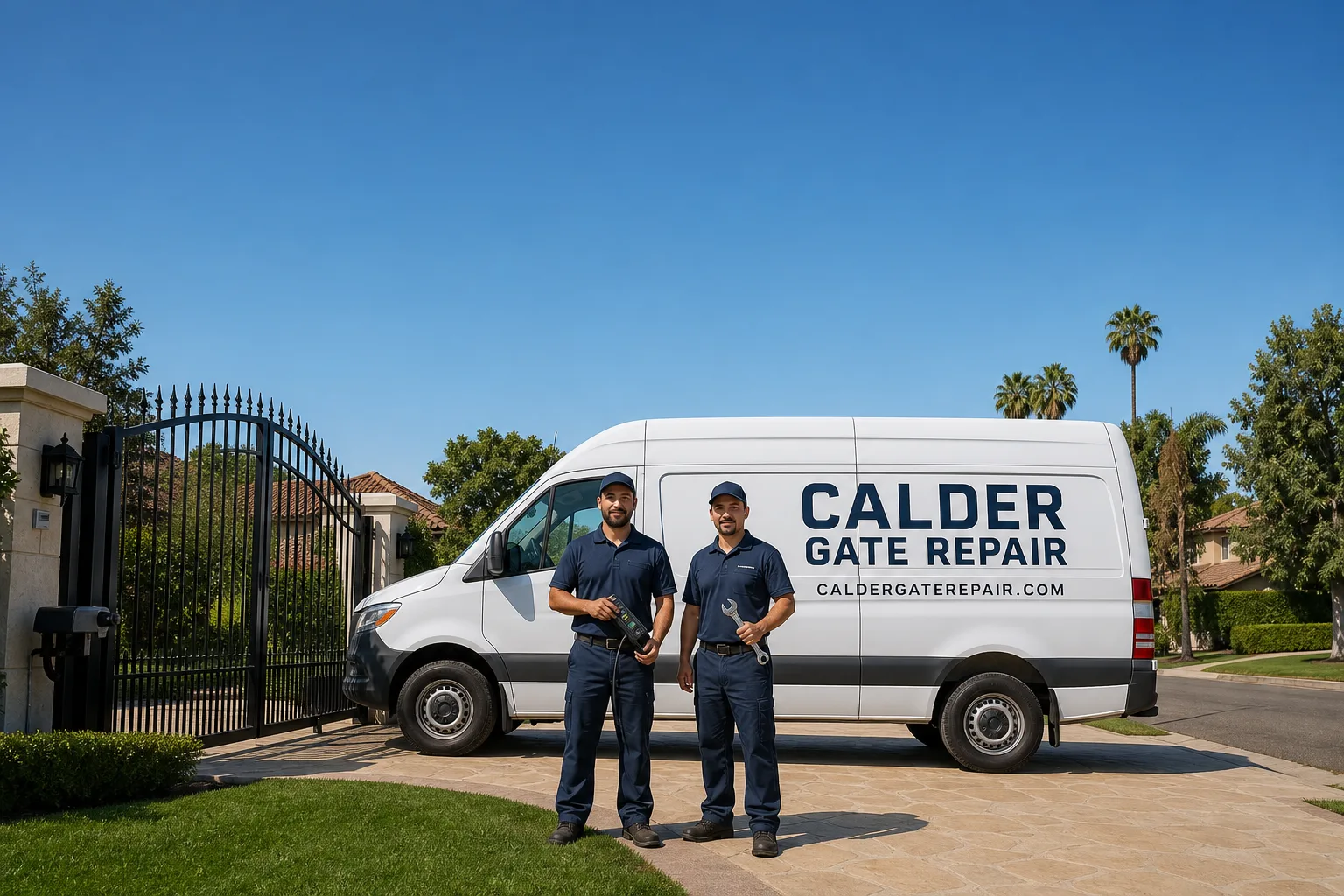
Free on-site gate assessment - hinges, posts, and your LiftMaster or Nice gate operator checked before anything is quoted
The assessment is free and the quote is the invoice.
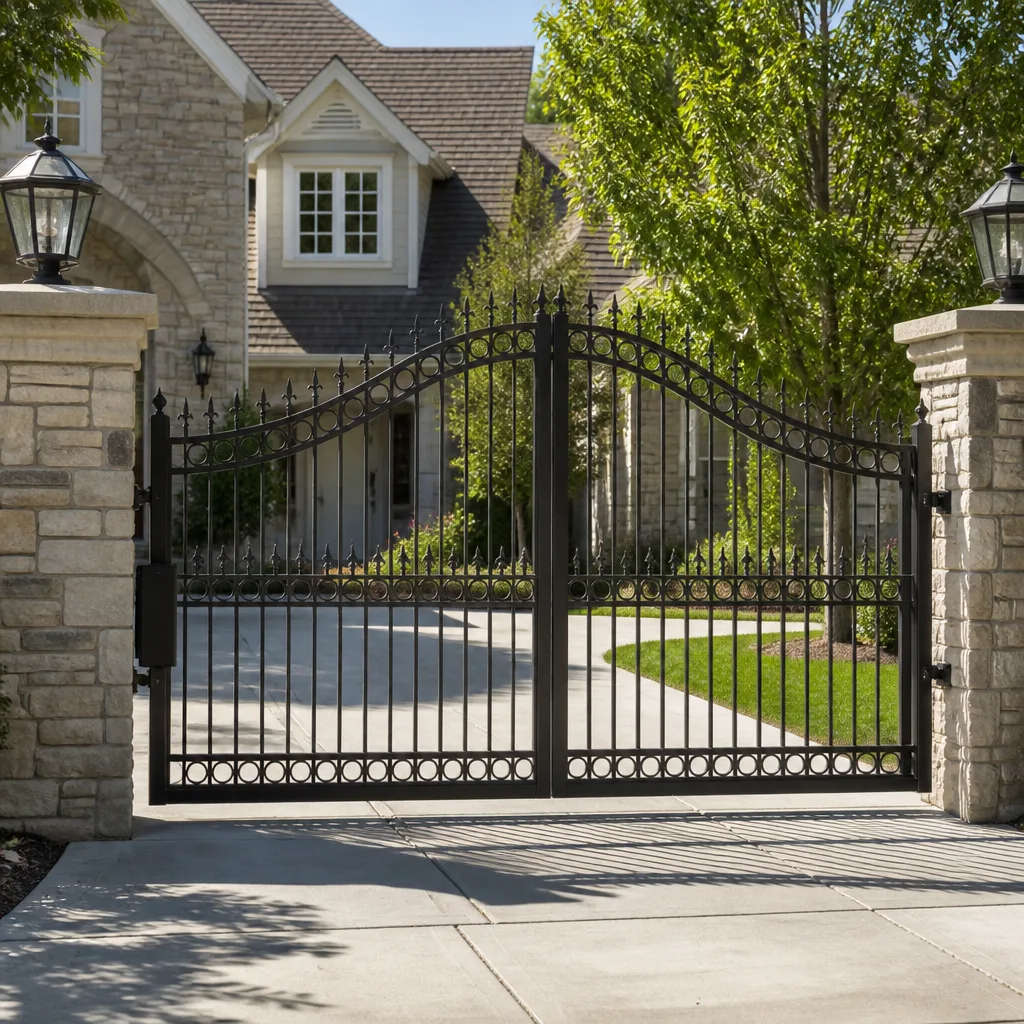
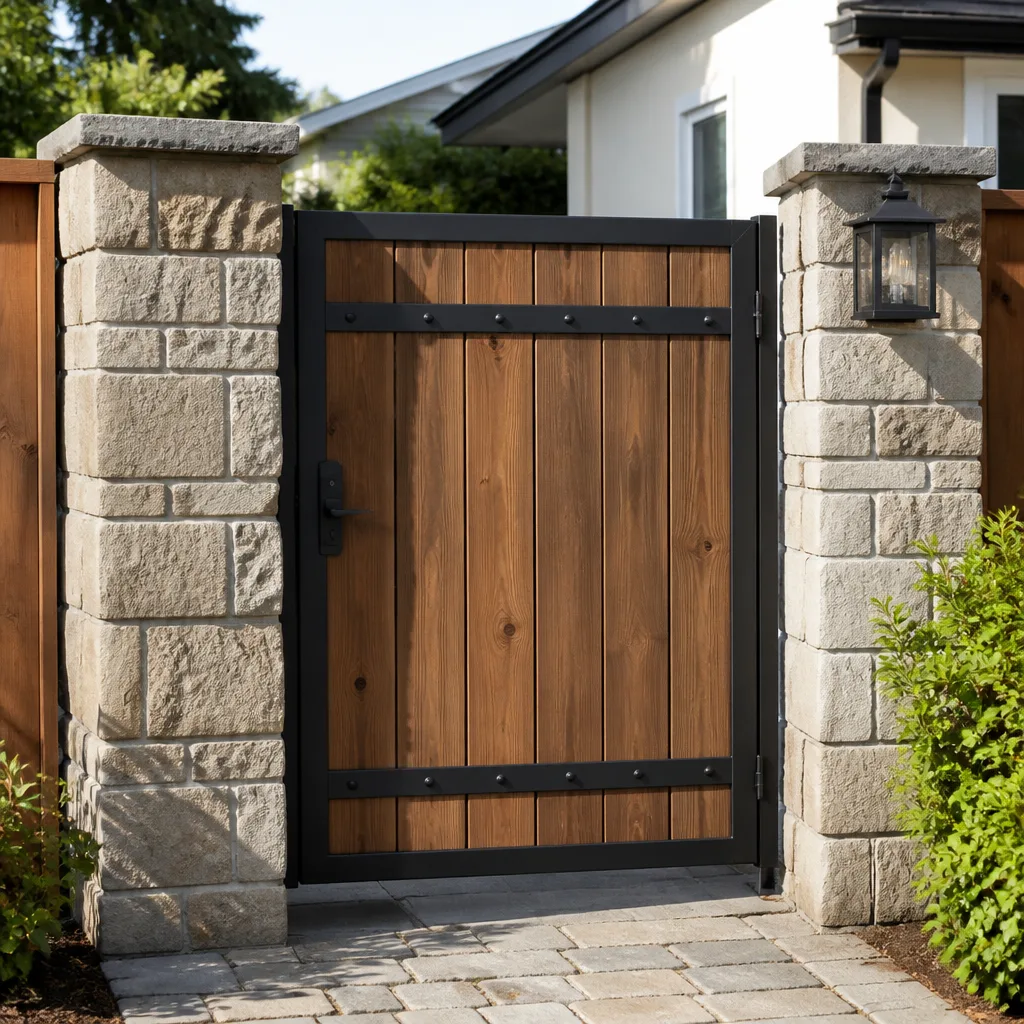
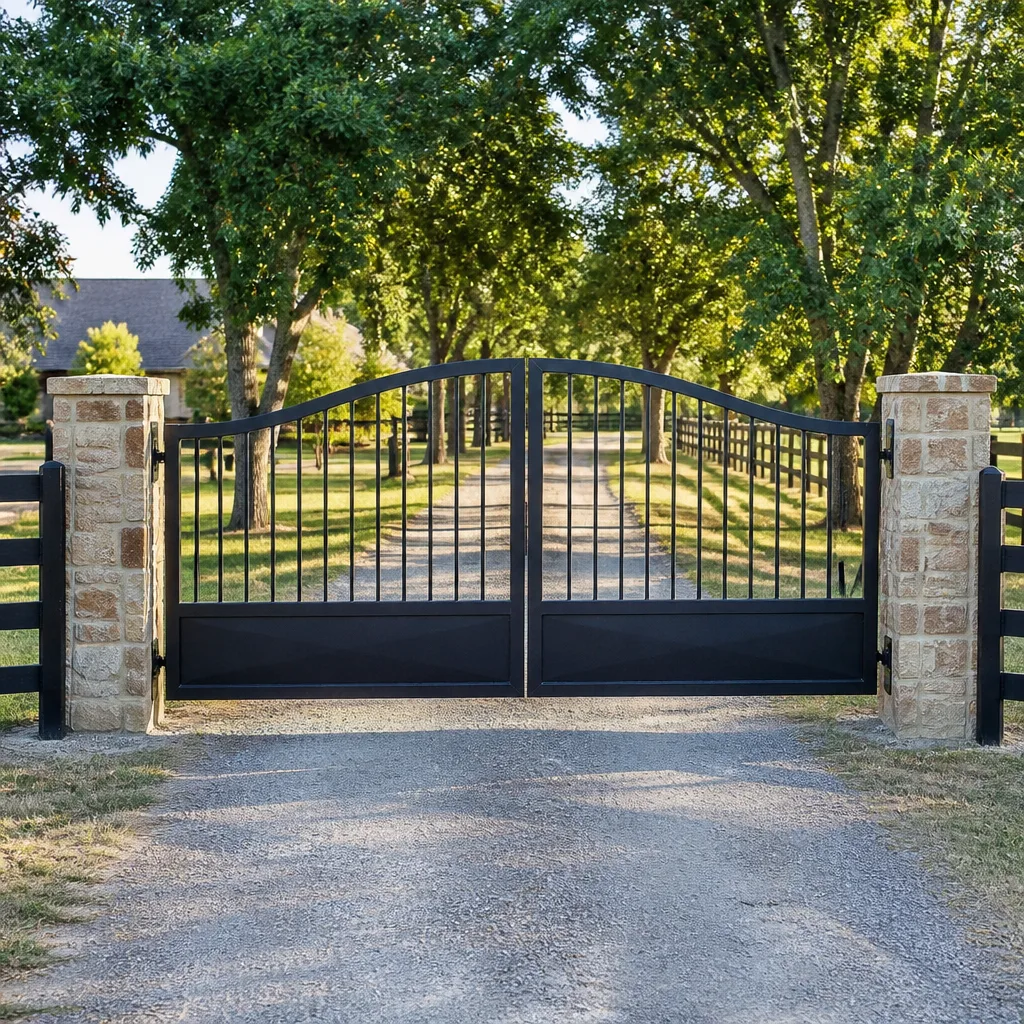
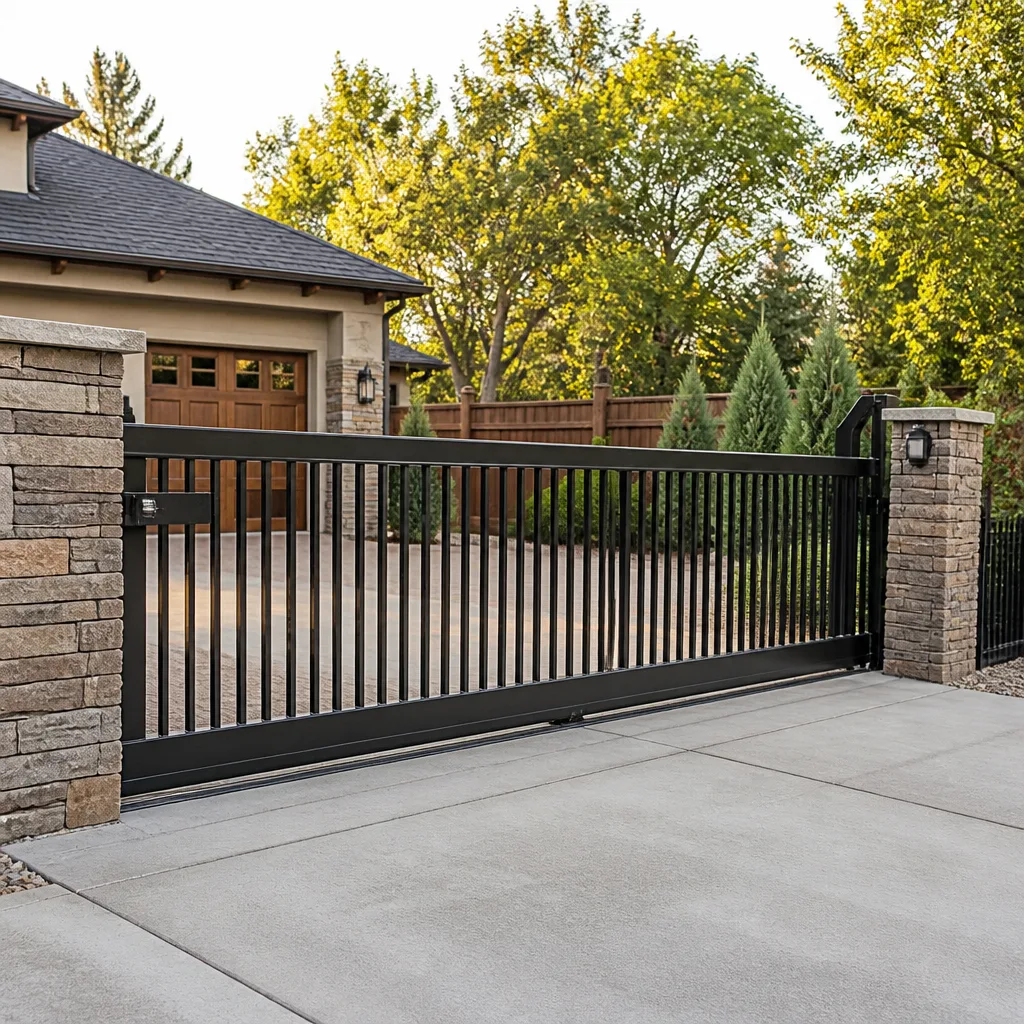
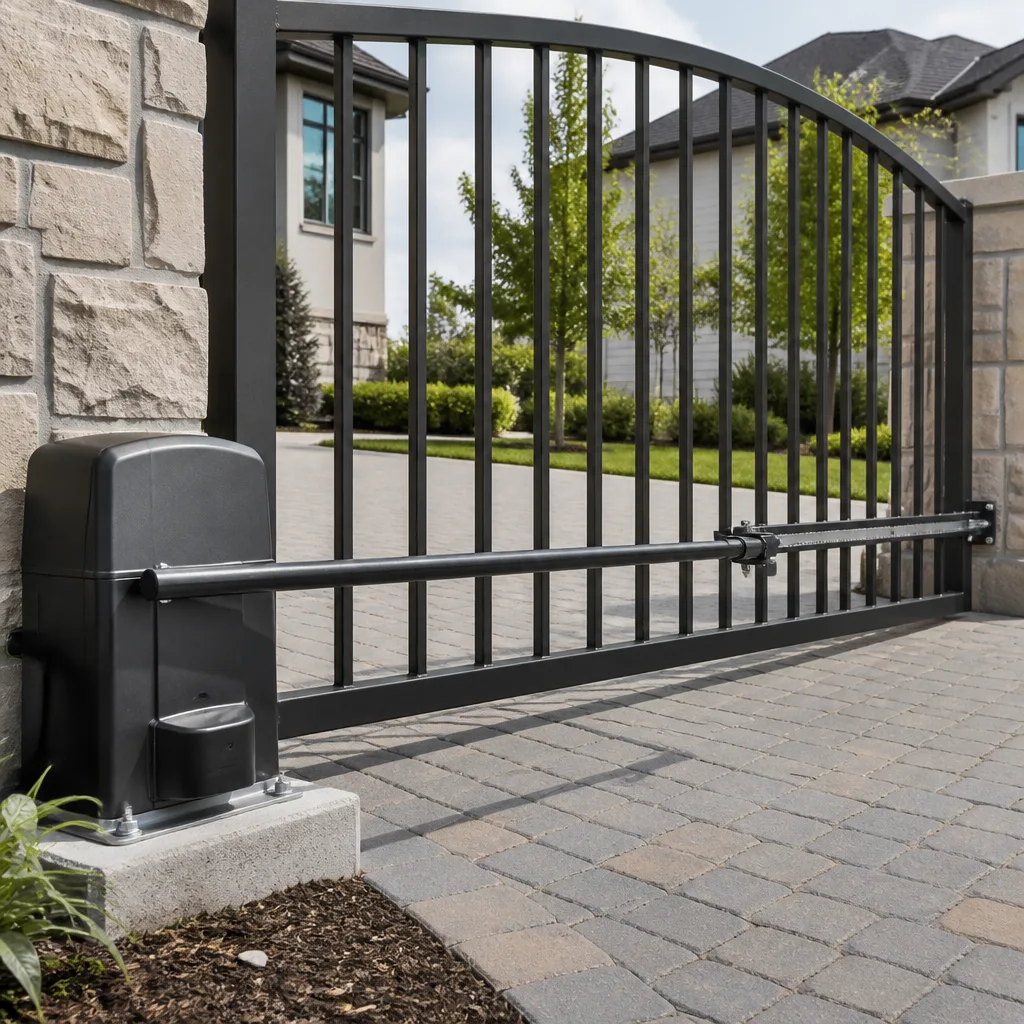
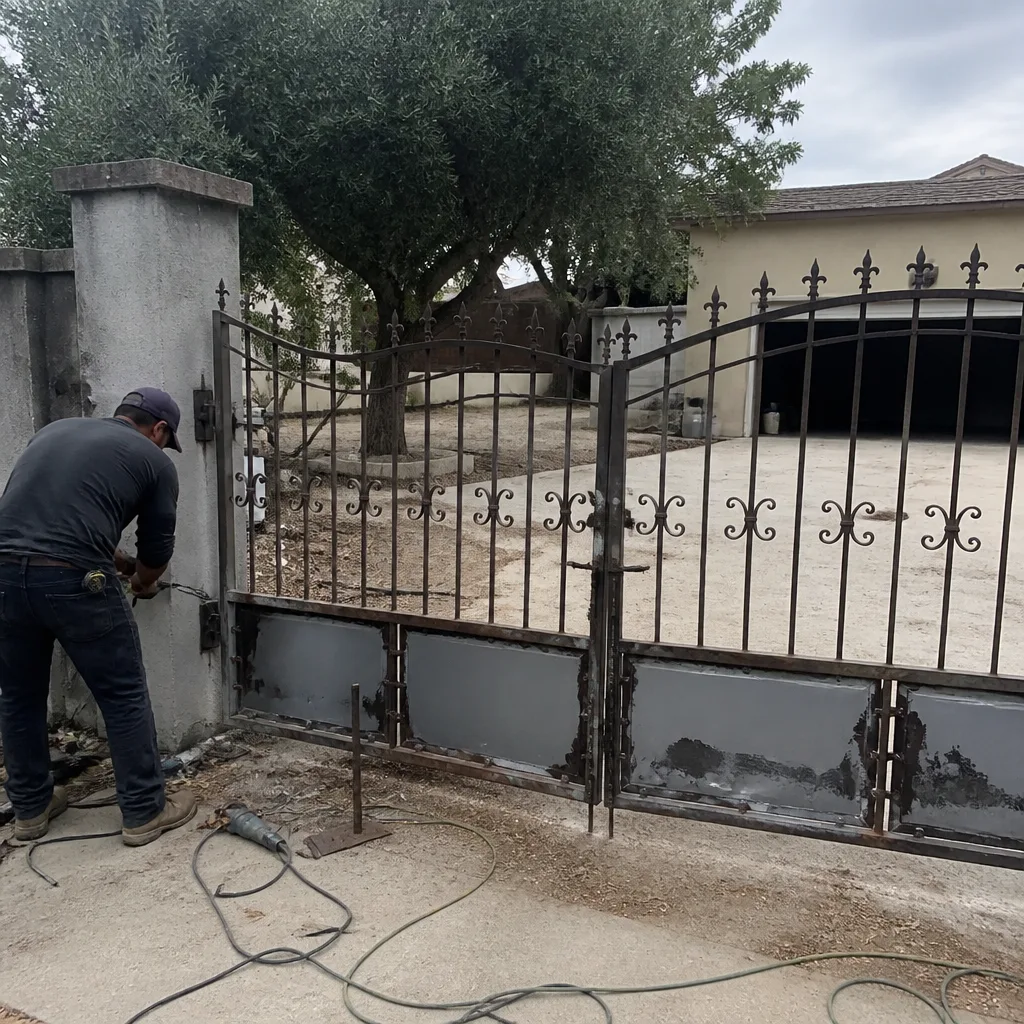 Before
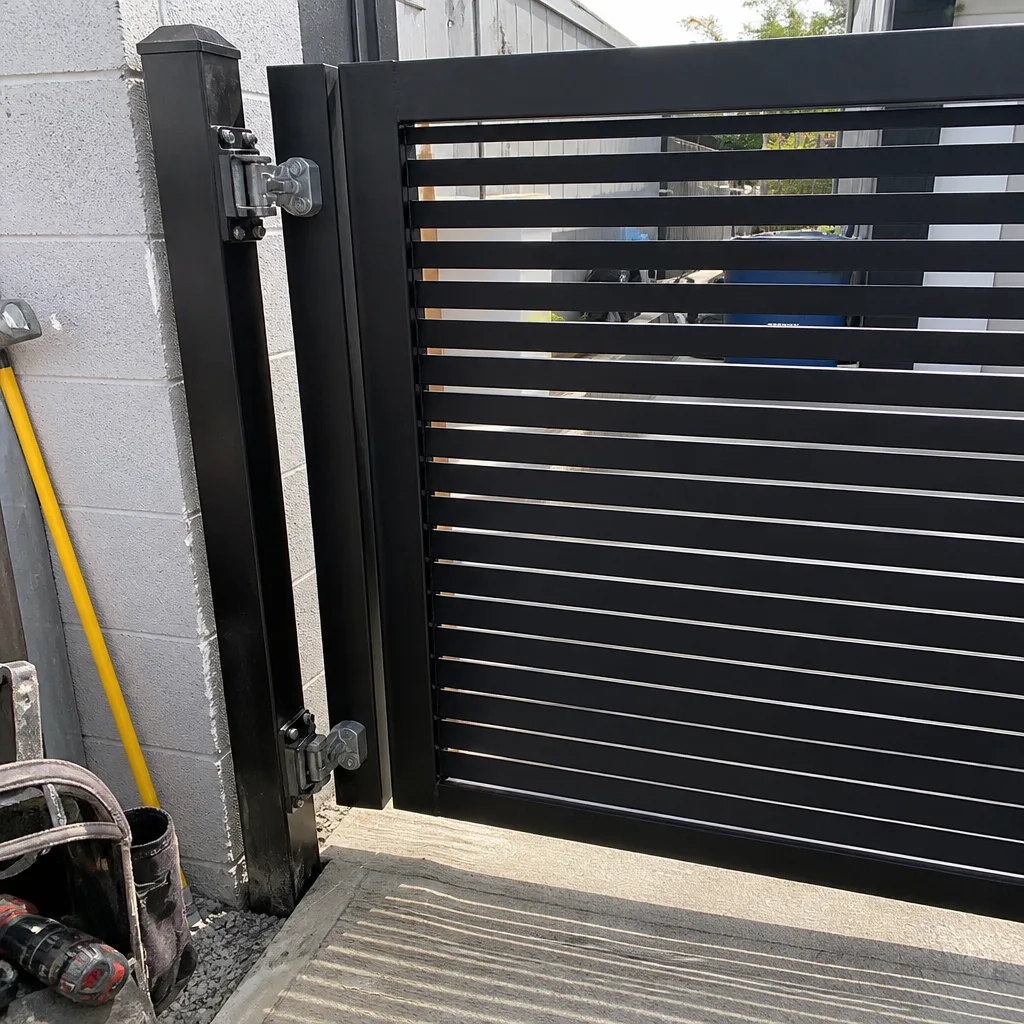 After
After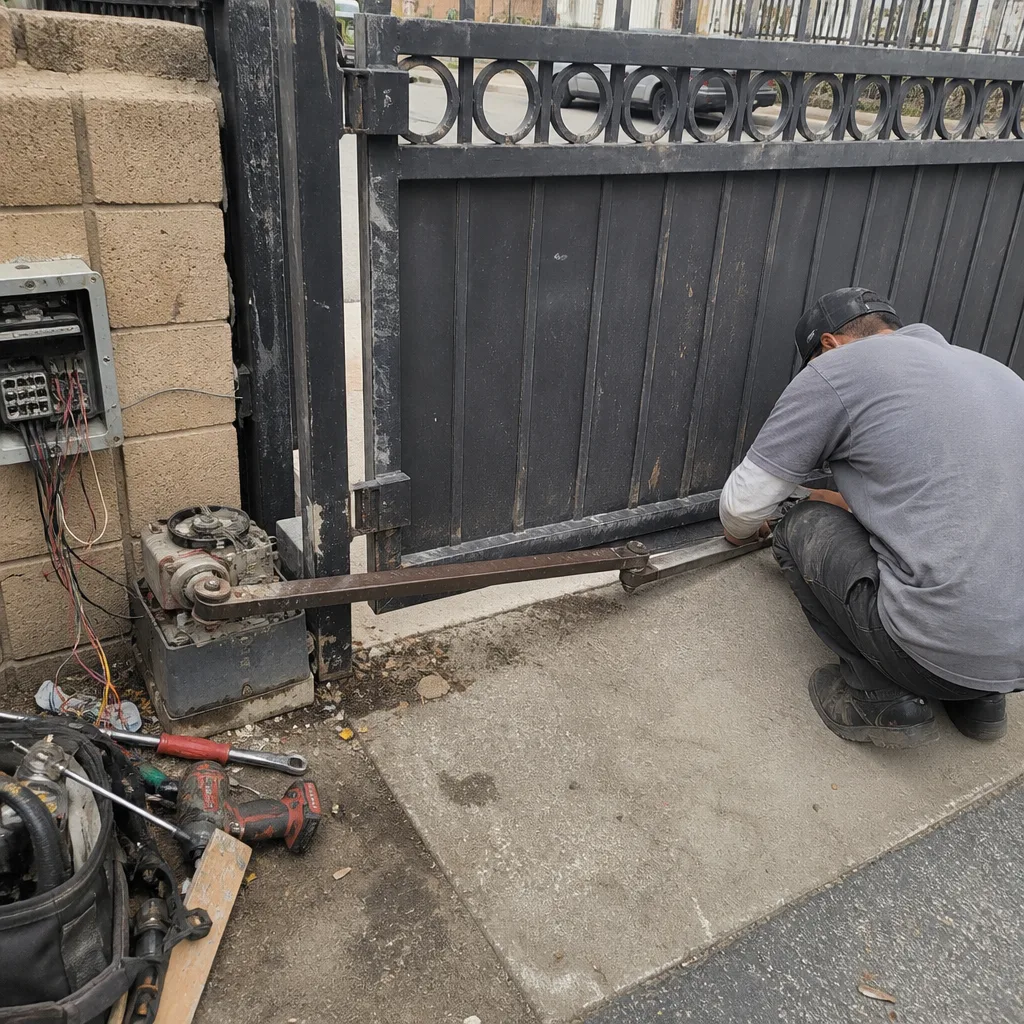 Before
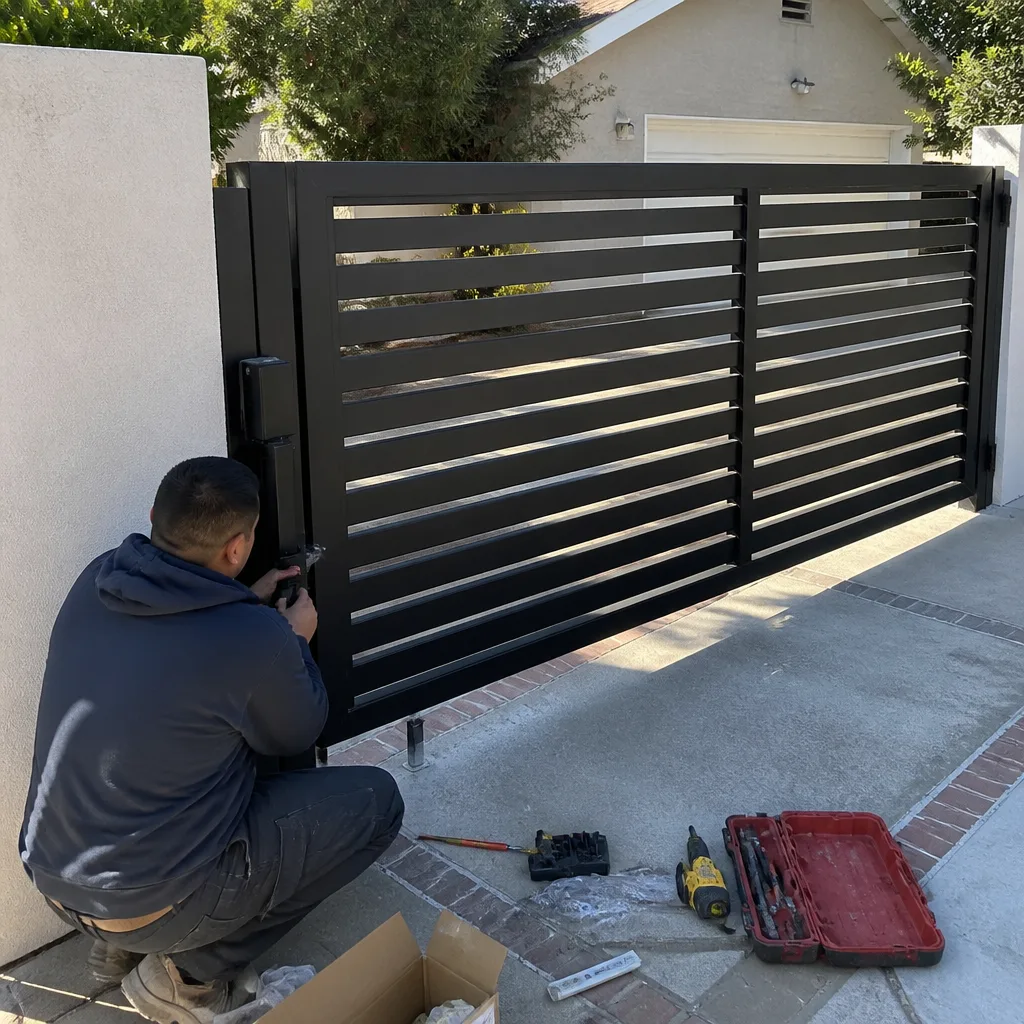 After
After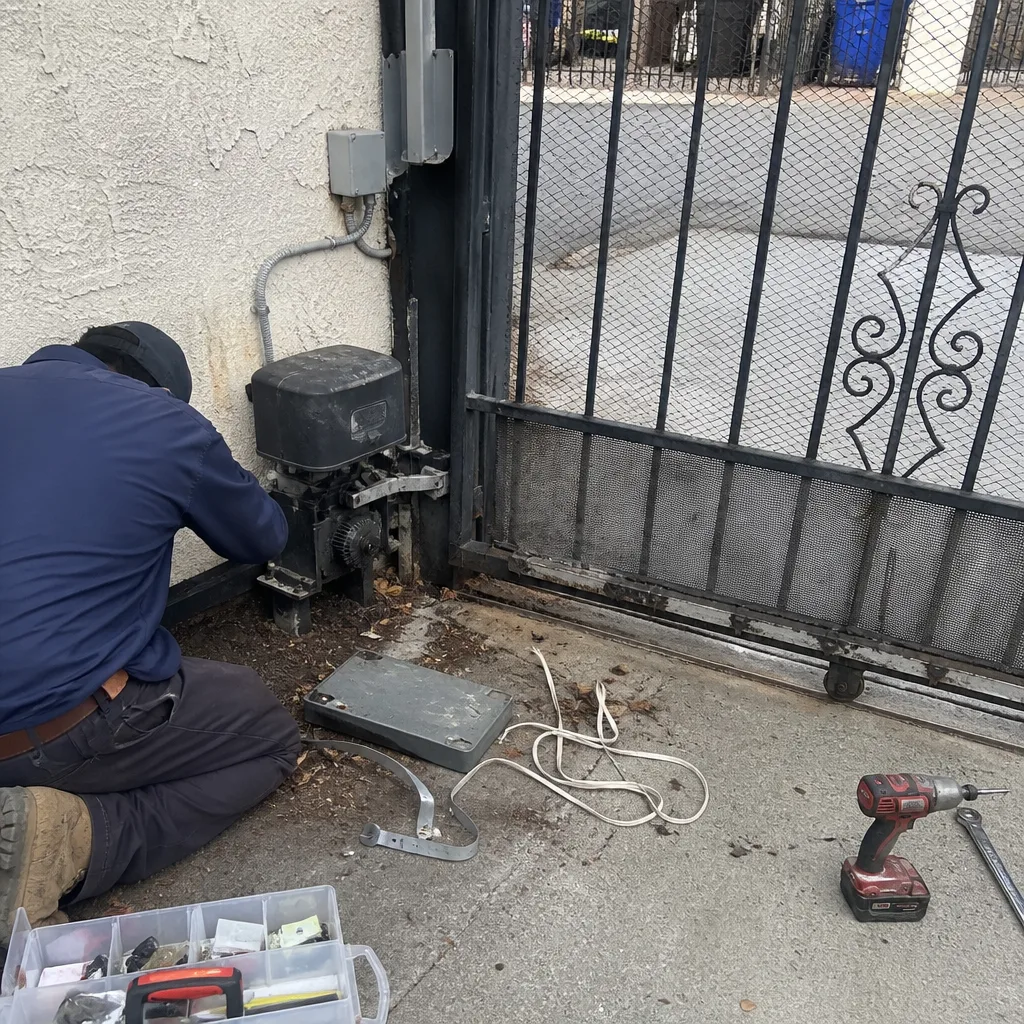 Before
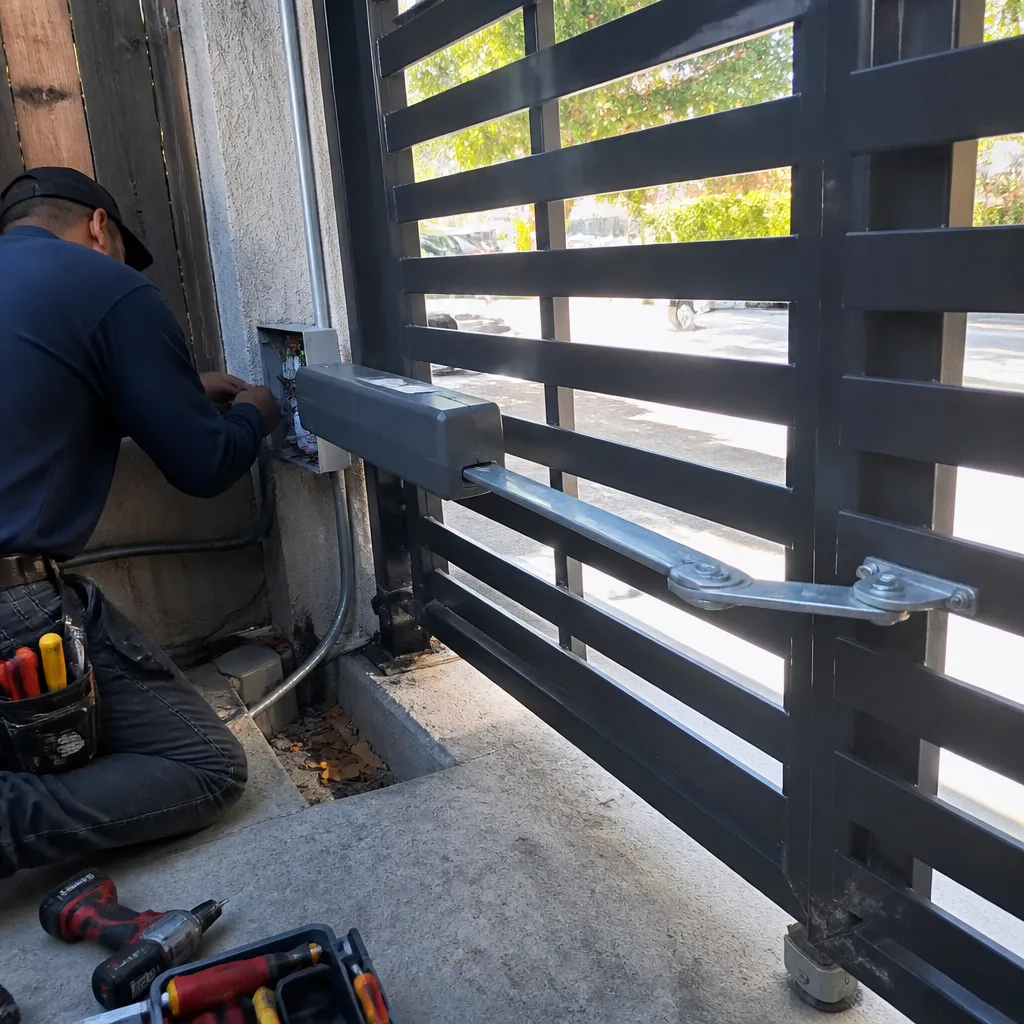 After
AfterGate Won’t Open or Close
A gate that won’t open or close is almost always caused by one of four things: a dead or miscommunicating opener, a broken mechanical component like a hinge or wheel, a tripped safety sensor, or a power issue that has cut the unit off entirely. In most cases, a trained technician can pinpoint the exact cause within the first few minutes on site.
That said, a gate stuck in either position is more than an inconvenience. If it’s stuck open, your property has no barrier. If it’s stuck closed, you may be blocked in – or out. Neither situation is something worth leaving until tomorrow. The sections below walk through the four most likely causes, what you can safely check right now, and how your local Calder Gate Repair team handles the fix.
Why It Happens
1. The Opener Has Lost Its Signal or Settings
Gate openers communicate through a receiver inside the motor unit and a transmitter in your remote or keypad. When that signal breaks down – because of a dead remote battery, a frequency conflict with a nearby device, or corrupted internal settings – the opener receives no instruction and the gate stays put. You can usually identify this cause because the motor makes no sound at all when you press the button, but the gate itself moves freely if you push it by hand.
2. A Mechanical Component Has Failed
Hinges, rollers, wheels, drive arms, and tracks take real punishment over years of daily cycling. When one of these wears out or breaks, the gate either can’t move at all or starts moving and then stops – sometimes with a grinding or scraping noise. Look at the gate’s travel path: visible damage, a wheel that’s jumped its track, or a hinge sitting at the wrong angle are all signs that the problem is mechanical, not electrical.
3. A Safety Sensor Is Blocked or Misaligned
Most electric gates have photo-eye sensors or safety edges that stop the gate from closing on a person, a vehicle, or an animal. When those sensors are dirty, misaligned, or detect something in the gate’s path, the system refuses to complete the cycle – which looks exactly like a malfunction even when everything is technically working correctly. If your gate opens fine but won’t close, and you hear the motor running briefly before it reverses, a sensor issue is a very likely cause.
4. A Power Problem Has Cut the Unit Off
Electric gate openers run on your property’s electrical supply, and some include a battery backup. A tripped breaker, a loose wire at the connection point, or a battery that’s gone flat can all cut power to the unit and leave it completely unresponsive. If the indicator lights on the opener are dark and the unit doesn’t react to any input – remote, keypad, or manual button on the motor itself – start by checking whether the circuit breaker for that outlet has tripped.
What to Do Right Now
- Stop forcing the gate. If it’s stuck mid-travel or feels like it’s fighting you, don’t push through it. Forcing a gate with a failing component can turn a straightforward repair into a much larger one.
- Check the obvious power source first. Look at the breaker for the gate circuit and the indicator light on the opener. If neither shows any sign of life, you likely have a power issue rather than a mechanical one – and that’s useful information for the technician arriving.
- Look at the sensor path. Walk the line between any sensor pairs and clear away leaves, dirt, spiderwebs, or anything else sitting in the beam. Check that each sensor is pointing squarely at its partner. This takes thirty seconds and occasionally fixes the problem on the spot.
- Photograph what you can see. A quick photo of the gate’s position, any visible damage, and the opener’s display panel gives your technician useful context before they arrive and speeds up the diagnosis.
- Do not attempt to adjust springs, cables, or high-voltage wiring yourself. Gate springs operate under significant mechanical tension. Electrical connections on a gate operator can carry dangerous current. If the component looks like it involves either of those, stop, step back, and call a trained technician. This isn’t overly cautious – it’s the right call.
How We Fix It
When your local Calder Gate Repair technician arrives, the first thing they do is a full diagnostic – not a guess, not a quick look. They check the opener’s behavior, test the sensors, inspect the mechanical components along the gate’s full travel path, and confirm whether the issue is electrical, mechanical, or both.
Once the cause is clear, they’ll give you a written price before any work starts. That number doesn’t change when the job is finished. The repair itself – whether it falls under gate repair or electric gate repair – typically involves replacing or adjusting the failed component, testing the gate through multiple full cycles, and confirming that all safety features are working correctly before leaving the site.
Every repair is covered by the 365-Day Done Right Promise: if the fix isn’t right, Calder makes it right. That’s in writing on every job, and it includes a free second visit if the repair fails within the promise window. Most repairs are completed in a single visit.
Frequently Asked Questions
It depends on which direction it’s stuck, but neither situation is one to leave unattended. A gate stuck open means no physical barrier between your property and the street. A gate stuck closed can block a vehicle in or out, and if the mechanism has failed under tension, the situation can worsen if someone tries to force it. Call (903) 417-0793 – a live person answers around the clock and can help you figure out how urgently you need someone on site.
Your local Calder Gate Repair team handles gate repair calls promptly, and a live person is available to take your call at (903) 417-0793 any time, day or night. When you call, you’ll get a real human – not a voicemail, not a bot – who can check availability and give you a trackable arrival time rather than a vague window. Call now and get it on the schedule.
Every Calder job includes a written price before any work begins. The technician diagnoses the problem, tells you exactly what needs to be done and what it costs, and waits for your go-ahead before touching anything. The number on the invoice is the number you agreed to at the door. There are no add-ons that appear after the fact.
Sudden failures usually point to a specific trigger: a dead remote battery, a tripped breaker, a sensor that got knocked out of alignment, or a mechanical part that had been wearing down gradually and finally gave out. Gates rarely fail without a reason, and the reason is almost always something a technician can identify quickly. The diagnostic at the start of every Calder visit is designed to find that cause before any repair work begins.
Get It Fixed
Call (903) 417-0793 – a live person answers 24 hours a day, 7 days a week. Your local Calder Gate Repair team will give you a trackable arrival time, a written price before anything starts, and a repair backed by the 365-Day Done Right Promise. Your gate, fixed and tracked to the door.
Written by Nico Alvarez, Owner & Lead Technician at Calder Gate Repair, part of the Relay Home Co. family since 2009.
What Our Customers Say
"Swing gate arm replaced and aligned. Got photos of the old part by text."
- Nadia F."Quote came in the app before the visit. No surprise at the end."
- Ginny L."Keypad and remotes reprogrammed in one visit. Paid by link."
- Pauline C.