
Free on-site gate assessment - hinges, posts, and your LiftMaster or Nice gate operator checked before anything is quoted
The assessment is free and the quote is the invoice.
 Before
 After
After Before
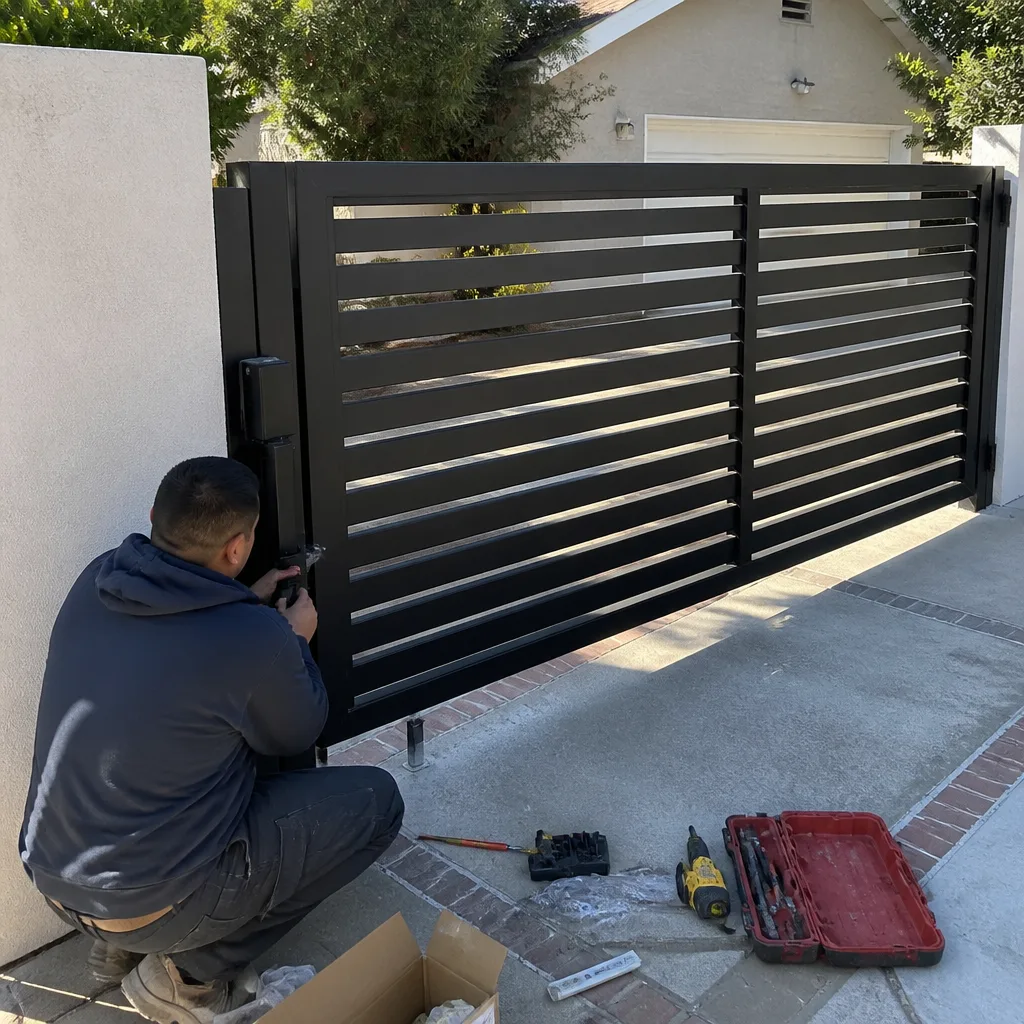 After
After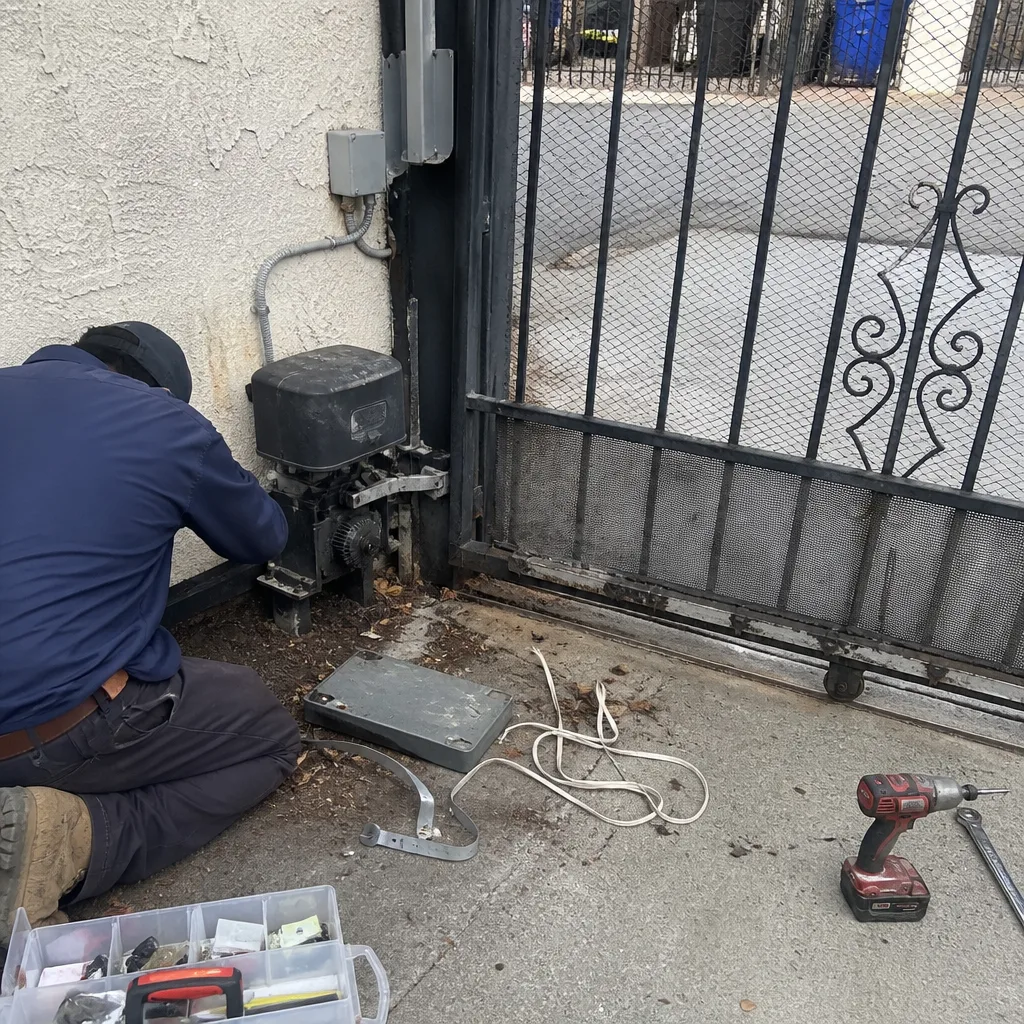 Before
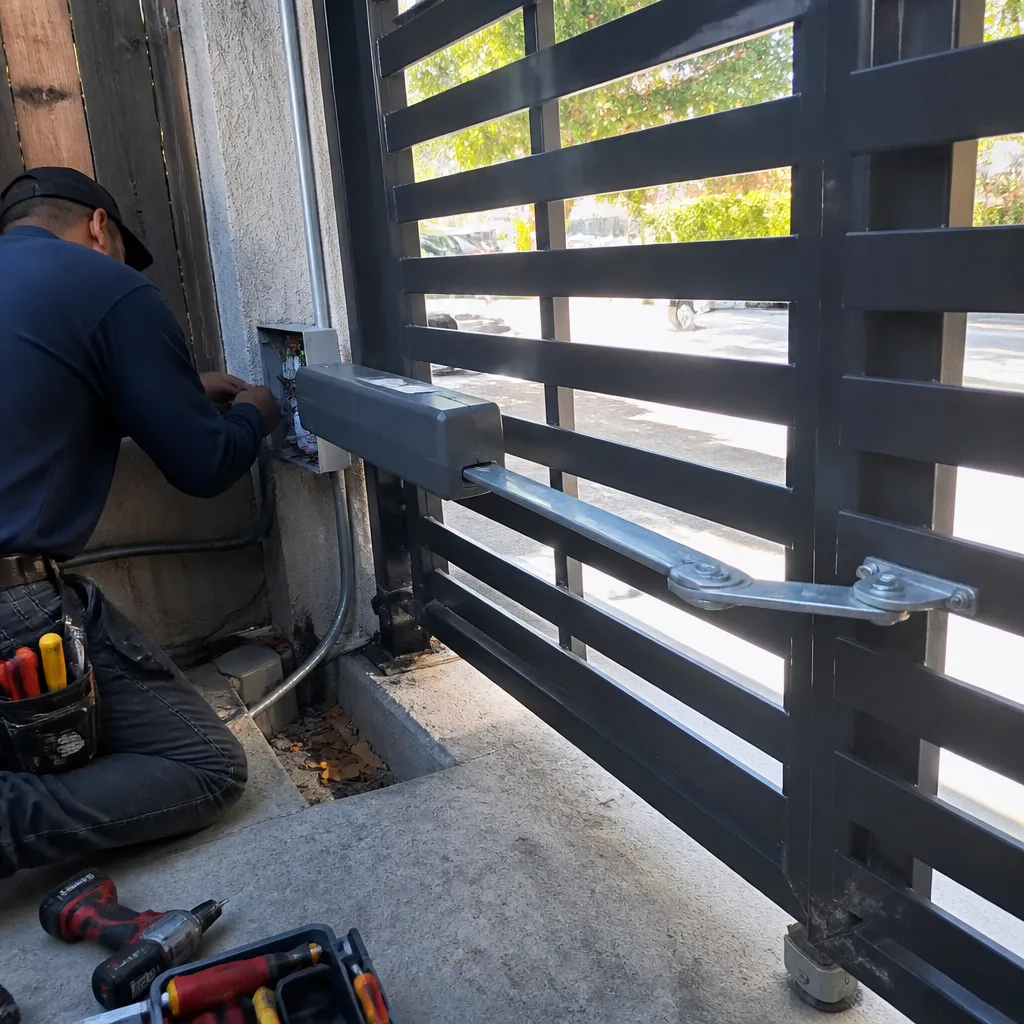 After
AfterLinear Access Control Installation: The Los Angeles Owner’s Guide
Linear access control installation in Los Angeles typically runs $350 to $900 installed, depending on whether you need a keypad, card reader, telephone entry unit, or full multi-credential system. We stock Linear-compatible parts on our trucks and can usually have a technician at your door the same day you call. Most Los Angeles homeowners discover their access control has failed the hard way: a keypad that ignores a valid code, a card reader that stopped reading cards, or a telephone entry system that rings endlessly without letting anyone in.
If you’re reading this, chances are your Linear unit is doing something it shouldn’t, or stopped doing something it should. Maybe the keypad backlight is on but nothing happens when you punch in the code. Maybe the system worked fine for years and then quit after a rainstorm. Or maybe you bought a house with a Linear system already installed and nobody gave you the manual or the master code. Any of those scenarios is fixable, and you don’t need to rip out the whole setup.
Which Linear Models This Applies To
Linear built its reputation on access control systems for apartment buildings, gated communities, and commercial lots, but plenty of single-family homes in Los Angeles use their gear too. The most common units we service are the AE-100, AE-500, and AE-2000 telephone entry systems, along with the AK-11 digital keypad, the AM-KP keypad, and the IEI 212i-style keypads that Linear rebadged for years. If your unit has a Linear sticker on the front or a model number starting with “AE,” “AK,” or “AM,” we carry or can source the parts for it.
One compatibility gotcha worth knowing: Linear’s older keypads ran on a 10-digit code format, while the newer units default to a 4-to-6-digit PIN and require a programming sequence change if you’re swapping hardware. A homeowner trying to replace an old Linear keypad with a newer model often gets stuck because the new unit expects a different wiring convention and code length. That’s exactly the kind of mismatch we sort out before drilling a single hole. When it comes to OEM versus aftermarket, Linear’s own boards tend to last longer in direct sun and coastal air, but quality aftermarket keypads from brands like Essex and HID (which we also stock alongside LiftMaster, Mighty Mule, and Ghost Controls parts) can work fine if matched to the existing wiring and power supply.
Signs Your Linear Access Control Installation Is Failing
- Keypad accepts some codes but not others. This usually points to a failing membrane switch or a relay that’s arcing internally. The keypad looks fine from the outside, but the contact points under the buttons are worn unevenly.
- Card reader beeps but doesn’t open the gate. The reader is reading the credential fine; the problem is downstream. It could be a dead relay on the control board, a broken wire between the pedestal and the gate operator, or a ground fault that developed after heavy rain.
- Telephone entry rings forever or goes straight to a busy signal. If the unit used to call a forwarding number and now doesn’t, the phone line has changed, the unit’s internal modem has failed, or the programming got wiped by a power surge. Los Angeles gets enough brownouts during heat waves that we see this a few times a month in the San Fernando Valley alone.
- System works during the day but fails at night. This is almost always a power issue. The transformer is undersized, the battery backup has died, or a solar-powered setup isn’t holding charge. The system isn’t broken; it’s running on borrowed voltage and dropping when demand spikes.
- The keypad or reader is physically cracked, sun-faded, or full of water. Los Angeles sun destroys plastic housings faster than anything. A cracked faceplate lets moisture into the board, and once the board corrodes, it’s replacement time, not repair time.
Replacement Cost & What’s Included
Here in Los Angeles, a basic Linear-compatible keypad replacement runs $250 to $450 installed, including the part. A card reader swap lands between $300 and $550. Telephone entry system replacement starts around $600 and can reach $900 when we need to reprogram tenant directories and forwarding numbers. What drives the range is the age of the existing wiring, whether we’re matching an old panel or starting fresh, and how much programming your system requires.
Every installation includes the labor, the part, full programming, testing with your credentials, and a walkthrough so you know how to add or delete codes yourself. We quote the exact price in writing before any work starts, and that’s the number on the invoice. Nothing changes at the door. The 365-Day Done Right Promise covers every access control installation: if it fails within 365 days, Calder Gate Repair returns at no charge. No fine print, no prorating.
DIY or Call Us?
An access control installation isn’t dangerously high-voltage, but it does involve wiring, relays, and programming sequences that will frustrate anyone who hasn’t done it before. You can absolutely check a few things yourself first: confirm the breaker isn’t tripped, make sure the keypad hasn’t just lost its programming after a power outage, and verify the gate operator itself still opens with its own remote or button. If the gate opens manually but the Linear unit won’t trigger it, you’ve isolated the problem to the access control side, and that’s our department.
Where DIY goes sideways is voltage. Linear systems run on 12 to 24 volts DC depending on the model, and hooking up the wrong transformer will cook a brand new board in about ten seconds. We’ve also seen plenty of homeowners who bought a “universal” keypad online, wired it in, and then discovered it wasn’t compatible with their Linear controller at all. If you’d rather skip the trial and error, call us at (903) 417-0793. Tell me what it’s doing, and I’ll tell you what it’ll cost before I touch anything.
FAQs
Most Linear keypads and readers last 7 to 10 years in Los Angeles, with shorter lifespans on units in direct all-day sun or within a few miles of the coast, where salt air accelerates corrosion. Outdoor keypads mounted without a sun shield often fail closer to year five. Call (903) 417-0793 if your unit is nearing that age and acting up; we can tell you if it’s worth repairing or better to replace.
Sometimes. If the issue is a dirty or corroded contact pad, we can often clean and reseat it. If the board itself has failed or the plastic housing is cracked, replacement is the honest answer. We’ll tell you which camp your unit falls into before quoting anything. Call (903) 417-0793 or describe the symptoms and we’ll give you a realistic expectation.
A straightforward keypad or card reader swap takes 45 to 90 minutes once our technician is on site. A telephone entry system replacement with programming runs 2 to 3 hours. We give you a live, trackable arrival time when you book, so you’re not stuck waiting through a four-hour window.
We stock the most common Linear-compatible keypads, card readers, controllers, power supplies, and wiring kits on our trucks. If your unit needs a less common board, we source it from our Los Angeles suppliers and usually have it within one to two business days. Your written quote includes the expected timeline before we touch anything.
Get Your Linear Access Control Running Again in Los Angeles
Nico Alvarez and the Calder Gate Repair team serve Los Angeles and nearby areas with upfront pricing, live arrival tracking, and background-checked technicians who know Linear systems inside and out. Whether it’s a dead keypad in Echo Park or a telephone entry unit that quit on a rental property in Van Nuys, we’ll diagnose it, quote it in writing, and install it right. Call (903) 417-0793 for a free estimate. A live person answers, 24/7.
Written by Nico Alvarez, Owner & Lead Technician, Calder Gate Repair at Calder Gate Repair, serving Los Angeles and nearby areas.