
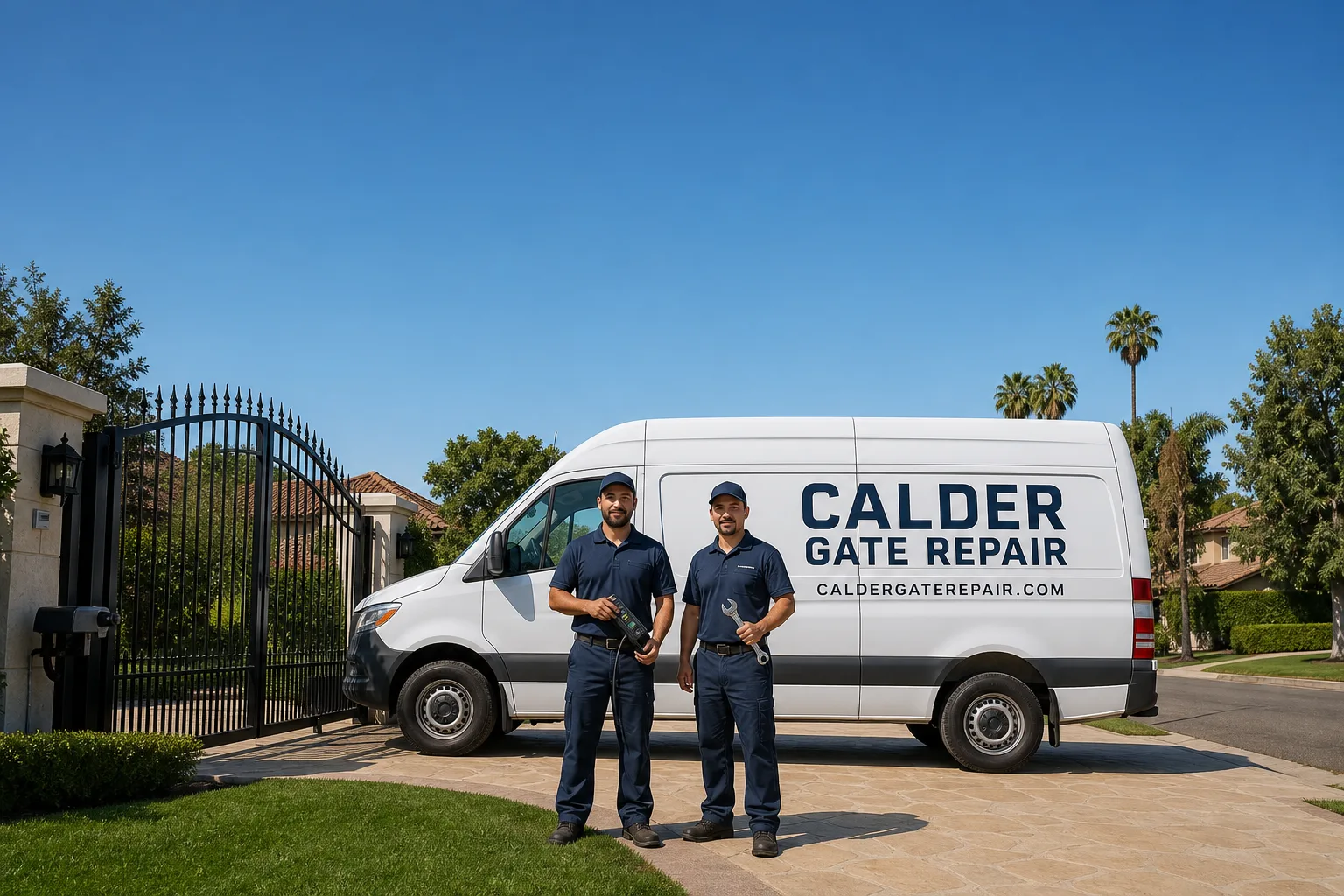
Free on-site gate assessment - hinges, posts, and your LiftMaster or Nice gate operator checked before anything is quoted
The assessment is free and the quote is the invoice.

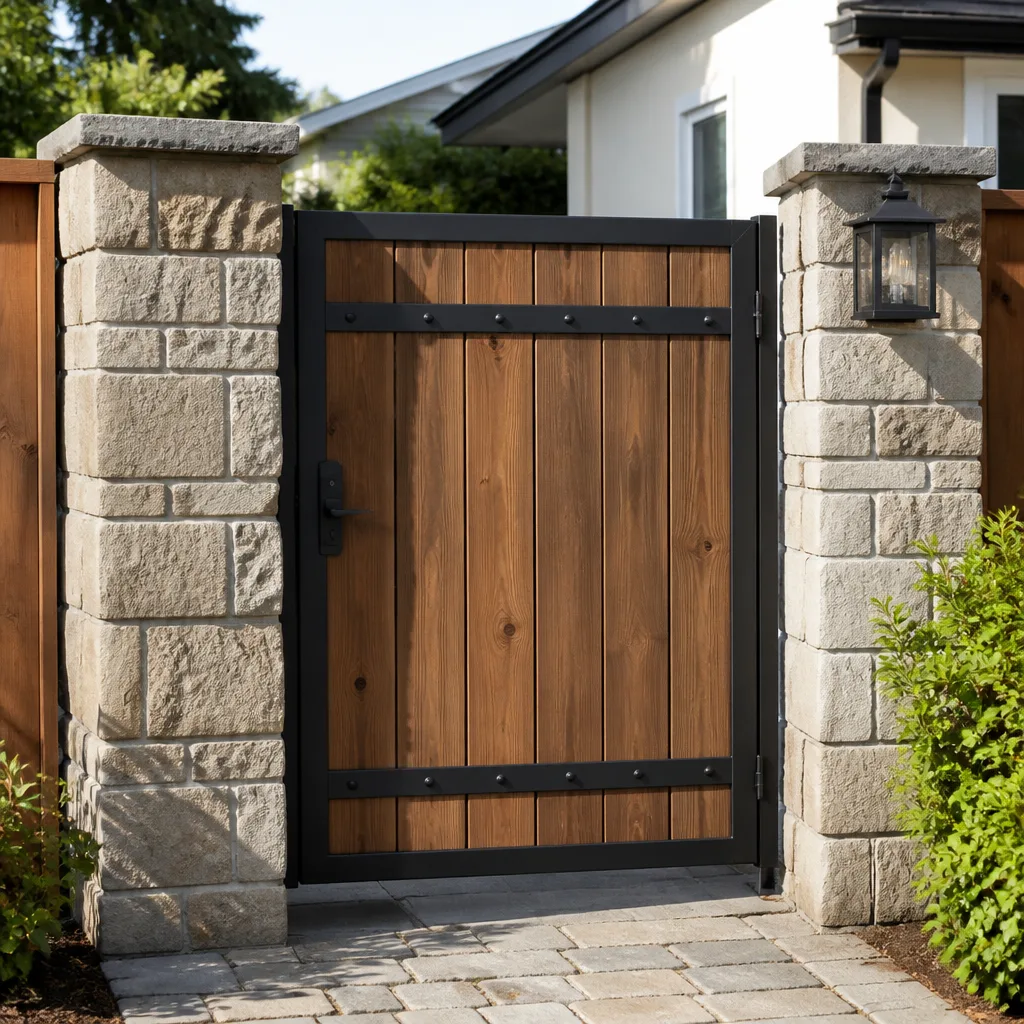

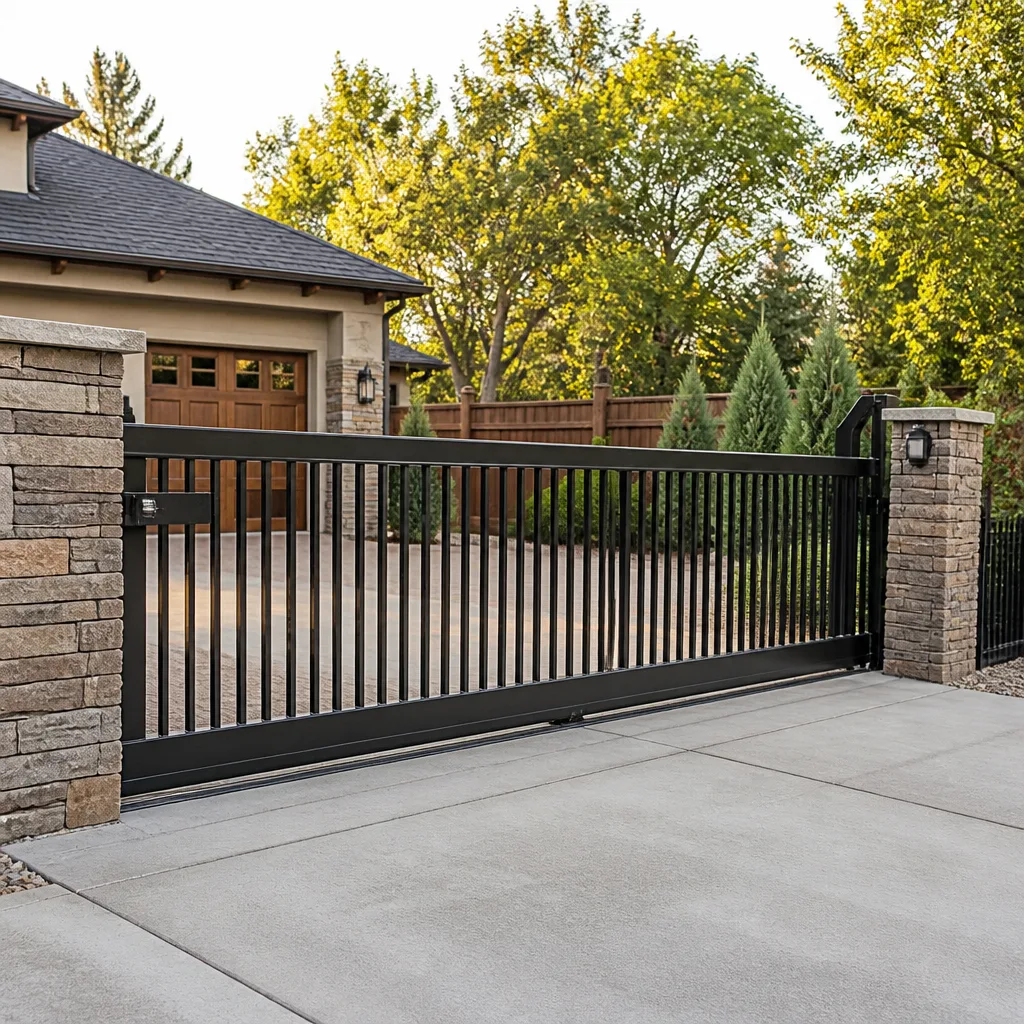
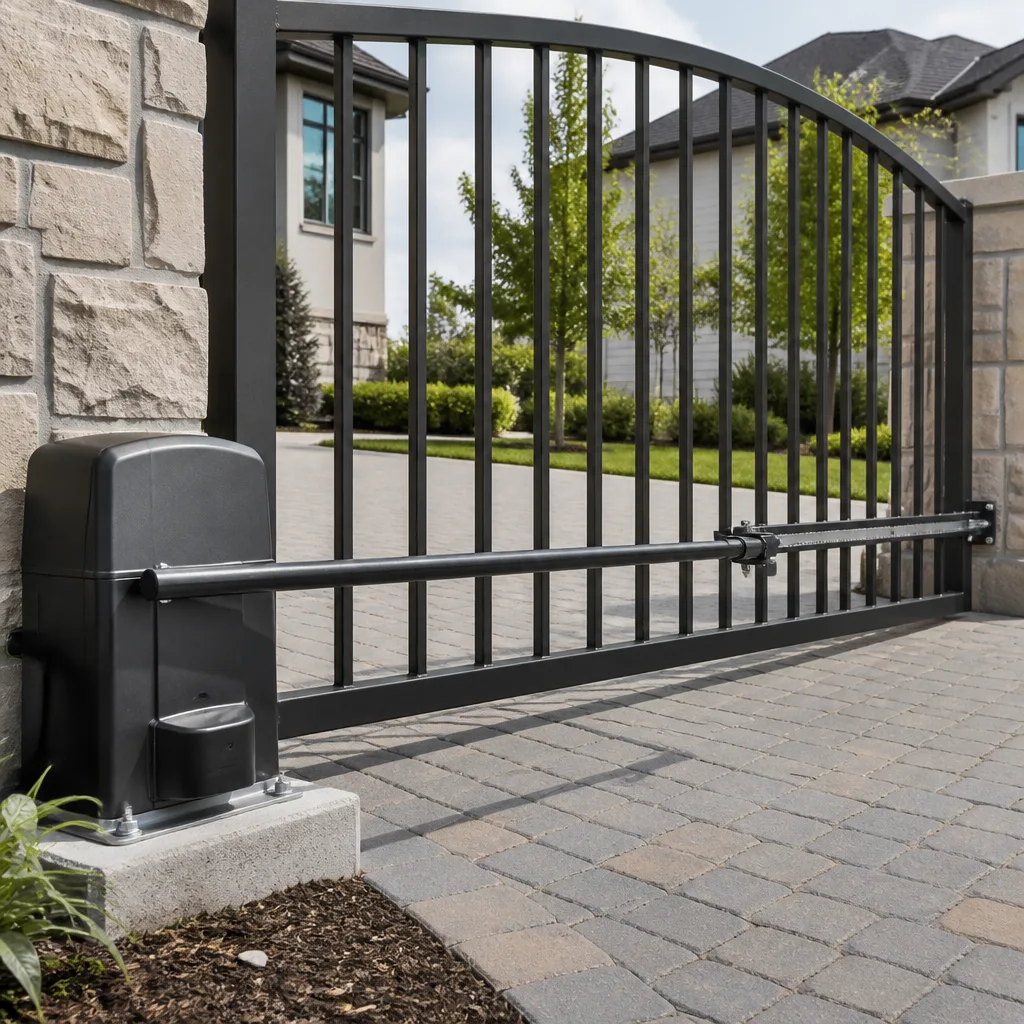
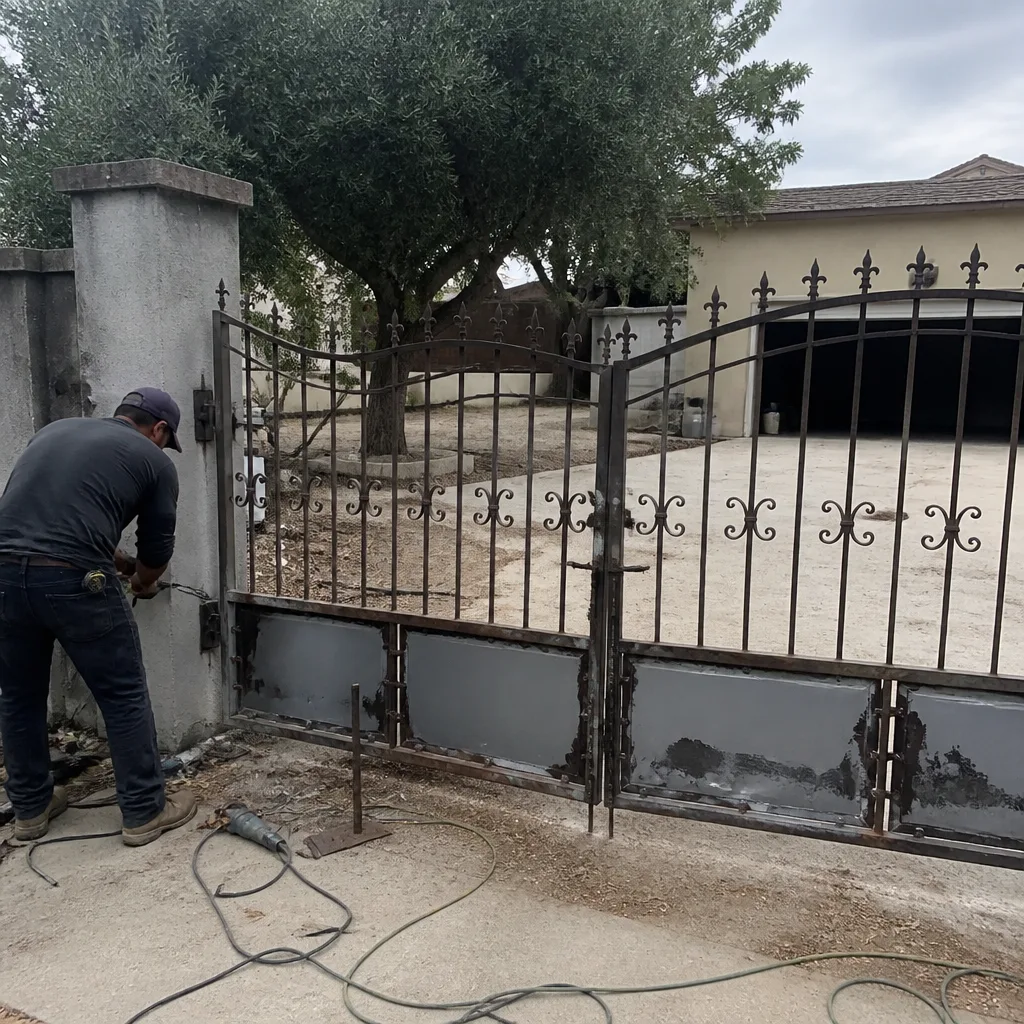 Before
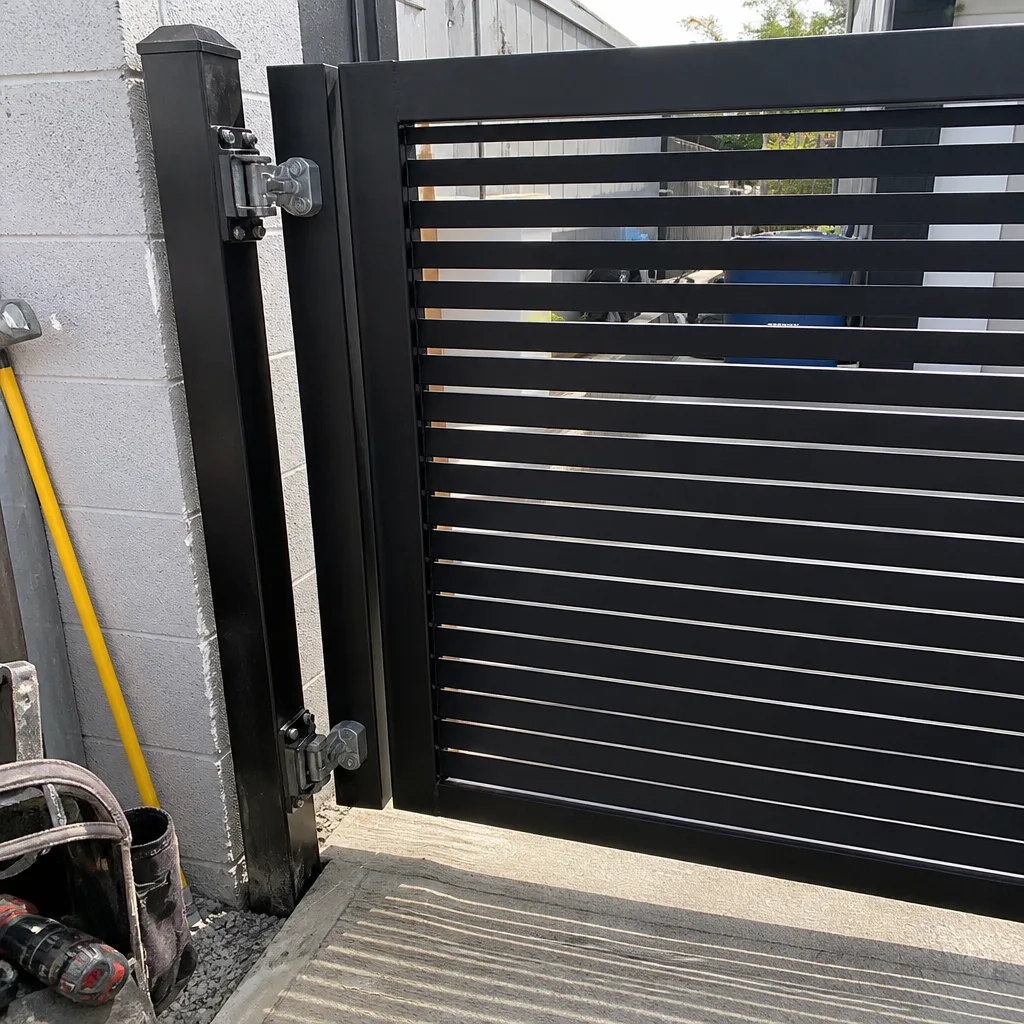 After
After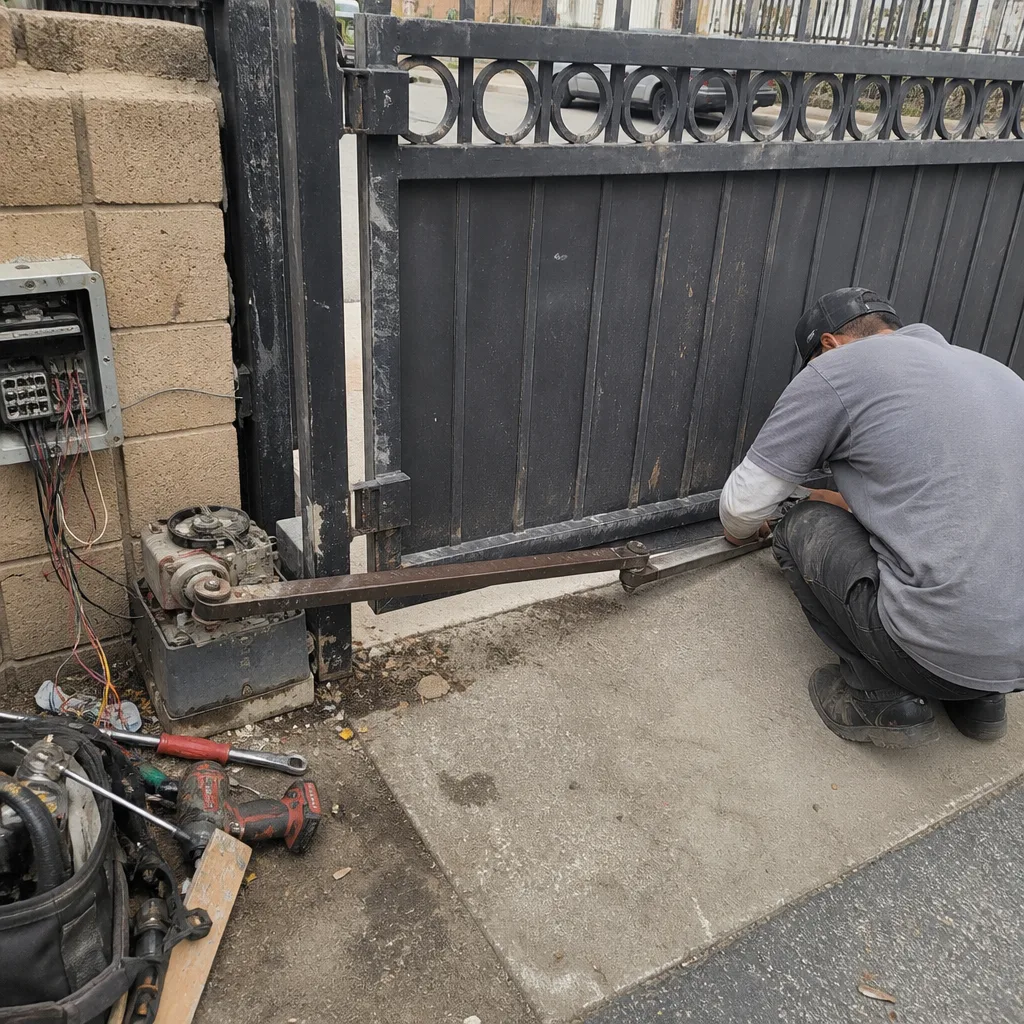 Before
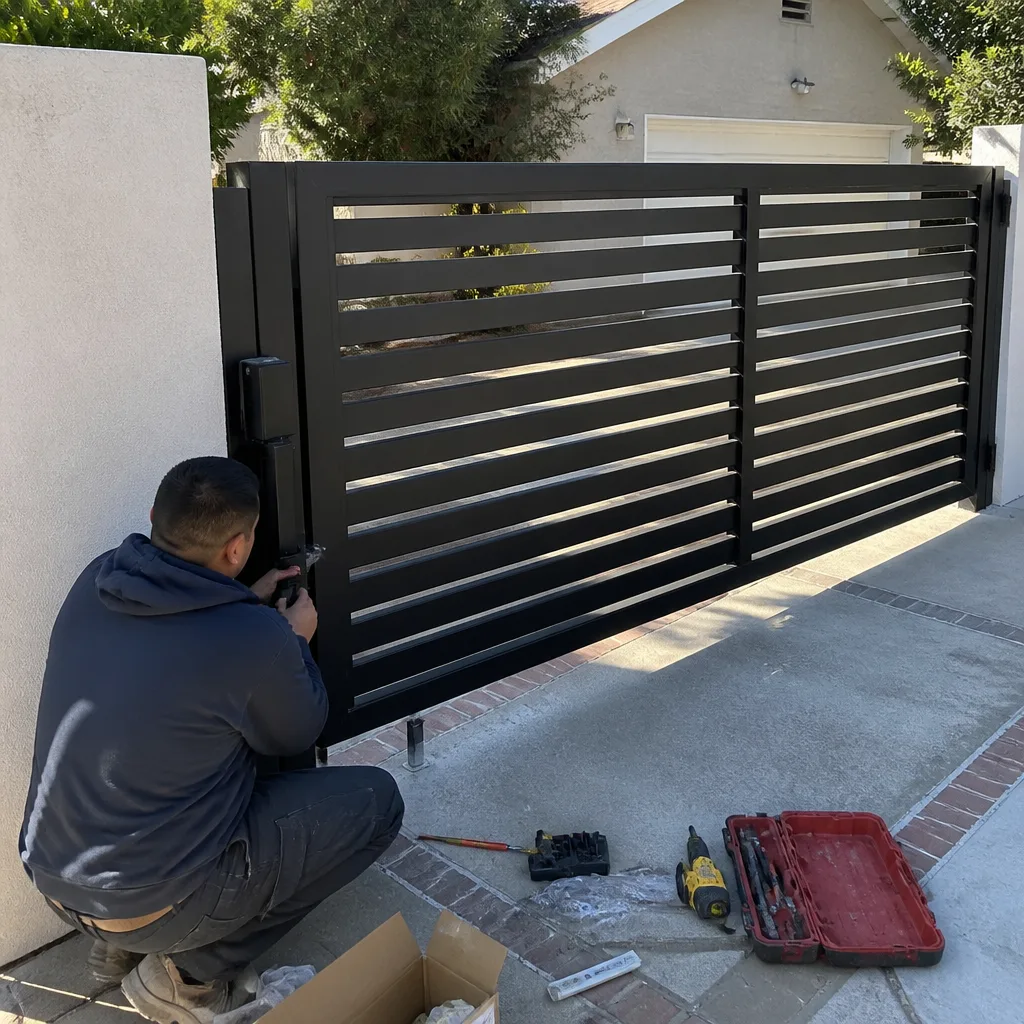 After
After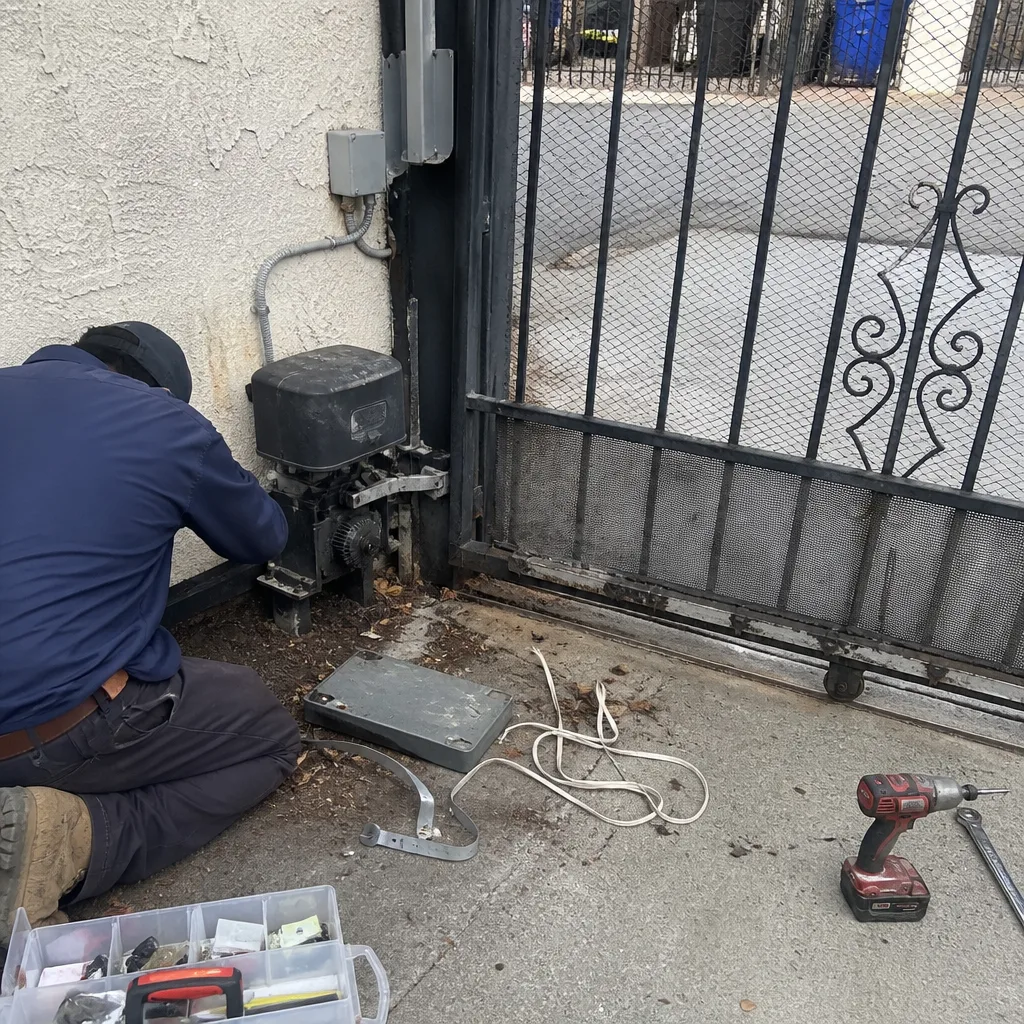 Before
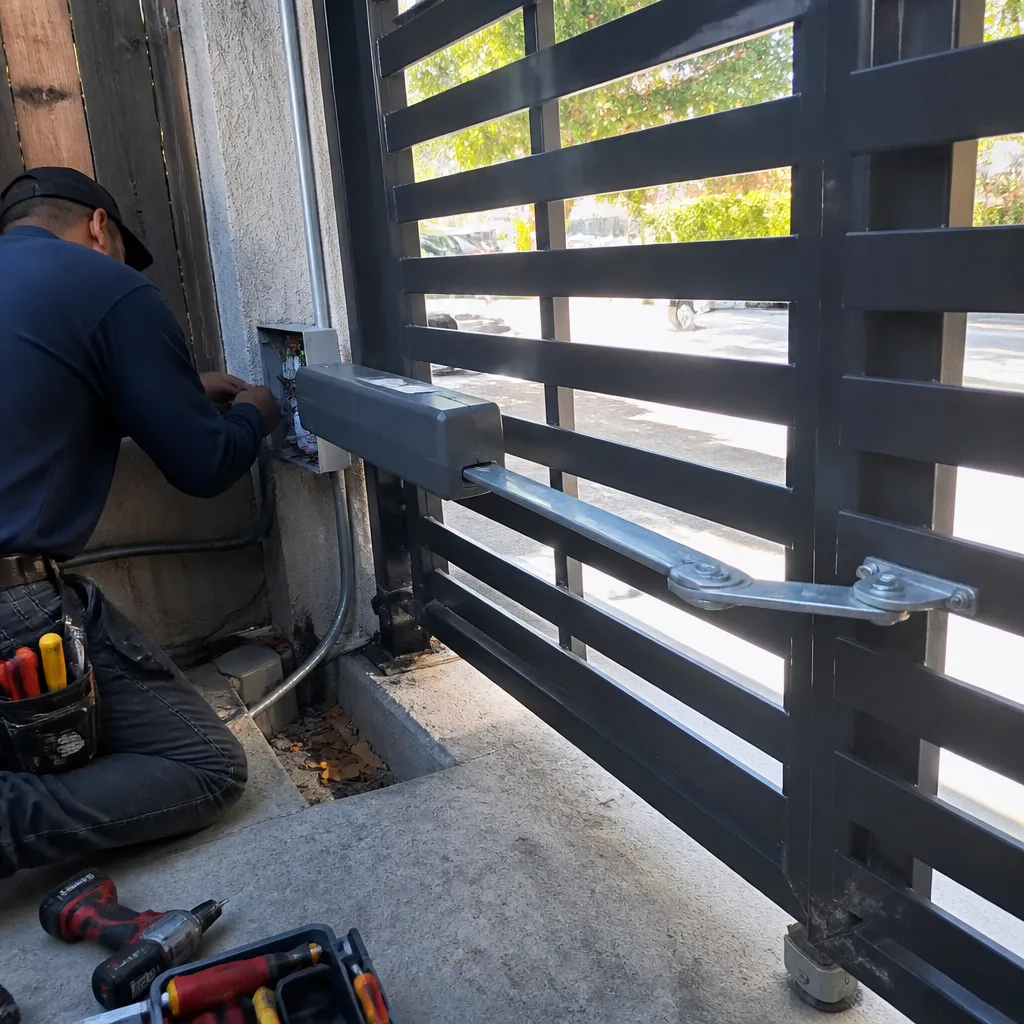 After
AfterGate off its track
A gate that’s slipped off its track almost always means one of three things: a damaged or missing roller, a bent or broken track section, or a fastener that’s worked loose from the post. In most cases the gate is still visible and reachable, but it should not be forced, lifted, or run on the opener until a technician has looked at it. Doing so risks bending the frame, snapping a roller, or jamming the opener’s drive mechanism in a way that turns a one-part repair into a much larger one.
The track is what keeps the gate moving in a straight line. When that path is interrupted, even slightly, the gate shifts weight onto parts that aren’t built to carry it – rollers, hinges, the drive arm. The longer it runs that way, the more those parts wear. If the opener is still trying to cycle the gate and you can hear it straining, cut power to the unit at the breaker or unplug it at the outlet before anything else.
Why It Happens
Worn or Cracked Rollers
Rollers are the small wheels that ride inside the track channel. They’re usually nylon or steel, and they wear down with use, UV exposure, and road grit. When a roller cracks or its bearing seizes, it stops rolling and starts dragging, which can kick it sideways out of the channel entirely. You’ll often hear a grinding or scraping sound before the gate comes off – and when you look at the roller itself, you’ll see flat spots, cracks, or a wheel that spins rough or not at all.
Bent or Damaged Track
Track sections get knocked out of alignment by vehicles backing into them, heavy debris impact, or gradual ground movement shifting the concrete pad underneath. Even a bend of a few millimeters is enough to pop a roller out of the channel mid-travel. Look down the length of the track from one end – if it curves or kinks at any point instead of running straight, that’s your answer. The gate may have come off right at that spot.
Loose or Sheared Track Brackets
The track is held to the posts and the pad by brackets and bolts. Vibration from daily cycles works those fasteners loose over time, and corrosion can eventually shear them. When a bracket lets go, the track drops or tilts and the gate slides out of the channel almost immediately. You’ll typically find the track sitting at an angle rather than flush against the post, and you may see the bracket hanging or missing entirely.
Gate Frame Shift or Settling
Post movement is slower and easier to miss. If the ground underneath a post heaves, settles, or erodes, the post leans and the track geometry changes with it. The gate may have run fine for months, slowly getting rougher, before finally jumping the track. A good indicator: the gap between the gate bottom and the ground is noticeably uneven from one end to the other, or the gate has been dragging on one side for a while before it came off.
What to Do Right Now
- Stop running the opener. Cut power to the unit at the wall outlet or at the breaker. A gate that’s off its track and still being driven by a motor can bend the drive arm, strip the rack gear, or damage the opener itself.
- Don’t try to lift or push the gate back onto the track manually. Sliding gates are heavy – some residential models run 300 to 600 pounds – and a gate that isn’t properly seated can shift suddenly and cause a serious injury.
- Leave the gate where it stopped. If it’s partially blocking a driveway, use a cone or park a car to signal the hazard, but resist the urge to shove it. Moving it by hand can cause the bottom of the gate to dig into the track or concrete, adding damage.
- Take photos before you touch anything. A clear shot of the track, the rollers, the brackets, and wherever the gate left the channel gives your technician a head start and helps confirm the scope of the repair before they arrive.
- Note what you heard or saw just before it happened. A scraping sound, a sudden stop, a grinding noise – that sequence often tells a technician exactly which part failed first. Write it down or leave yourself a voice memo.
How We Fix It
When your local Calder Gate Repair technician arrives, the first thing they do is walk the full track – not just the spot where the gate came off. A gate rarely jumps its track for one reason only, and fixing only the obvious point without checking the rest means it comes off again in two weeks.
They’ll check every roller for wear and bearing condition, test each track bracket for tightness and corrosion, measure the track alignment with a level, and inspect the drive arm and rack if an opener is involved. If the track is bent, they’ll assess whether it can be straightened on-site or needs a section replaced. Rollers are almost always swapped out rather than patched.
Before any of that work starts, you get a written price. The number on that paper is the number on the invoice – no additions at the door. The repair is covered by Calder’s 365-Day Done Right Promise: if the repair isn’t right within that window, we come back and make it right, with a free second visit included. The work falls under our Gate Repair service, and in cases where the opener was running during the failure, our technicians will inspect the drive system as part of the same visit. Most track and roller repairs are completed in a single appointment.
Frequently Asked Questions
It’s a real safety risk and it shouldn’t be left running. A gate that isn’t seated in its track can fall, shift suddenly, or be pushed by wind in a way a properly tracked gate cannot – and the opener, if it’s still powered, will keep trying to cycle a gate that has no business moving. Even if the gate seems stable sitting still, the longer it stays off the track, the more stress goes onto the frame, hinges, and any hardware still in contact with the channel. Call (903) 417-0793 and get someone out as soon as you can.
In most cases, yes. A live person answers at (903) 417-0793 around the clock, and they can check your local Calder team’s availability and give you an actual arrival time, not a four-hour window to clear your schedule around. Call now and we’ll tell you exactly when to expect someone.
It depends on how long it ran and what type of opener you have. A rack-and-pinion drive is especially vulnerable because the drive arm pushes against the rack – if the gate isn’t moving freely, that force goes somewhere, and it usually goes into the arm, the gear, or the motor itself. Your technician will check the opener as part of the visit. If there’s damage, it’ll be identified before any work starts and included in the written estimate.
The honest answer is that it depends on which parts failed – rollers only, track section replacement, bracket hardware, or some combination. Calder doesn’t quote prices before we’ve seen the gate, because a number guessed over the phone is rarely the right number. What we can tell you is that every customer gets a written price before anything starts, and that price is what you pay – no adjustments at the end of the job. Call (903) 417-0793 and we’ll get a technician out for a proper look, free of charge.
Get It Fixed
Your local Calder Gate Repair team is ready. Call (903) 417-0793 – a real person picks up, day or night – or book online and get a live arrival time you can track to the door. Written price before we start, 365-Day Done Right Promise on every repair.
Written by Nico Alvarez, Owner & Lead Technician at Calder Gate Repair, part of the Relay Home Co. family since 2009.
What Our Customers Say
"Good job on the motor. Part took a few days to arrive, but the updates came by text."
- Oscar J."Safety sensors realigned. Works fine. Photo eyes were dirty and out of line. Gate now stops when it should."
- Raul A."Booked online. The tech texted his ETA and arrived on time. Gate opener was dead; he replaced the control board and tested the sensors."
- Terry W.