

Free on-site gate assessment - hinges, posts, and your LiftMaster or Nice gate operator checked before anything is quoted
The assessment is free and the quote is the invoice.


 Before
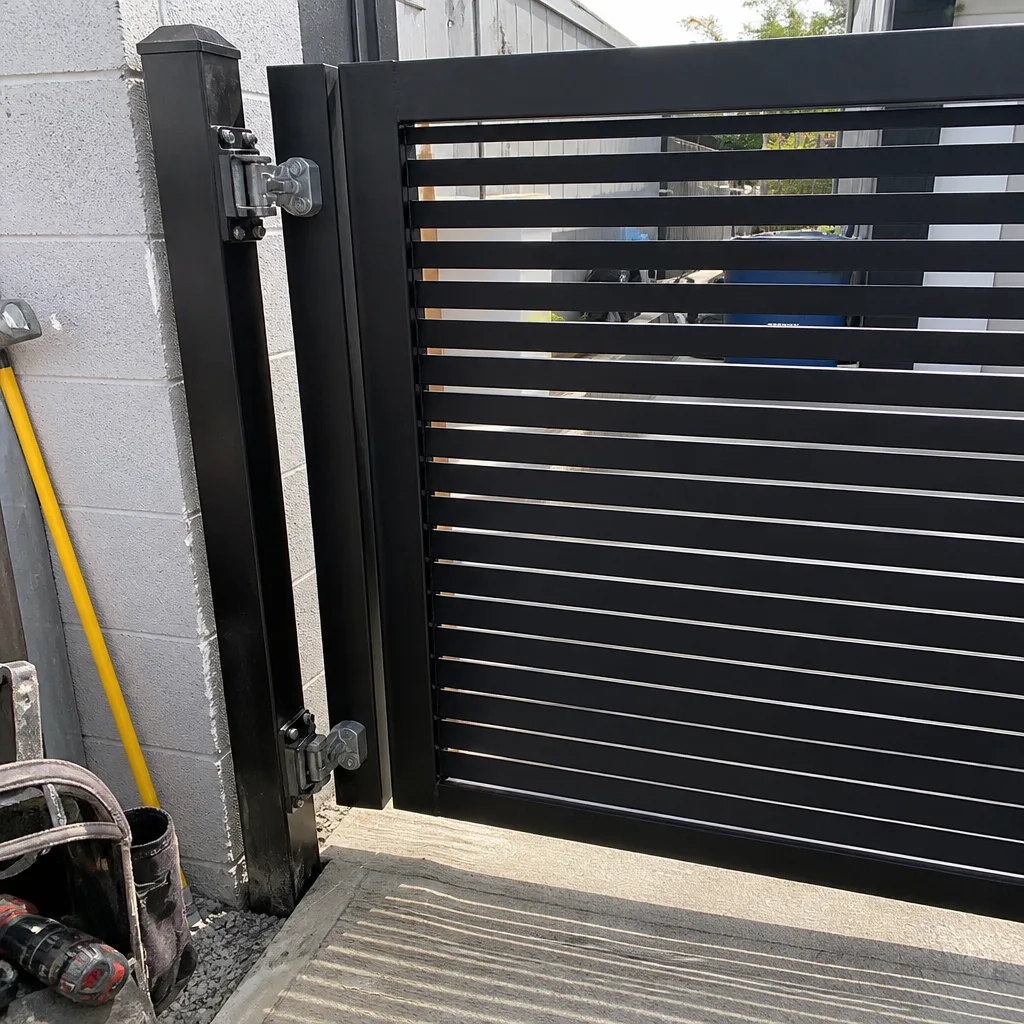 After
After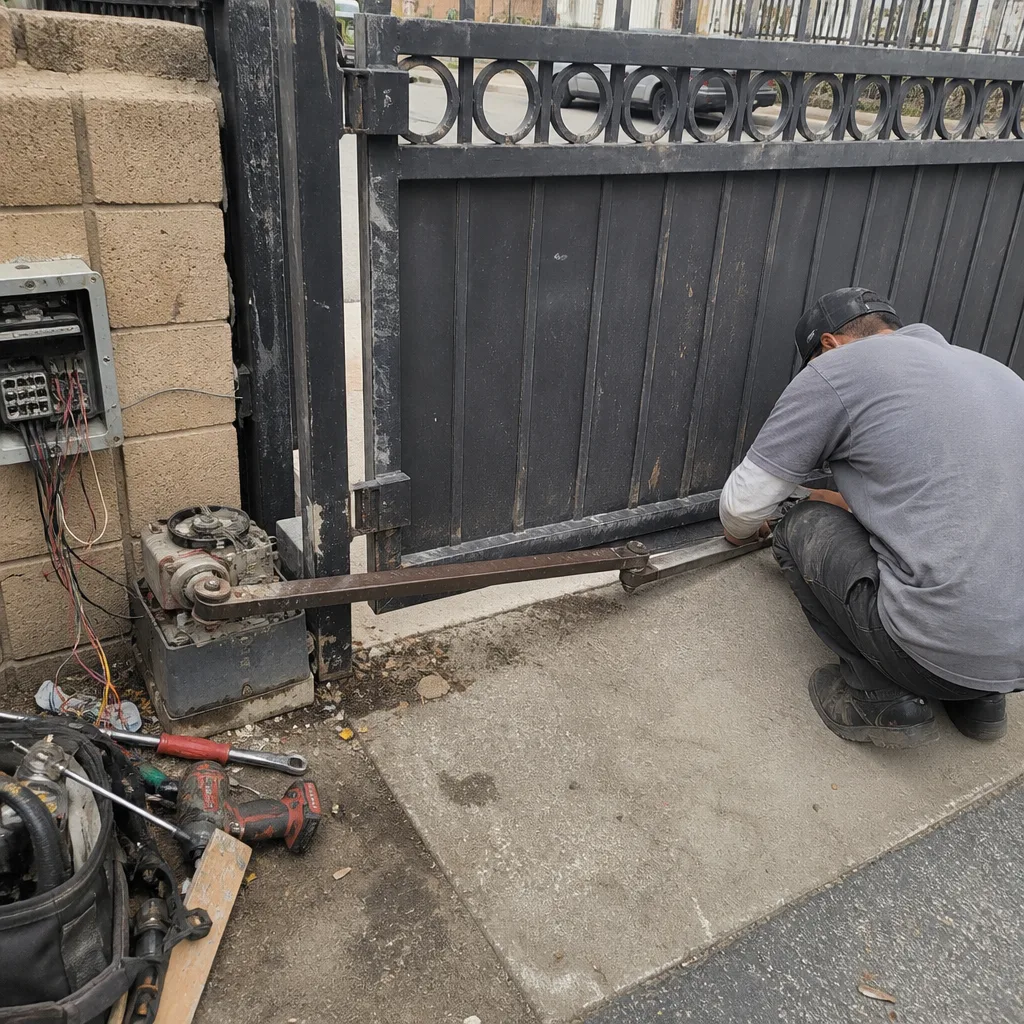 Before
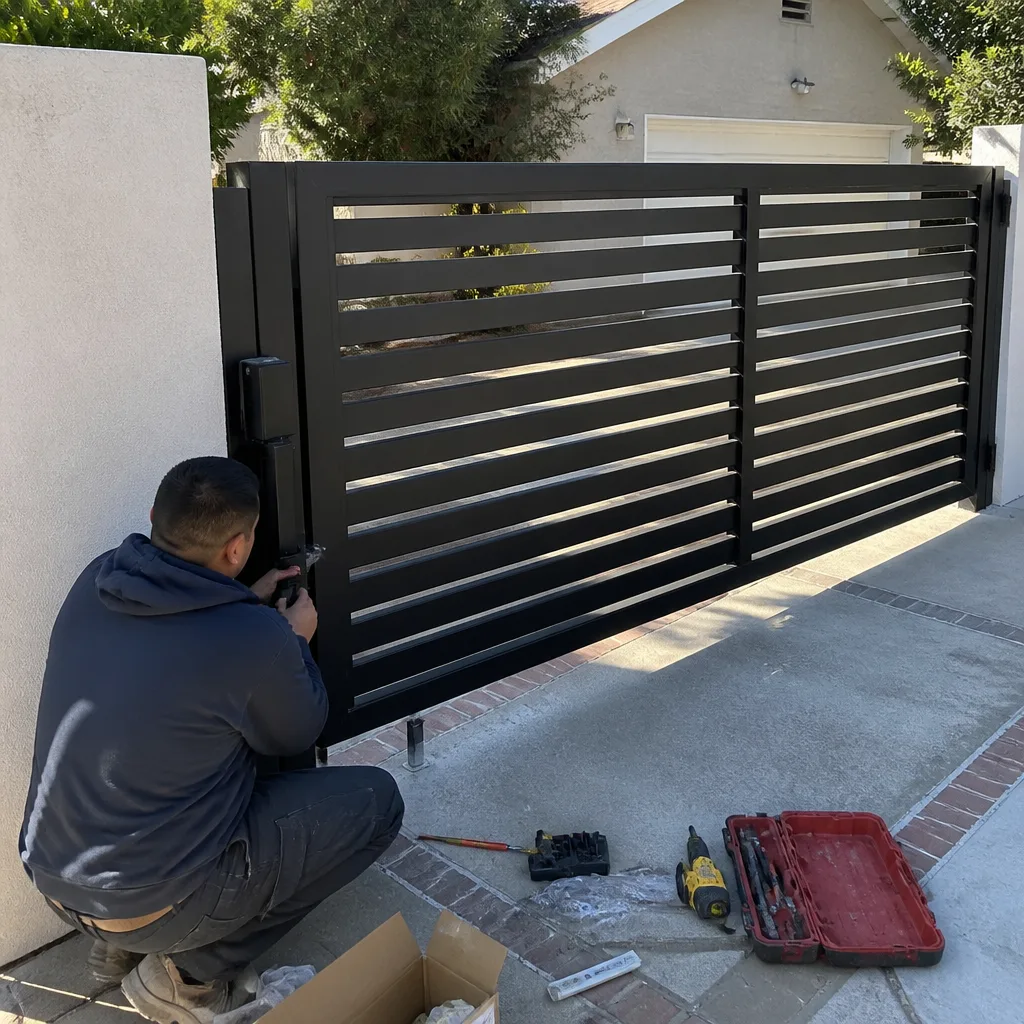 After
After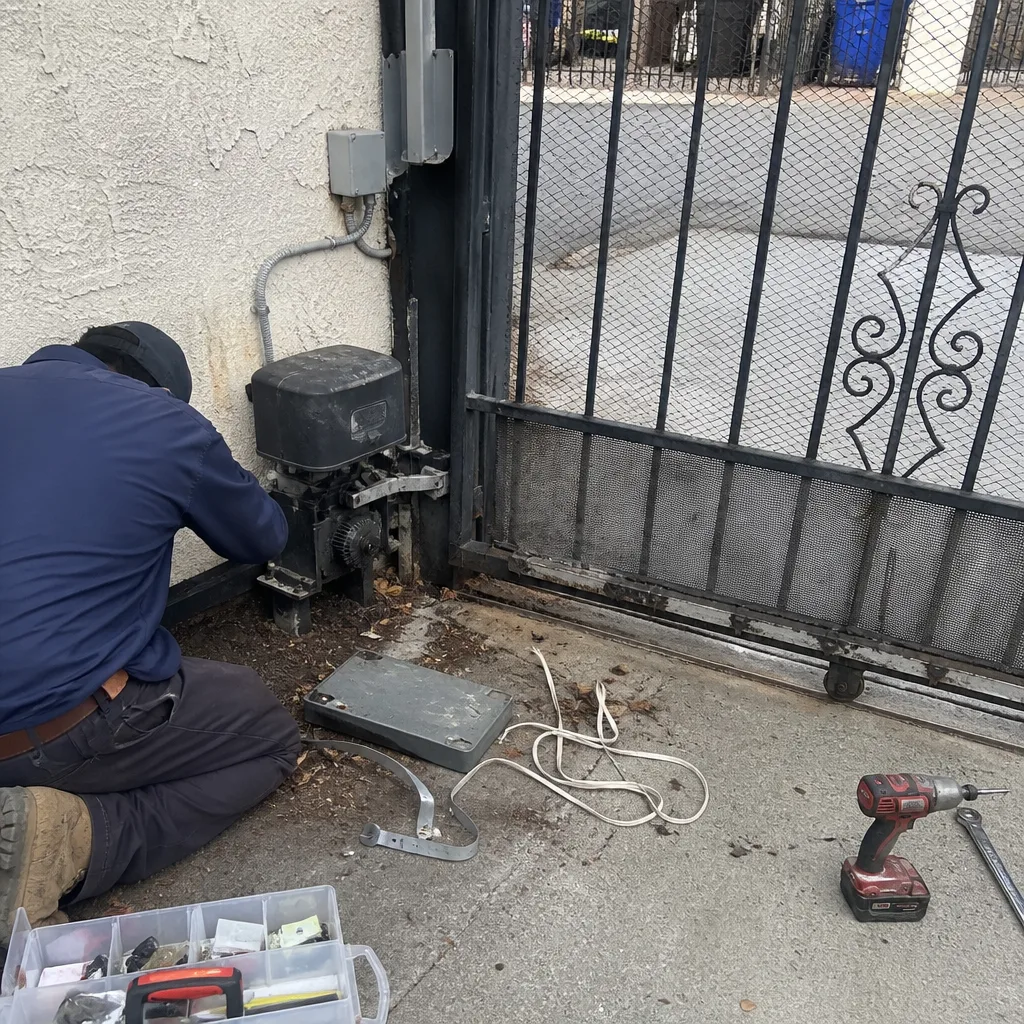 Before
 After
AfterGate Reverses Immediately
When a gate starts to move and then immediately reverses direction, the opener’s safety system has detected something it doesn’t like – a misaligned sensor beam, an obstruction in the path, or a limit switch that’s telling the motor it’s already at the end of travel when it isn’t. In almost every case, the gate itself is fine; the problem is in the control logic or the safety hardware that protects it. A trained technician can usually diagnose the exact cause in under an hour.
The reversal is actually the opener doing its job – it sensed a problem and stopped rather than forcing the gate into something or someone. That’s the good news. The less good news is that “sensed a problem” covers a wide range of causes, from a leaf sitting in front of a photo eye to a failing control board. The steps below will help you narrow it down before anyone arrives, which usually means a faster fix.
What’s Happening
A gate that reverses immediately after it starts moving has triggered one of its built-in safety responses. The opener is not broken in the dramatic sense – it’s stopping itself because something in the signal chain told it to. The three most common triggers are blocked or misaligned safety sensors, a limit switch set to the wrong position, or a physical obstruction the motor can feel as resistance. A quick look at the sensor lights and the gate’s travel path will usually tell you which category you’re dealing with.
What you won’t know just from watching is whether the sensor is misaligned by a quarter-inch or whether the control board is sending a false fault signal on its own. That distinction matters because one fix takes two minutes and the other takes parts. A written diagnosis from a technician is the only reliable way to know what you’re actually paying for before the work starts.
Why It Happens
Misaligned or Blocked Photo-Eye Sensors
Photo-eye sensors sit low on each side of the gate opening and fire an invisible beam across the gap. If that beam is broken or misaligned, the opener reads it as an obstruction and reverses. You can usually spot this immediately: look at the two small sensor housings on either post and check whether both indicator lights are solid (green on the receiver, amber on the sender is a typical LiftMaster or Viking setup). A blinking or off light means the beam isn’t landing. Mud, a cobweb, a fallen branch, or a post that shifted slightly after rain are the usual culprits.
Limit Switch Set Incorrectly
The limit switch tells the opener “this is fully open” and “this is fully closed.” When it’s out of calibration – either from vibration over time or from a previous adjustment that was slightly off – the motor thinks the gate has already reached its end point the moment it starts moving, so it reverses. You’ll notice this more after the gate has been serviced recently, or after a power outage that reset the opener’s memory. There’s nothing visually obvious to spot here; the gate will just reverse cleanly with no grinding or hesitation.
A Physical Obstruction or Mechanical Resistance
Openers have a force-sensing function that monitors how hard the motor is working. If the gate hits something or drags against debris, a warped track, or a hinge that’s seized, the opener interprets that resistance as a safety fault and reverses. Walk the full travel path and look for anything touching the gate leaf – a rock, a root that’s grown under a swing gate, or a roller that’s jumped its track on a sliding gate. You’ll often hear a brief grinding or scraping sound right before the reversal if this is the cause.
Control Board or Wiring Fault
Less common but more frustrating: the control board itself sends a false safety signal with no real obstruction present. This tends to show up after a power surge, after moisture gets into the control box, or simply as a component reaches the end of its useful life. If you’ve cleared the sensor path, checked for obstructions, and the sensors both show solid lights, a board fault is a reasonable next suspect. There’s no safe homeowner test for a live control board – this one needs a technician with the right diagnostic equipment.
What to Do Right Now
- Stop cycling the gate. Repeatedly sending the open command while the fault is active stresses the motor and can wear the drive mechanism faster. One or two test cycles to confirm the symptom is enough.
- Check both sensor lights. Walk to the gate opening and look at the two photo-eye housings near the ground. If either light is off or blinking, that’s your most likely cause. Clear anything sitting in front of the lenses and gently wipe the lens face with a dry cloth. Don’t adjust the mounting brackets yourself unless the sensor is visibly knocked sideways – getting alignment right usually takes a tool and a helper.
- Walk the full gate path. Look for anything the gate could be touching or dragging on: rocks, roots, swollen timber, a hinge that’s shifted. If you find an obvious physical obstruction, remove it – that’s safe. Don’t try to force the gate past resistance by hand.
- Photograph what you find. A photo of the sensor lights, the travel path, and any visible damage gives your technician a head start and makes the diagnosis faster. Your local Calder Gate Repair team may ask for these when you call.
- Leave the gate in whatever position it stopped. If it stopped mid-travel, don’t try to manually force it to a closed or open position. Some gate arms and slide mechanisms store tension, and forcing them by hand can cause injury. Call instead and ask the dispatcher what’s safe to do in the meantime – the line is answered by a live person around the clock.
How We Fix It
When your local Calder Gate Repair technician arrives, the first thing they do is run through a systematic diagnostic – sensors, limit settings, force calibration, wiring continuity, and a visual inspection of the mechanical path. They’re factory-familiar with nine major brands including LiftMaster, FAAC, BFT, Linear, Viking, Ghost Controls, DoorKing, Elite, and Mighty Mule, so they’re not guessing at menu structures or hunting for adjustment screws.
Before anything is touched, you receive a written price. That number doesn’t change when the invoice arrives – that’s not a policy we bend.
Most sensor and limit-switch repairs are resolved in a single visit, often under two hours. A control board replacement takes longer depending on parts availability, but your technician will tell you that upfront. The work falls under our electric gate repair and gate opener repair services, and every repair is covered by the 365-Day Done Right Promise: if it’s not right, we come back and make it right – at no charge. That’s in writing on every job, not just mentioned at the door.
Frequently Asked Questions
It depends on what’s causing it. A gate stuck mid-travel or one that reverses unpredictably is a security gap – your property isn’t secured the way it should be. If the reversal is violent or the gate is moving erratically, stop using it entirely until it’s inspected; a gate arm under unexpected tension can cause injury. If it’s simply reversing cleanly and sitting still, the risk is lower, but it still needs attention soon. Call (903) 417-0793 and a live person can help you decide how urgently to schedule.
If your gate is stuck open, don’t wait – an unsecured entry is a real problem, not a cosmetic one. If it’s stuck closed and you have another way in and out, you have a bit more flexibility, but “a few days” tends to stretch, and in the meantime the underlying fault can put more strain on other components. Call (903) 417-0793 to check availability with your local team – the sooner you call, the sooner we can get someone scheduled.
Yes – always. Your technician diagnoses the problem, then gives you a written price before any work begins. The number on the invoice is the number you agreed to at the door. There are no add-ons discovered mid-repair, no “while we were in there” charges. If you decide not to proceed after seeing the written price, that’s your call to make.
Yes. If both sensor lights are solid and there’s nothing in the gate’s path, the next suspects are a limit switch out of calibration or a control board sending a false fault. Both are diagnostic tasks that require the right tools and familiarity with your specific opener brand. Your Calder technician works across nine major brands and carries the diagnostic equipment to test each of these systematically – no guessing, no parts-swapping to see what sticks.
Get It Fixed
Call (903) 417-0793 – a live person picks up, day or night – or book online in under a minute. Your local Calder Gate Repair team will confirm a trackable arrival time, arrive in uniform, and put the written price in front of you before touching anything. Your gate, fixed and tracked to the door.
Written by Nico Alvarez, Owner and Lead Technician at Calder Gate Repair, part of the Relay Home Co. family serving communities nationwide since 2009.
What Our Customers Say
"Keypad and remotes reprogrammed in one visit. Paid by link."
- Pauline C."Good job on the motor. Part took a few days to arrive, but the updates came by text."
- Oscar J."Safety sensors realigned. Works fine. Photo eyes were dirty and out of line. Gate now stops when it should."
- Raul A.