
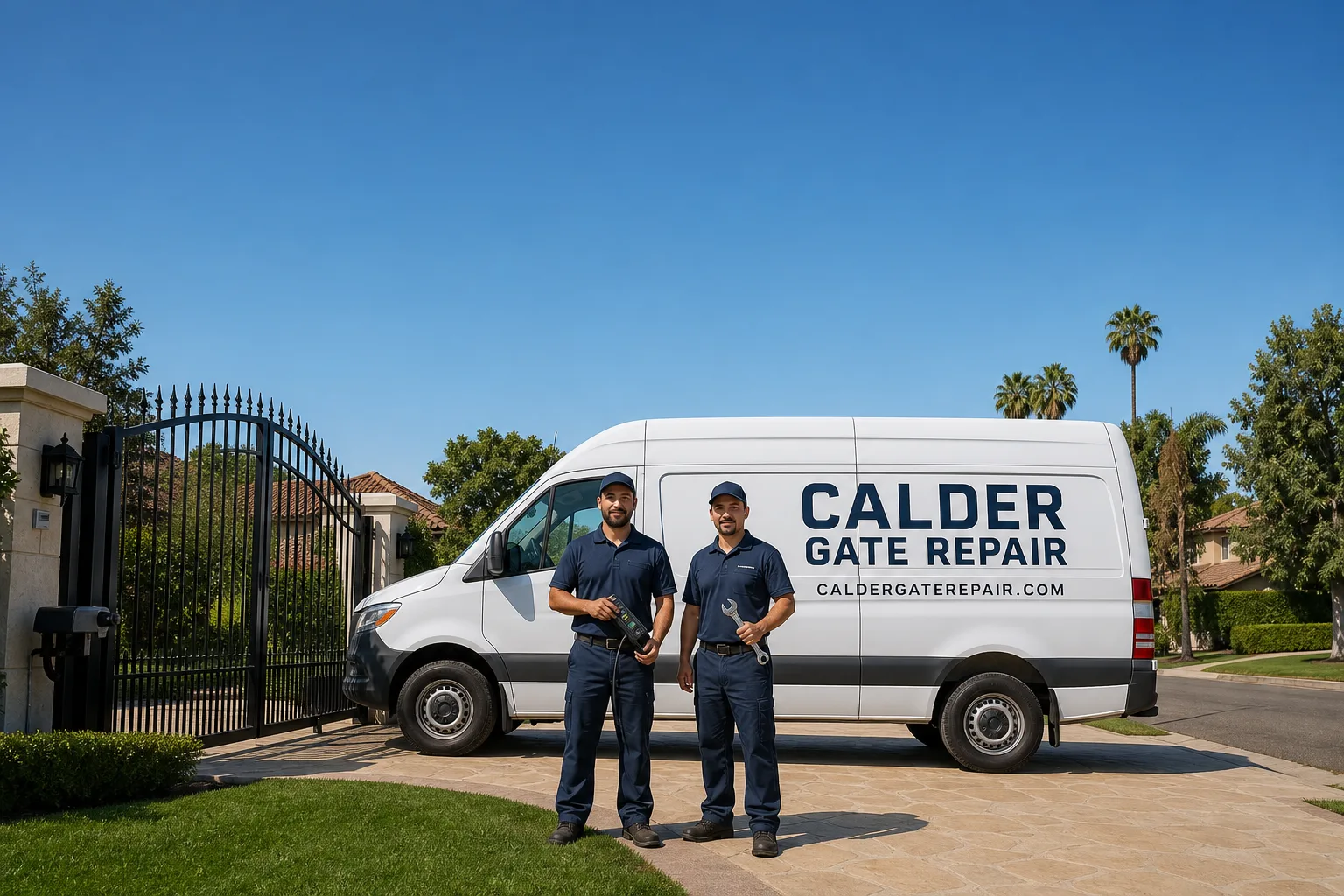
Free on-site gate assessment - hinges, posts, and your LiftMaster or Nice gate operator checked before anything is quoted
The assessment is free and the quote is the invoice.

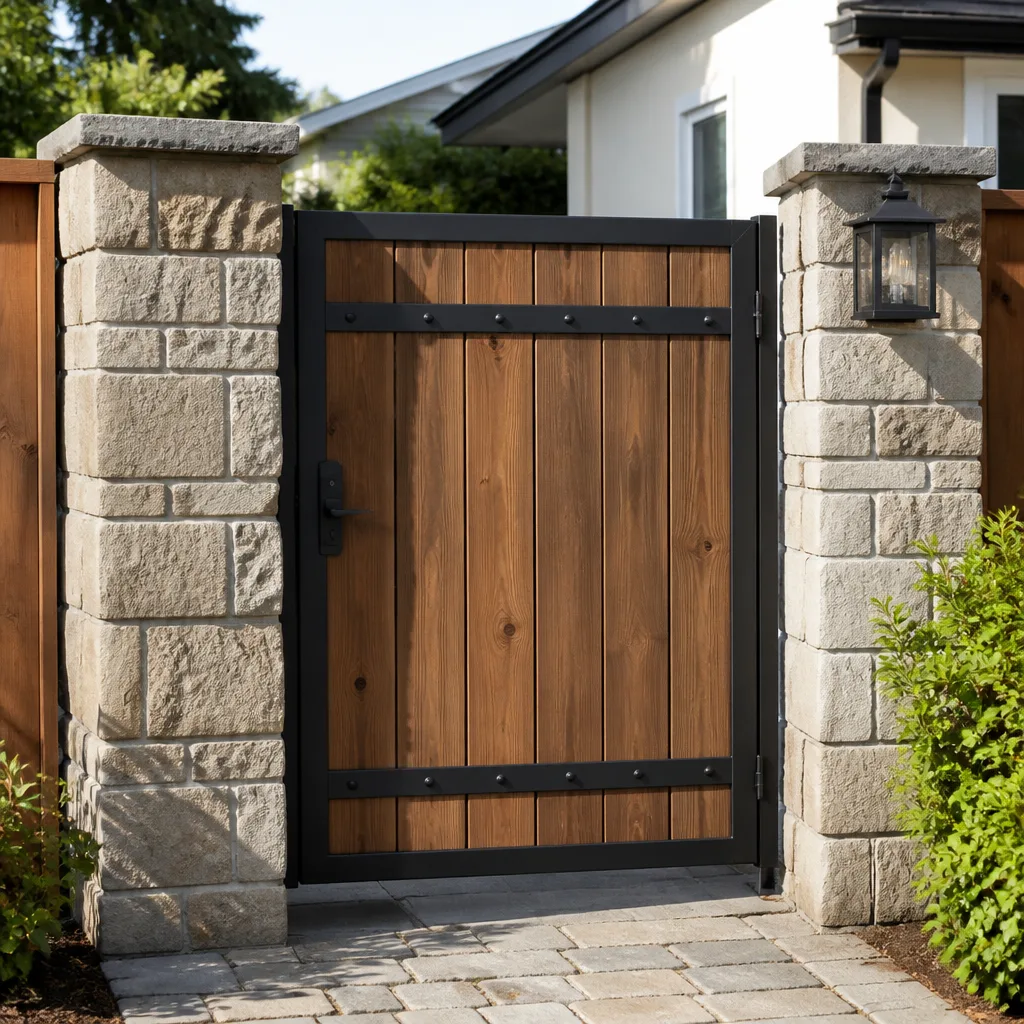

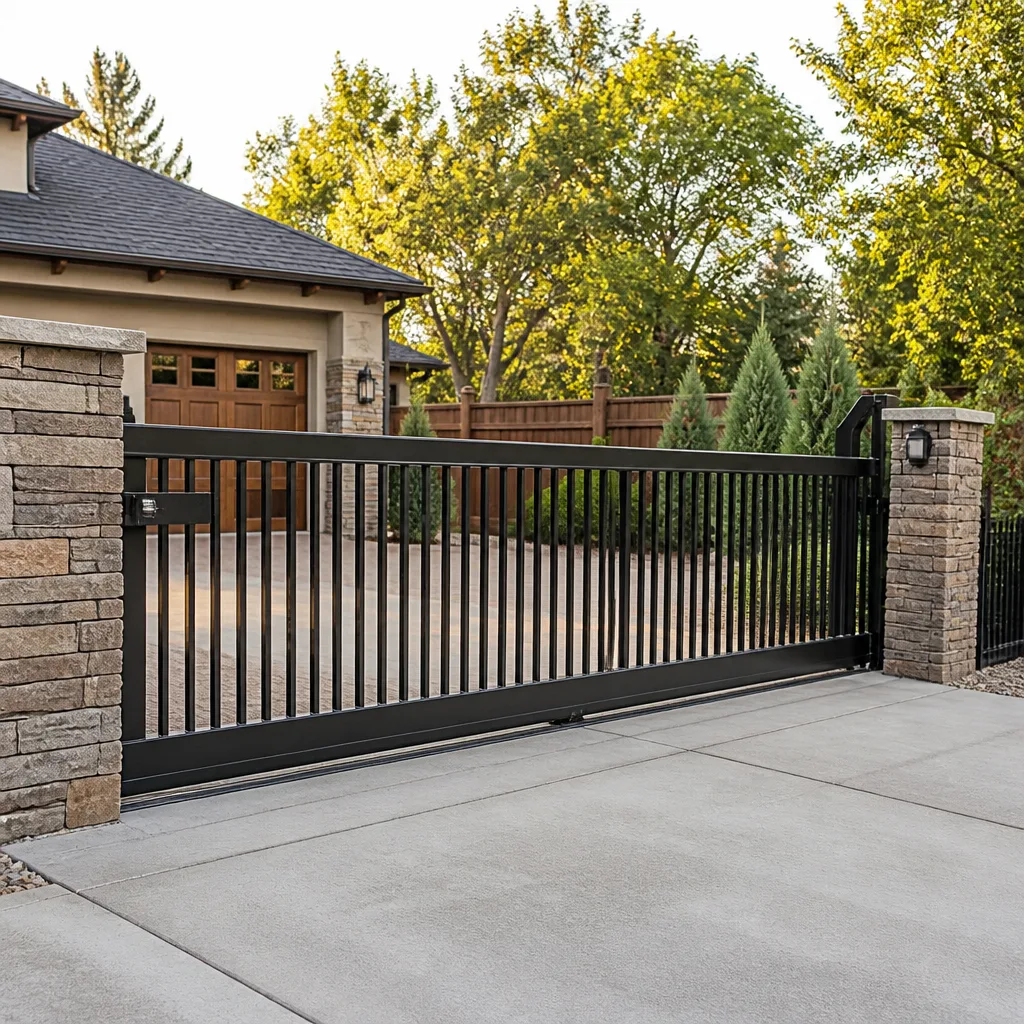
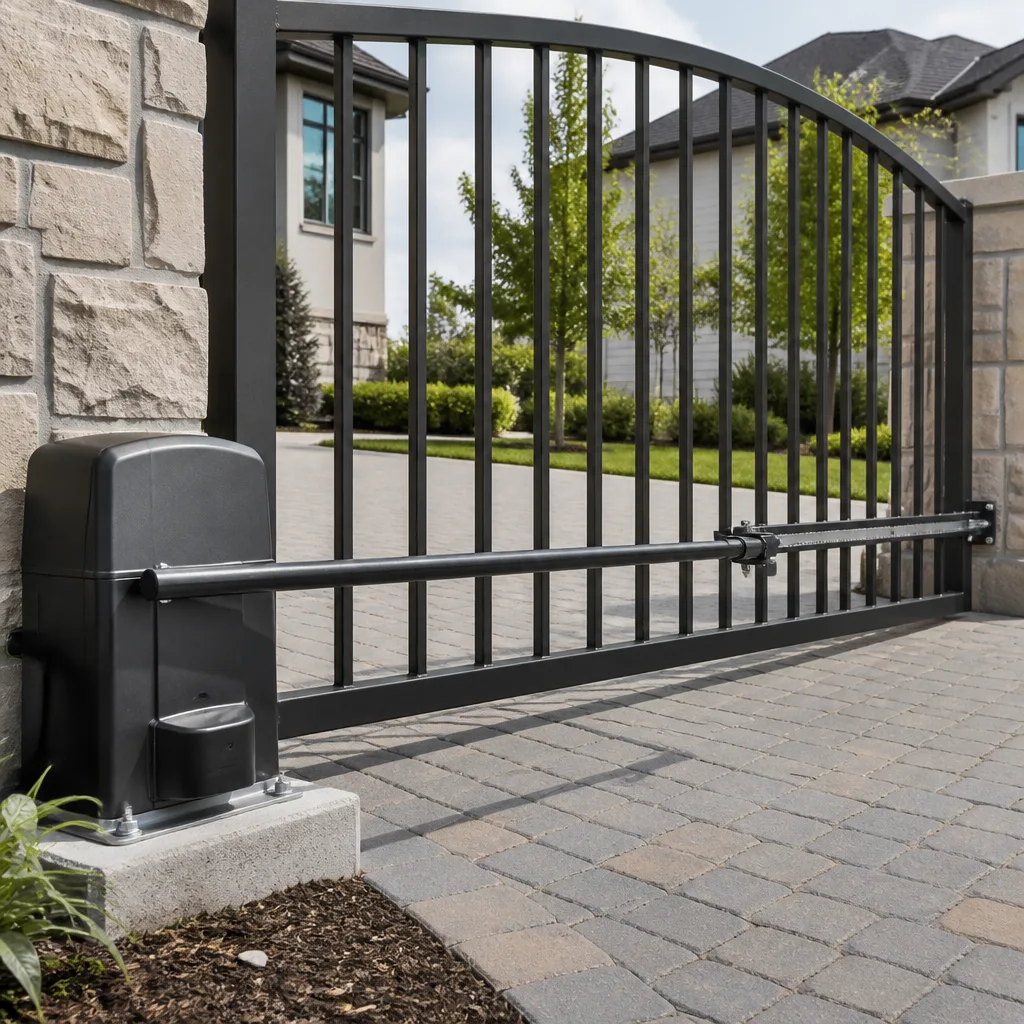
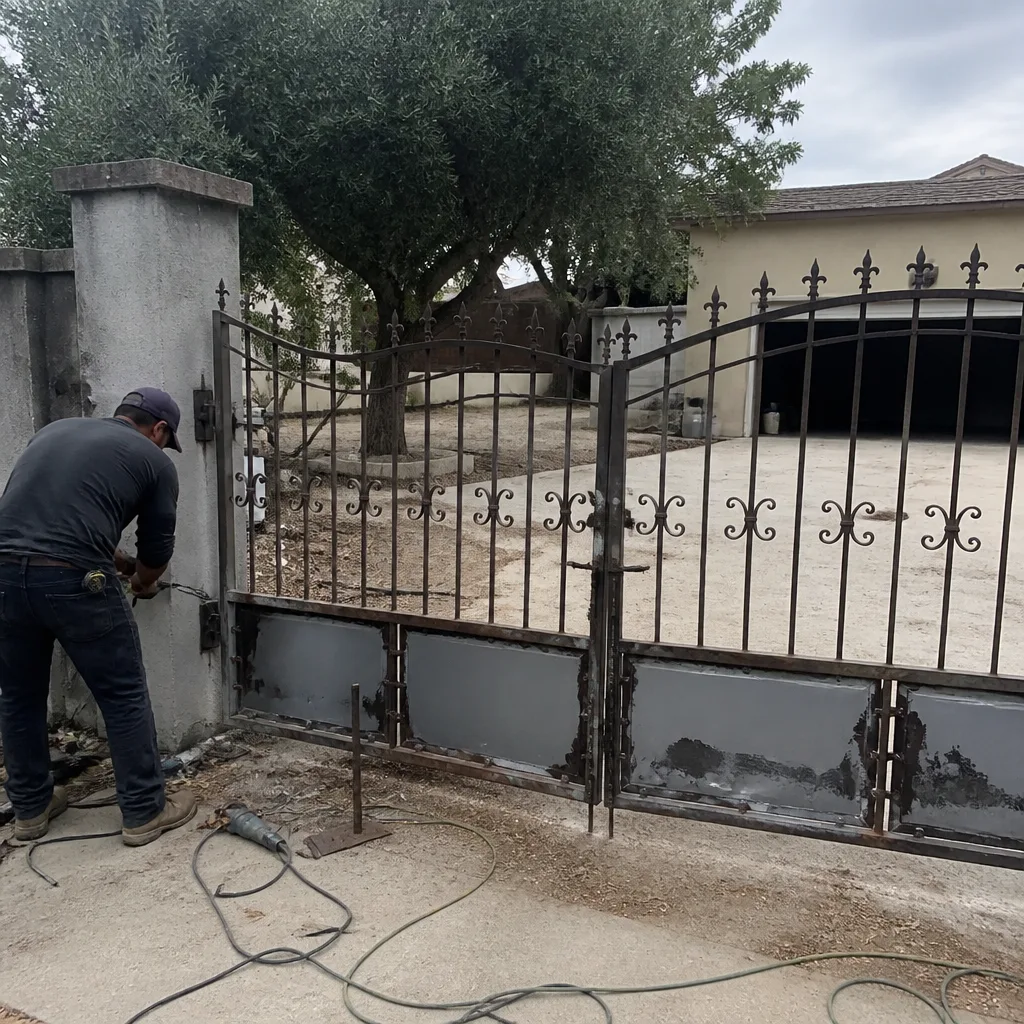 Before
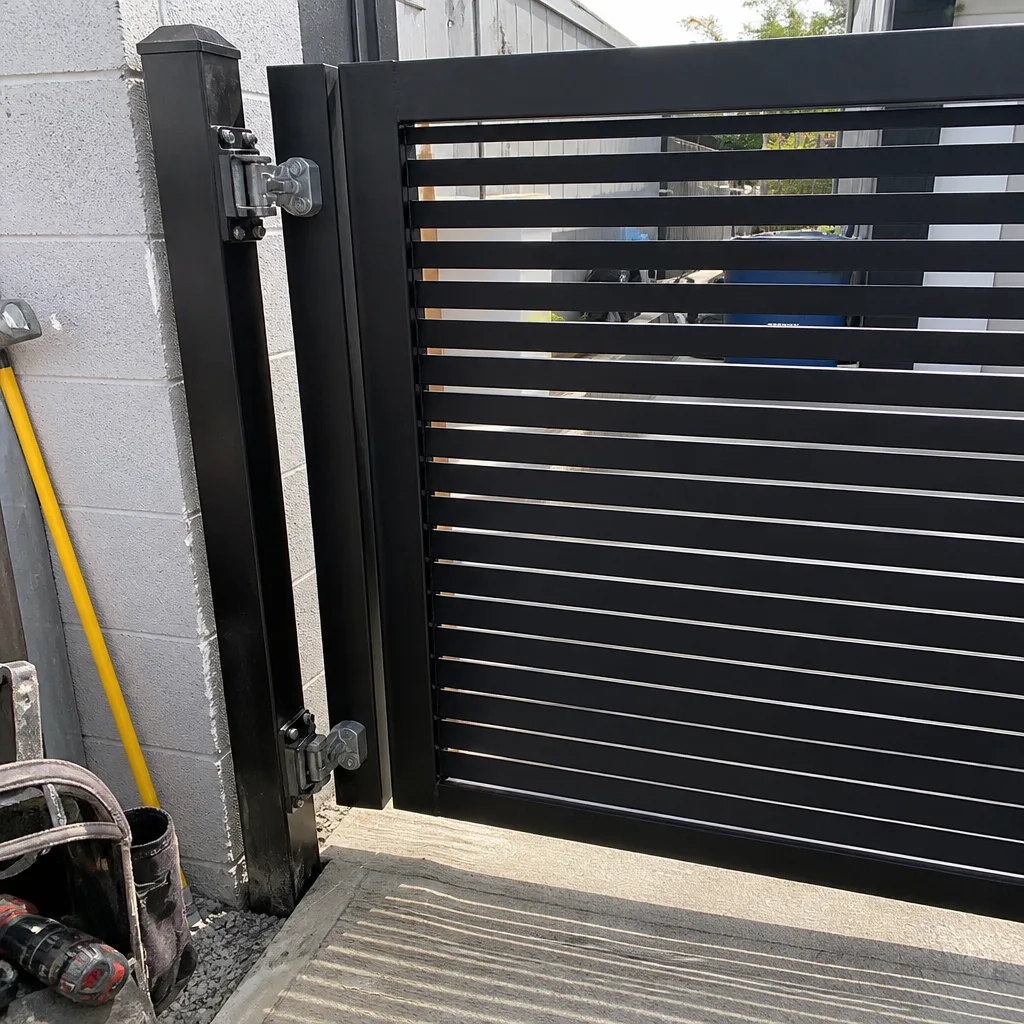 After
After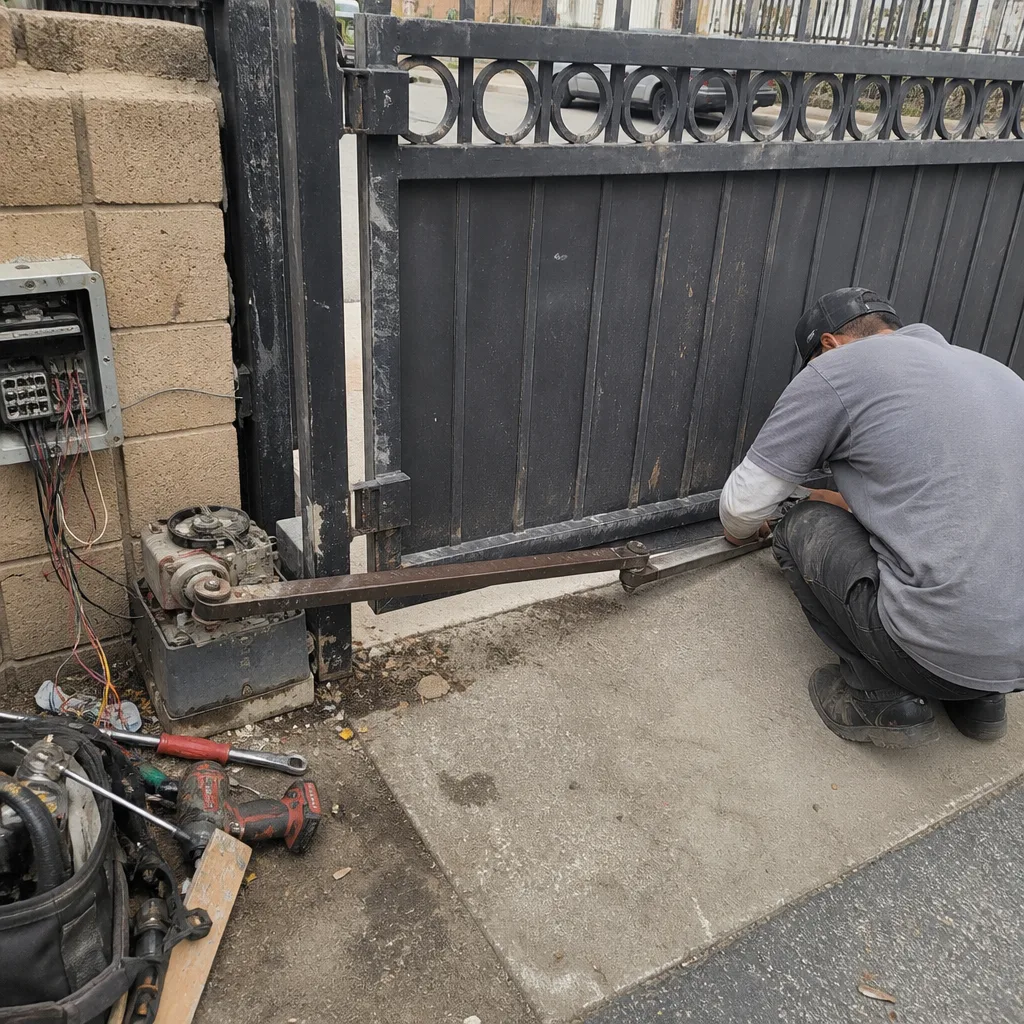 Before
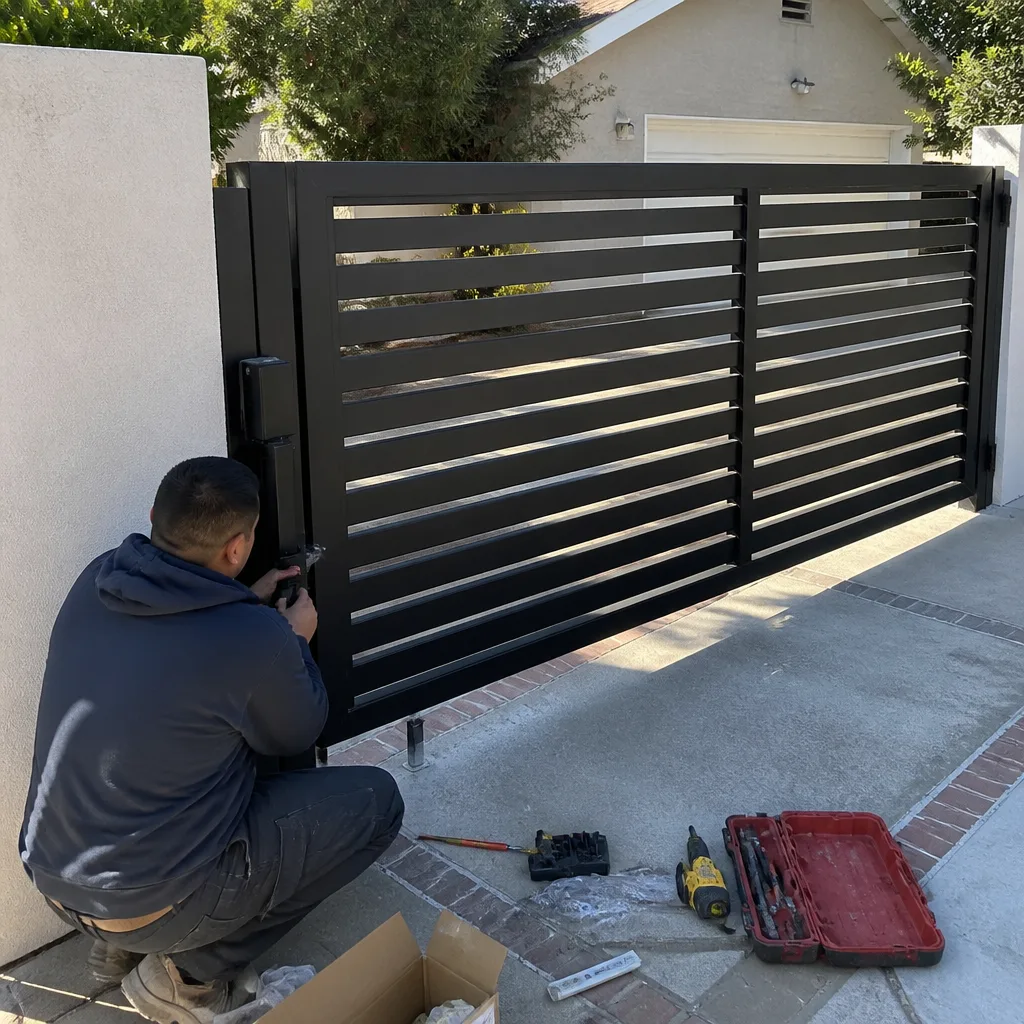 After
After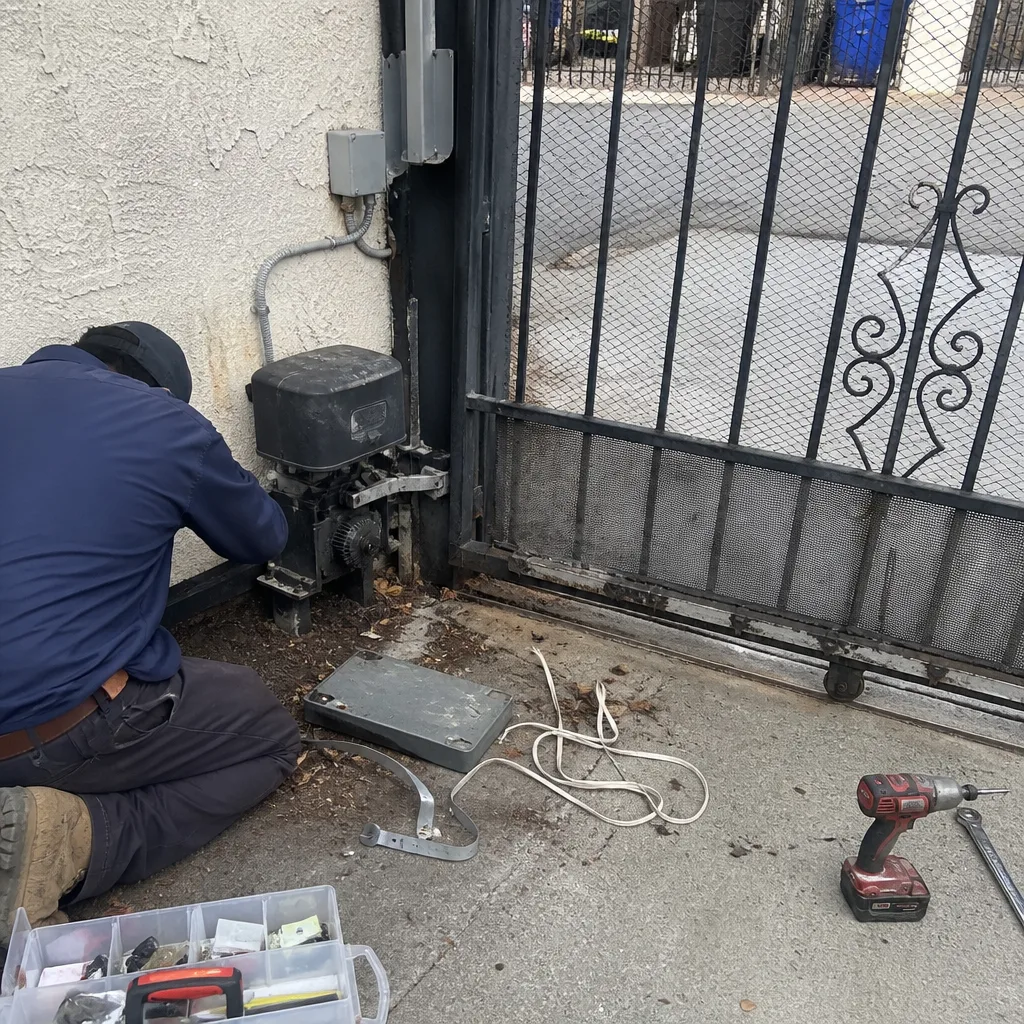 Before
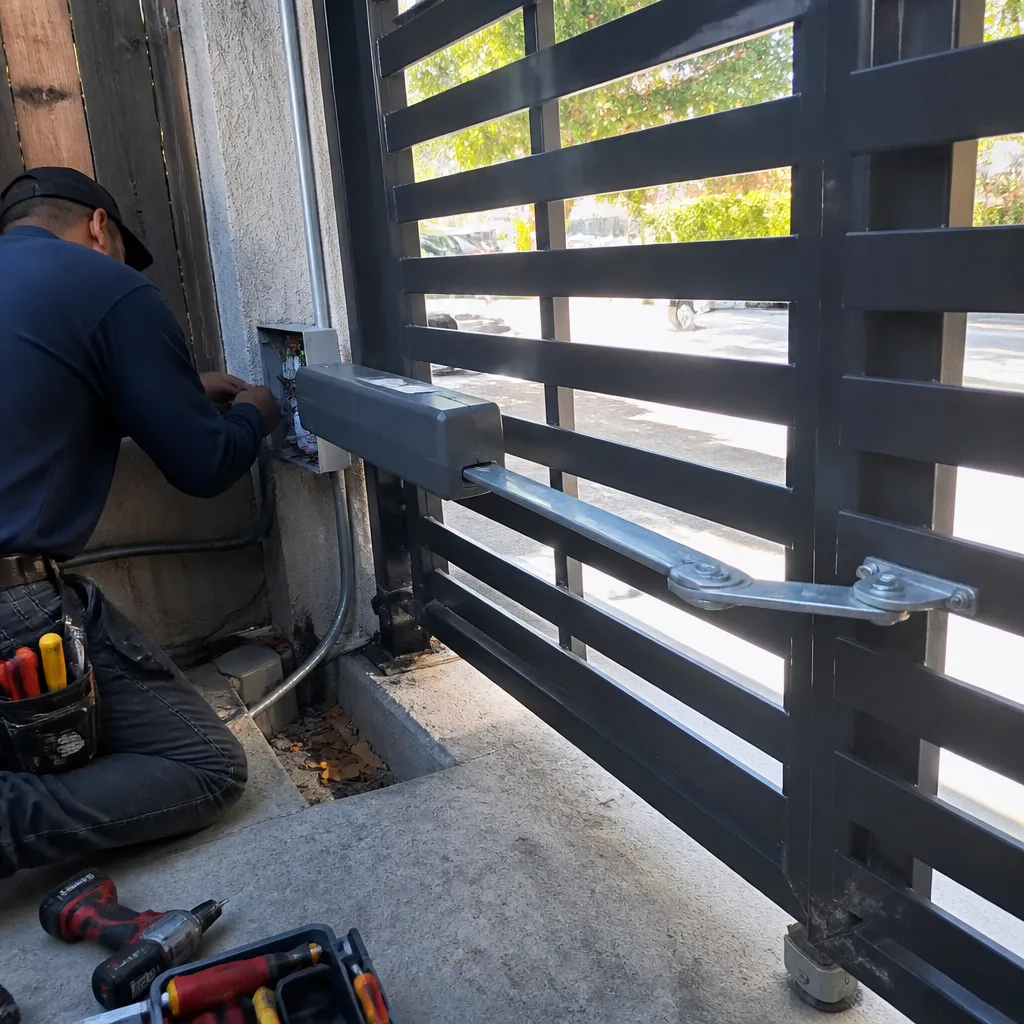 After
AfterLoud Grinding When the Gate Moves
What’s Happening
A loud grinding noise when your gate moves almost always means metal is making contact with metal in a way it shouldn’t – most commonly a worn or dry drive gear inside the gate opener, a rack-and-pinion system running without lubrication, or debris caught in the drive track. This is a mechanical fault, not a minor quirk, and running the gate while it grinds accelerates the damage.
The good news is that a grinding gate is almost always fixable in a single visit once a technician identifies the source. The bad news is that the longer you keep cycling it, the more components get pulled into the damage. A worn gear that costs a straightforward repair today can shear teeth off the rack next week, which is a bigger job. Stop using the gate while it grinds, and get a technician to look at it soon.
Why It Happens
Worn or Stripped Drive Gear
Inside most electric gate openers sits a drive gear – usually nylon or plastic – that meshes with a metal worm gear or rack to move the gate. These gears wear gradually, but they wear faster when lubrication dries out or when the gate itself is heavier than the opener was rated for. When the teeth on the drive gear strip, you get a coarse grinding or skipping sound that’s loudest at the beginning and end of travel. If the gate moves inconsistently – starts, jolts, or hesitates mid-run – a stripped gear is a likely culprit.
Dry or Damaged Rack and Pinion
Sliding gates run on a toothed metal rack along the bottom of the gate. The opener’s pinion gear rolls along this rack to push the gate open or closed. If the rack loses its lubrication – which happens over months of weather exposure – the metal-on-metal friction produces a grinding that gets louder the faster the gate moves. You can often spot this one yourself: crouch down and look at the bottom of the gate. If the rack looks dry, dirty, or if individual teeth appear bent or chipped, that’s your source.
Debris or Obstruction in the Track
Gravel, a small rock, compacted leaves, or even a warped section of the gate track can force the gate’s rollers or the rack to grind against something solid. This type of grinding tends to be intermittent – loud when the gate hits the obstruction, quieter before and after. Walk the track slowly and look for anything that shouldn’t be there. A visible obstruction you can safely remove by hand is worth clearing before the technician arrives, but don’t force the gate through anything that’s causing real resistance.
Failing Gate Rollers or Hinges
On sliding gates, the rollers that carry the gate along the track develop flat spots and pitting over years of use. On swing gates, hinges can corrode or lose their grease and begin to bind under the gate’s weight. Both produce a grinding or scraping sound, but roller noise tends to be rhythmic – you’ll hear it in a pattern as each roller passes through its rotation. Hinge noise on a swing gate is usually louder at the start of movement, before the metal warms and loosens slightly. Neither is dangerous to observe, but both will get worse if left alone.
What to Do Right Now
- Stop cycling the gate. Every movement while it’s grinding risks turning a gear or roller repair into a full component replacement. If you need the gate in a fixed position – open or closed – move it there once, then leave it.
- Walk the track and look for visible obstructions. Rocks, gravel, wood chips, and compacted debris are common causes and safe to remove by hand. Clear what you safely can without forcing anything.
- Look at the rack without touching it. Check whether the toothed bar along the bottom of a sliding gate appears dry, rusty, or has visibly damaged teeth. Take a photo – your technician will want to see the condition before they adjust anything.
- Photograph or video the grinding in action. A short phone video of the gate moving, capturing where in the travel the noise peaks, is genuinely useful diagnostic information. It helps the technician arrive with the right parts instead of having to make a return trip.
- Do not attempt to open or adjust the gate opener’s internal housing. Inside most openers are components under mechanical tension or live electrical current. The internal gears are not a homeowner-serviceable part – leave the housing closed and let a trained technician do the diagnosis safely.
How We Fix It
When your local Calder Gate Repair technician arrives, the first thing they do is run the gate through a full cycle and listen. Experienced ears narrow the source fast – a grinding that peaks mid-travel sounds different from one that spikes at the end-stop, and that difference points toward specific components before a single panel is opened.
From there, the technician inspects the drive gear, rack, rollers, and hinges in sequence, identifies the worn or damaged part, and gives you a written price before any work starts. That number doesn’t change at the end of the job. Our technicians are factory-familiar with nine major opener brands – LiftMaster, FAAC, BFT, Linear, Viking, Ghost Controls, DoorKing, Elite, and Mighty Mule – so they know where to look inside each model without guesswork.
Most grinding-noise repairs resolve under our gate repair or electric gate repair service. The repair is covered by the 365-Day Done Right Promise: if it’s not right, we make it right, and if the repair fails within that window, the second visit is free.
Frequently Asked Questions
It’s not immediately dangerous to people, but it is actively damaging your gate system every time you run it. A worn gear grinding against a rack strips teeth with each cycle, and what starts as a gear swap can become a rack replacement if you wait long enough. A few days of continued use can meaningfully change the scope of the repair. If you can leave the gate in a fixed position and stop cycling it, do that now, and get a technician out as soon as you can. Call (903) 417-0793 and a live person will answer – no voicemail, no call-back window.
Yes. A live person answers at (903) 417-0793 around the clock, every day of the year, and they can book your local Calder Gate Repair technician with a real, trackable arrival time – not a four-hour window. Grinding-noise calls are treated as active mechanical faults, not routine tune-ups, so availability is generally the same day for repairs.
You’ll receive a written price before any work starts – that’s a non-negotiable part of how every Calder job works, not an optional upgrade. The technician inspects the gate, identifies the fault, and gives you the number in writing. The figure on the invoice is the figure you agreed to at the start. There are no surprise charges added after the fact.
Every repair Calder does is covered by the 365-Day Done Right Promise: if the repair isn’t right, we make it right, and if the problem recurs within that period, the return visit is free. That promise is in writing on every job – it’s not a verbal assurance, it’s a documented guarantee. If your gate starts grinding again after we’ve worked on it, call (903) 417-0793 and we’ll come back out.
Get It Fixed
Your gate shouldn’t sound like it’s chewing gravel. Call (903) 417-0793 right now – a live person picks up, gives you a real arrival time you can track, and your local Calder Gate Repair team arrives with a written price and the parts to fix it properly.
Written by Nico Alvarez, Owner and Lead Technician at Calder Gate Repair, part of the Relay Home Co. family serving communities nationwide since 2009.
What Our Customers Say
"Booked online. The tech texted his ETA and arrived on time. Gate opener was dead; he replaced the control board and tested the sensors."
- Terry W."Booking was easy and the job was done quickly."
- Seth R."Swing gate arm replaced and aligned. Got photos of the old part by text."
- Nadia F.