
Last updated October 9, 2026
Free on-site gate assessment - hinges, posts, and your LiftMaster or Nice gate operator checked before anything is quoted
The assessment is free and the quote is the invoice.
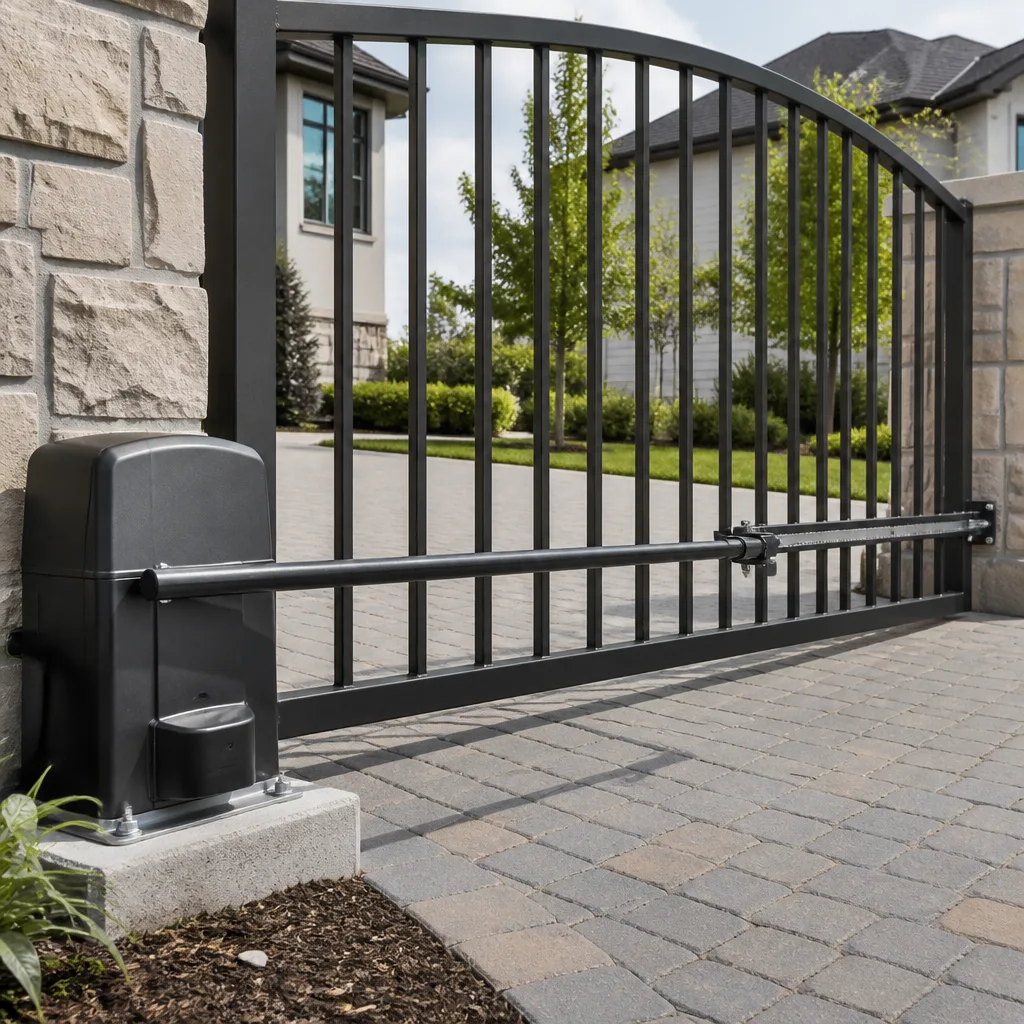
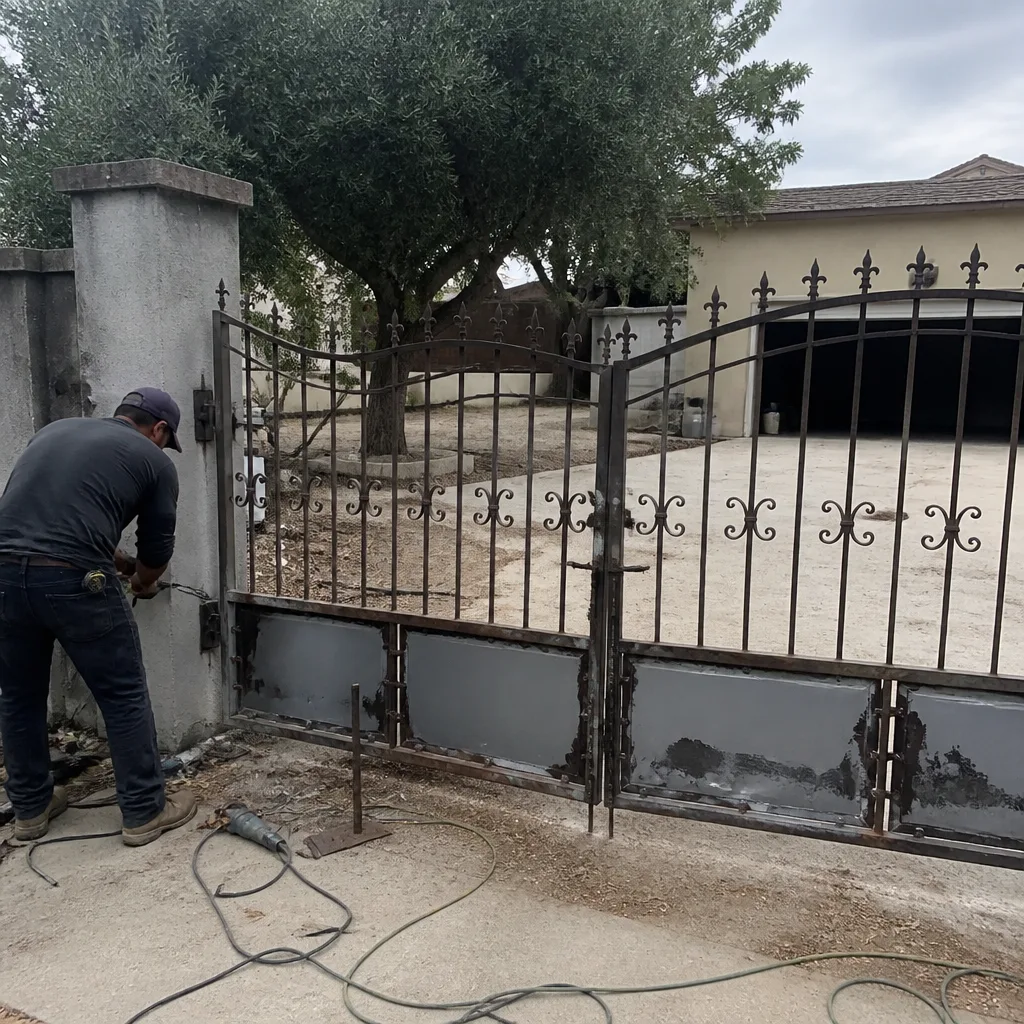 Before
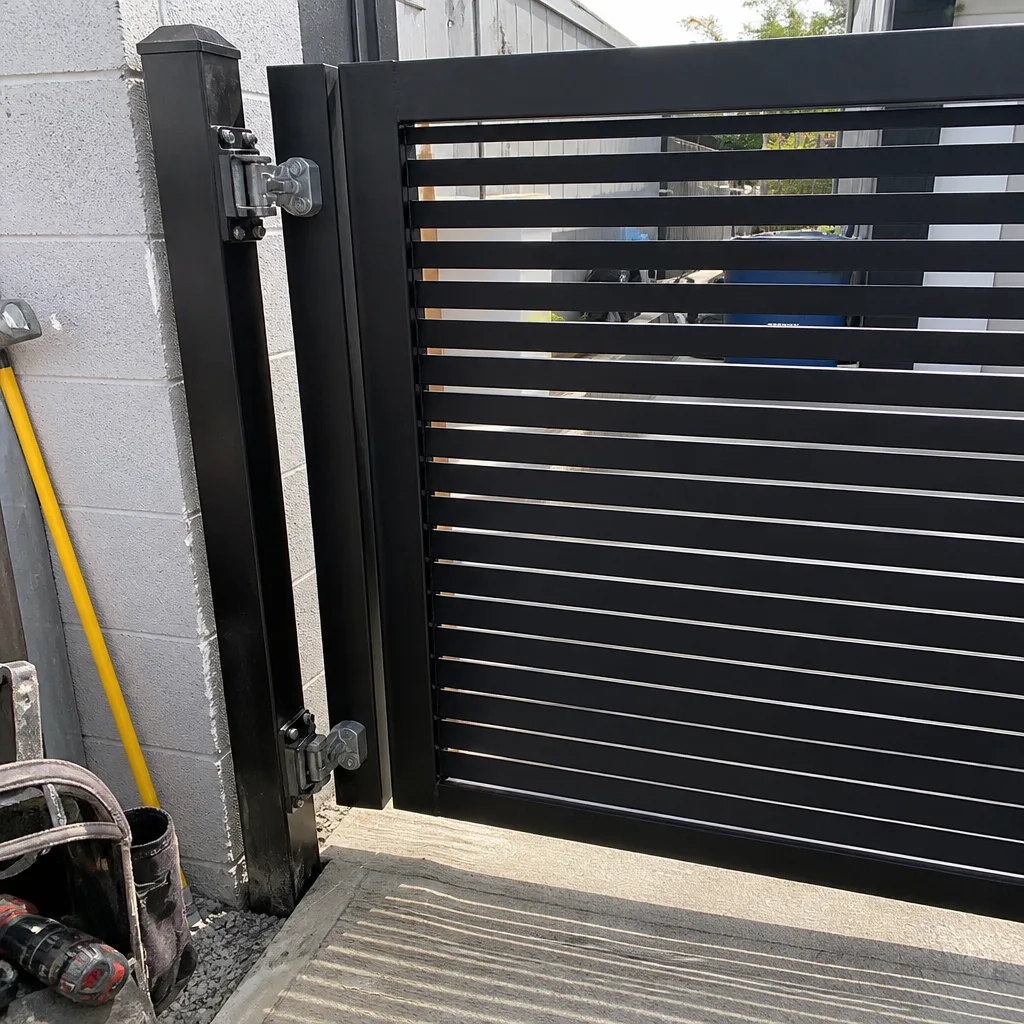 After
After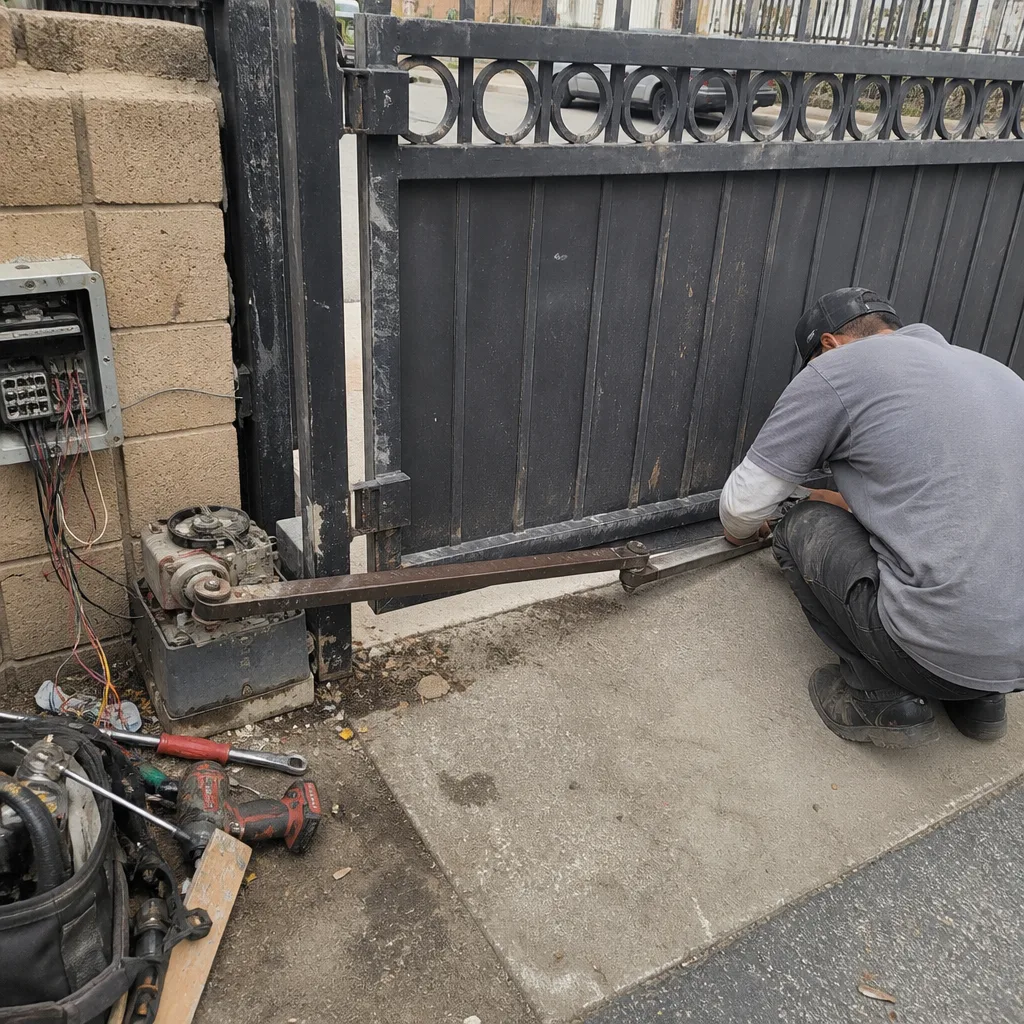 Before
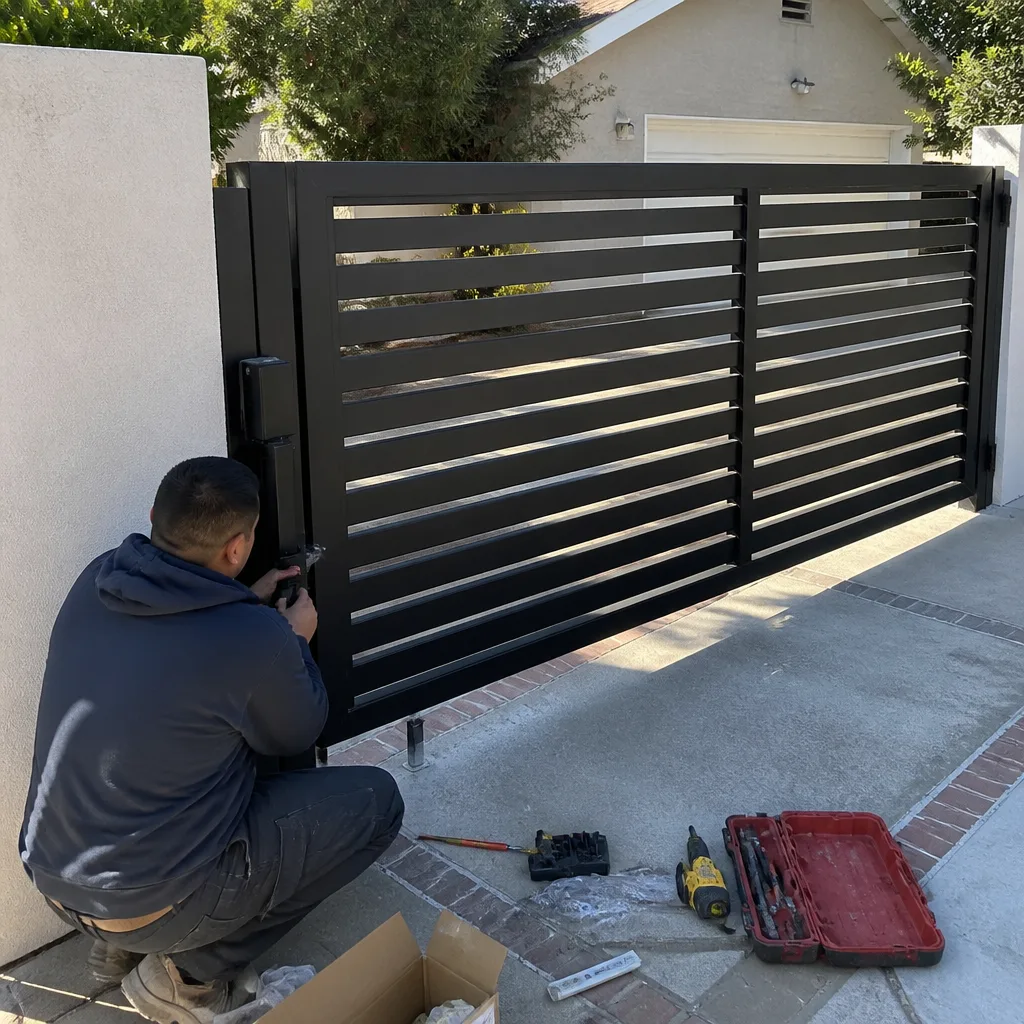 After
After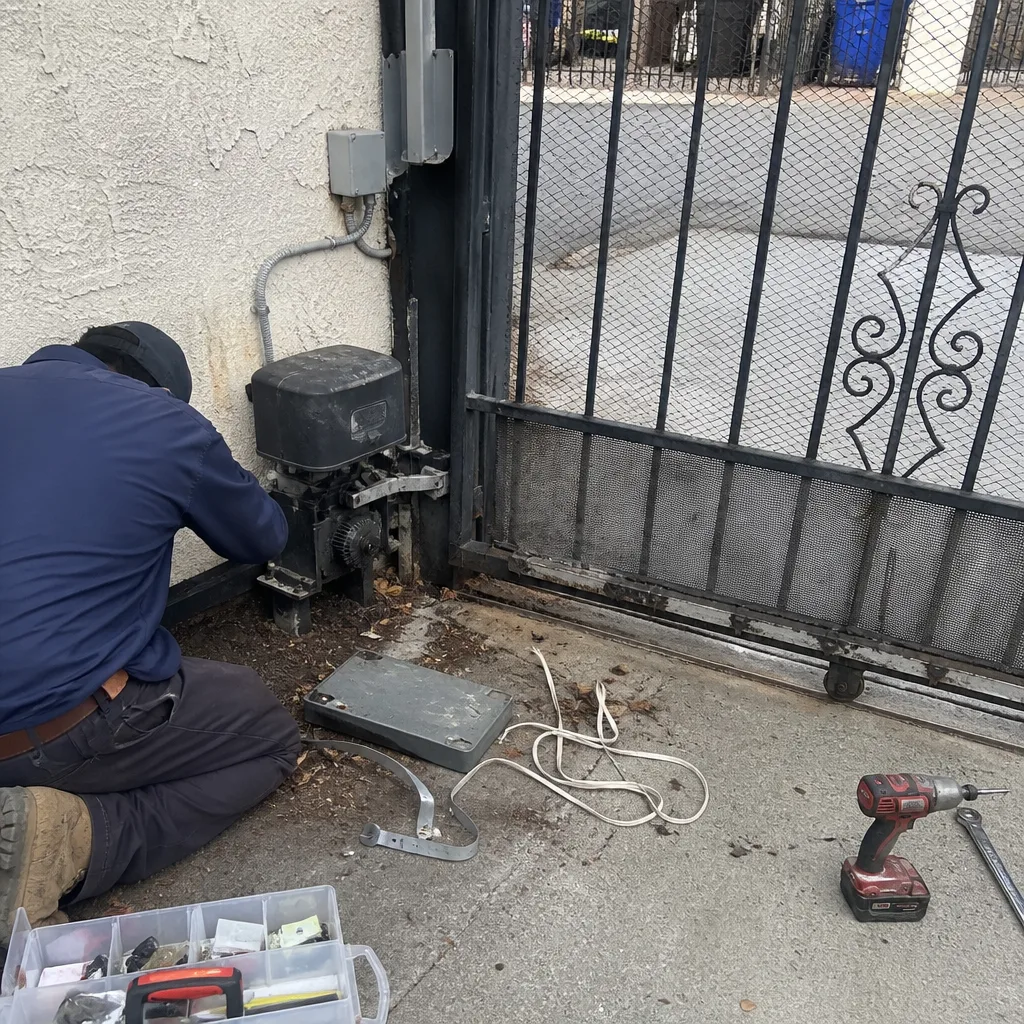 Before
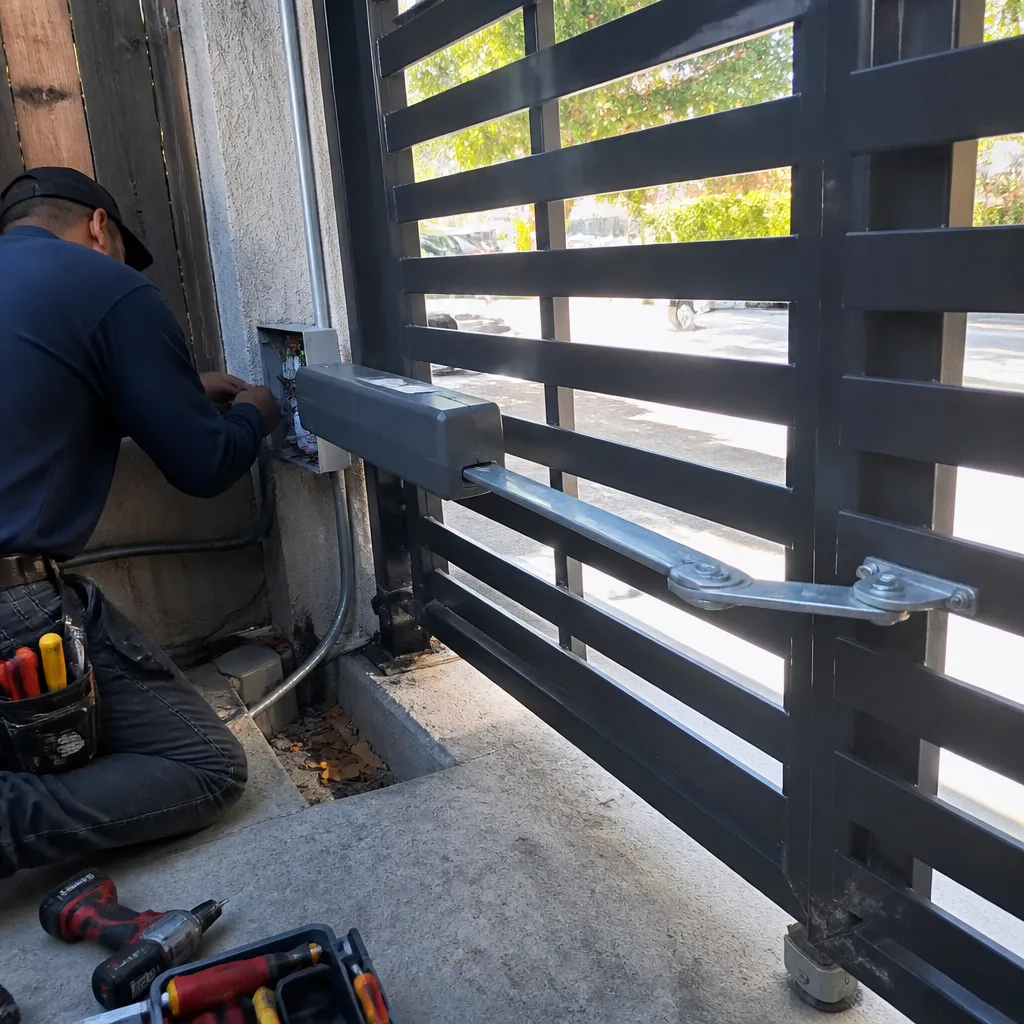 After
AfterGate Repair Emergency Preparedness Guide for Los Angeles Homes
During the 2025 Palisades fire evacuations, residents reported gates that failed mid-evacuation because the power was cut before they could manually release the opener. That manual release is a 10-second fix, but only if you’ve practiced it before the emergency. This guide walks Los Angeles homeowners through exactly what to do when a gate fails at the worst possible moment: how to release every major opener brand by hand, how to set up battery backup correctly, what to check quarterly, and who to call at 2am for Gate Repair services without getting taken advantage of.
Quick Answer
Emergency gate repair in Los Angeles starts with a manual release, which takes about 10 seconds on most openers and costs nothing if you know where the release handle is. If manual release fails or the gate has physical damage from an earthquake, accident, or attempted break-in, call (903) 417-0793 for an emergency gate repair estimate in Los Angeles. A prepared homeowner should also have battery backup installed so the gate keeps working during the power outages that precede most wildfire evacuations.
Table of Contents
- How to Manually Release Your Gate: Brand-by-Brand Steps
- Battery Backup: The Difference Between Escaping and Waiting
- The Pre-Emergency Checklist: What to Verify Quarterly
- Post-Earthquake Gate Inspection Protocol
- How to Vet an Emergency Gate Repair Company Fast in Los Angeles
- What Emergency Gate Repair Costs in Los Angeles
- Common Mistakes to Avoid
- When to Call a Professional
How to Manually Release Your Gate: Brand-by-Brand Steps
Every automatic gate opener has a manual release mechanism that disconnects the gate from the motor so you can push or pull it open by hand. The mechanism differs by brand, and in a high-stress situation like an evacuation order or a power outage, fumbling with an unfamiliar release is the last thing you want. We recommend practicing this once a quarter so the motion becomes muscle memory.
LiftMaster
LiftMaster slide gate openers typically have a red release handle on the side of the operator housing. Pull the handle outward and rotate it 90 degrees to disengage the gear. The gate should now slide freely. For LiftMaster swing arm operators, look for a small release lever near where the arm connects to the gate. On models with a keyed release, insert the key, turn counterclockwise, and pull the lever. Most LiftMaster units we service in Los Angeles hillside homes are swing arm models, and the release is almost always within arm’s reach of the operator box.
FAAC
FAAC hydraulic operators use a manual release valve, not a handle. Locate the small hex-shaped valve on the hydraulic pump unit, usually marked with a label. Turn it counterclockwise with a hex key or flathead screwdriver until you feel resistance stop, then push the gate open. FAAC 400 and 750 series operators are common on Los Angeles driveway gates, and the release valve is positioned on the side of the pump housing. Keep the correct hex key in a magnetic box attached to the gate post so you’re not hunting for tools in the dark.
Mighty Mule
Mighty Mule openers have a straightforward pull-pin release. On the arm where it meets the gate bracket, you’ll find a metal pin with a ring. Pull the pin straight out, and the arm disconnects from the gate. The gate swings freely. Mighty Mule is one of the most common DIY-installed openers we see in Los Angeles, and the pull-pin design means you can release it with one hand while holding a flashlight in the other.
Elite
Elite slide gate operators have a release lever on the front of the unit near the bottom. Push down on the lever to disengage the chain or belt drive. On Elite swing operators, the release is a small red knob on the side of the motor housing. Give it a quarter turn and pull outward. Elite is a commercial-grade brand often found on larger Los Angeles estate gates, and many homeowners don’t realize the release on these units works the same as residential models, just with a sturdier feel.
Other Common Brands: Linear, Viking, Ghost Controls, DoorKing, BFT
Linear and DoorKing swing operators use a similar pull-pin or lever system to Mighty Mule. Viking and BFT hydraulic units, like FAAC, use a release valve that requires a hex key. Ghost Controls uses a quick-release pin that pulls straight out. The universal principle is the same: find the mechanism that disconnects the motor from the gate, and the gate becomes a manual gate.
Safety Caveat
Never attempt to disengage a gate opener while the gate is mid-cycle. Wait for the gate to stop moving, or cut power first by unplugging the operator or switching off the circuit breaker before touching any release mechanism. High-tension springs, counterweights, and moving chains can cause serious injury if released incorrectly. If you’re unsure about your specific model, call us at (903) 417-0793 and a Calder technician will walk you through the process over the phone at no charge.
Battery Backup: The Difference Between Escaping and Waiting
The Palisades fire evacuations exposed a hard truth: most Los Angeles gates will not open when the power goes out unless they have battery backup installed. In a wildfire scenario, power is often cut by the utility or fails due to heat and wind damage before evacuation orders are issued. A gate with battery backup continues to open and close normally for 20 to 60 cycles, depending on the battery and opener size. Without battery backup, you’re relying on manual release, which requires you to get out of the car, walk to the gate, and physically push it open, often in smoke, darkness, or both.
Installing battery backup on a residential gate opener in Los Angeles typically costs between $450 and $900, including the battery, charging board, and labor. The price varies by brand: LiftMaster battery kits run $250 – $400 for parts, FAAC backup systems run $300 – $550, and Mighty Mule battery trays run $150 – $250. Labor accounts for the rest.
What battery backup does not do: it does not keep the gate running indefinitely. Most residential backup batteries are rated for 8 to 12 hours of standby or 20 to 60 open/close cycles. That’s enough for an evacuation and a return trip, but not for days of outage. For extended outages, you’ll need a generator or a solar charging battery system.
What to check quarterly:
- Battery voltage at rest. A healthy 12V battery reads 12.6 to 12.8 volts. Anything below 12.2 means the battery is degrading.
- Corrosion on terminals. Los Angeles salt air near the coast accelerates terminal corrosion. Clean with a wire brush and apply dielectric grease.
- Actual cycle test. Unplug the opener and run the gate through three full open/close cycles. If it slows or stops by the third cycle, the battery needs replacement.
- Age of the battery. Most backup batteries last 3 to 5 years. If you can’t remember when it was installed, it’s probably time.
In our experience at Calder Gate Repair, we find dead backup batteries in roughly half of the Los Angeles homes we visit. The homeowner installed backup years ago and forgot about it. A battery that reads fine at rest but collapses under load is the most common failure we see, and it’s only discovered during an outage when it’s too late.
The Pre-Emergency Checklist: What to Verify Quarterly
This is the Gate Repair Maintenance Checklist for Los Angeles Homeowners we wish everyone ran through four times a year. It takes 20 minutes and catches 90% of the failures that strand people during emergencies.
- Test the manual release. Disengage the opener and push the gate open by hand. If it’s hard to move, the gate is out of alignment or the wheels are failing. That’s a repair that should happen before an emergency forces the issue.
- Inspect the photo eye sensors. These are the small black boxes near the bottom of the gate posts. Clean the lenses with a dry cloth. Los Angeles dust and debris from Santa Ana winds coat these sensors and cause the gate to refuse to close, or worse, refuse to open.
- Check the emergency key release. If your gate has a keyed manual release, test the key. Keys get lost or locks corrode. Do this before the evacuation order, not during it.
- Verify battery backup cycles. Unplug the opener and run the gate three times. Note any slowdown.
- Listen for unusual sounds. Grinding, squealing, or clicking during operation means something is wearing. A chain that needs tensioning or a gear that’s stripping will fail at the worst possible moment.
- Check the gate’s physical condition. Look at the hinges, wheels, and track. Los Angeles gates take a beating from sun, wind, and occasional minor collisions. A cracked weld or seized wheel is easier and cheaper to fix before it breaks completely.
- Confirm who to call. Store (903) 417-0793 in your phone under “Emergency Gate Repair.” During a mass emergency, network congestion slows everything. Having the number saved and knowing a live person answers 24/7 removes one decision from a high-pressure moment.
Running this Gate Repair Maintenance Schedule: What to Do and When quarterly costs nothing and takes less time than waiting on hold with an insurance company. The goal is simple: when an emergency hits, your gate should be the thing that works, not the thing that traps you.
Post-Earthquake Gate Inspection Protocol
After a significant earthquake in Los Angeles, your gate deserves the same attention as your gas line and water heater. A tremor can shift gate posts, knock the opener off alignment, or damage the chain, gear, or arm. Even if the gate appears to work, damage may be hidden. Here are the three structural checks to run before reconnecting power after a significant tremor.
- Check the gate posts and mounting brackets for movement. Stand back and look at the gate from the side. Is it still plumb? Are the hinges still tight? A shift of even half an inch at the post translates to a gate that won’t close properly or strains the opener motor. Push on the gate from the middle. If it rocks or shifts, the post may need to be reset in concrete. Do not run the opener until a gate professional inspects the post footing.
- Inspect the opener mounting and drive system. Look for cracks in the operator housing, bent arms, or a chain that’s gone slack. On slide gates, check the track for debris, warping, or misalignment. On swing gates, check the arm where it connects to the gate bracket for bending. A bent arm will eventually snap under load. Reconnect power only after confirming the opener is securely mounted and the drive system is intact.
- Test the safety features. Run the gate through a full cycle and test the photo eyes and the auto-reverse. Place an object in the gate’s path while it closes. The gate should stop and reverse immediately. If it doesn’t, disconnect power and do not use the opener until the safety system is repaired. A gate that closes without reversing is a serious hazard, especially after an earthquake when debris may be scattered near the gate’s path.
If you find any of these three checks failing, call us at (903) 417-0793. We’ll send a background-checked, uniformed technician to your Los Angeles home with a live, trackable arrival time and a written price before any work starts.
How to Vet an Emergency Gate Repair Company Fast in Los Angeles
When your gate fails at 2am or in the middle of an evacuation order, you’re vulnerable. Desperation leads to rushed decisions, and rushed decisions lead to overpaying or hiring someone unqualified. Here’s how to vet a gate repair company quickly without getting taken advantage of in a stressful moment.
- Ask if a live person answers the phone. Call the number. If you get a voicemail or an answering service that promises a callback, that’s a red flag for emergency work. Calder Gate Repair has a live person answering every call, 24/7. You’ll talk to a human who can book the appointment, update you on arrival time, or troubleshoot over the phone.
- Ask for a written price before anyone dispatches. A legitimate company will quote a dispatch fee or a diagnostic fee and explain exactly what it covers. If they won’t put a number in writing before arriving, they’re leaving room for a bigger invoice. At Calder, every customer receives a written price before any work starts, and the number on the invoice is the number agreed to at the door. Always.
- Ask what brands they actually service. A gate opener is a specialized piece of equipment. A generalist handyman may claim to fix gates but has never opened a FAAC hydraulic pump or a LiftMaster control board. We’re factory-familiar with LiftMaster, FAAC, BFT, Linear, Viking, Ghost Controls, DoorKing, Elite, and Mighty Mule, and we don’t send a technician to a brand we don’t know well.
- Ask about the guarantee. Most emergency repair is done under pressure. What happens if the fix doesn’t hold? Calder Gate Repair backs every repair with the 365-Day Done Right Promise: if the repair fails within 365 days, we return at no charge for a second visit. That promise is in writing on every job, and it’s not an optional add-on.
- Ask about arrival tracking. A legitimate company in 2026 can tell you when the technician will arrive, not just “sometime this afternoon.” The Relay Standard, which Calder Gate Repair is built on, means a live, trackable arrival time, before-and-after photos, and a digital invoice you pay from a link. You always know who is coming and when.
One more thing: in a genuine emergency, don’t let embarrassment or panic push you into accepting a verbal quote. A written price is a basic professional standard, not a luxury. If a company won’t provide one, call the next number.
What Emergency Gate Repair Costs in Los Angeles
Emergency gate repair in Los Angeles runs higher than scheduled repair because it involves after-hours dispatch, immediate availability, and sometimes hazardous conditions. Here are realistic price ranges for the most common emergency gate issues, based on what we see across Los Angeles neighborhoods from West Adams to Sherman Oaks to the hills above the Valley.
- Manual release failure (gate won’t disengage): $95 – $185. Usually a seized release mechanism, broken cable, or a keyed release that needs replacing.
- Opener won’t respond (no power, no movement): $120 – $280 before parts. This covers the diagnostic and the most common fixes: blown fuse, bad capacitor, control board reset.
- Gate off track (slide gate): $180 – $400. Includes re-seating the gate on the track, tightening or replacing wheels, and adjusting the chain.
- Broken gate arm (swing gate): $150 – $350 before parts. Depending on brand, the arm itself runs $100 – $250. LiftMaster and FAAC arms are on the higher end.
- Gate stuck open (security emergency): $120 – $300 to secure the gate temporarily, plus the cost of the actual repair. A gate that won’t close is a different emergency than one that won’t open, and securing it is the first priority.
- Battery backup replacement: $450 – $900 installed. See the battery backup section above for the breakdown.
- Full opener replacement (emergency): $1,200 – $2,800 installed, depending on brand and gate size. Mighty Mule replacements are on the lower end; FAAC and LiftMaster on the higher end.
These are ranges for planning purposes, not quotes. Every Calder Gate Repair job starts with a written price before any work starts, so you’ll know the exact number before you approve anything. Call (903) 417-0793 for a free estimate on your specific gate.
Common Mistakes to Avoid
- Never testing the manual release until you need it. The release handle or valve on your opener may have seized years ago without you knowing. We see this constantly in Los Angeles, where coastal salt air and Valley dust both take their toll. Test it quarterly.
- Assuming the gate will work during a power outage. Most gates have no battery backup. Without it, your automatic gate becomes a manual gate at the exact moment you need it to be automatic. In a wildfire evacuation, that’s a dangerous distinction.
- Calling the first emergency number you find without asking about pricing. Emergencies breed price gouging. A legitimate company quotes a dispatch or diagnostic fee in writing before anyone arrives. If they won’t, move on.
- Ignoring the photo eye sensors. Dirty or misaligned sensors are the single most common gate problem we see in Los Angeles, and they can prevent the gate from opening or closing entirely. Clean them quarterly and check alignment.
- Forcing a stuck gate. If the gate won’t open, don’t push harder or try to drive through. You’ll strip the gear, bend the arm, or cause a chain to snap. Release the opener, and if the gate still won’t move by hand, call a professional.
- Reconnecting power after an earthquake without inspecting the gate first. A shifted post or damaged drive system will destroy the opener motor or cause the gate to fail catastrophically. Run the three checks from the earthquake section before plugging anything back in.
- Hiring a generalist for a specialist job. Gate openers are not garage door openers. Nine major brands, each with different electronics, hydraulics, and release mechanisms. Hire someone who knows your brand specifically.
When to Call a Professional
Call a professional when the manual release fails, when the gate won’t move even after releasing the opener, when you see structural damage after an earthquake, or when the gate is stuck open and your property is unsecured. These are not DIY situations, and attempting a fix under pressure often makes the problem worse and more expensive. Calder Gate Repair offers free estimates in Los Angeles: call (903) 417-0793 and a live person will answer, 24/7. We’ll dispatch a background-checked, uniformed technician with a trackable arrival time and a written price before any work starts.
Frequently Asked Questions
Locate the manual release on your gate opener and disengage it to unlock the gate from the motor. For most brands, this is a pull handle, pull pin, or release lever on the operator housing or arm. The specific location varies by brand: LiftMaster uses a red handle or keyed release, FAAC uses a hex valve, Mighty Mule uses a pull pin, and Elite uses a lever on the front of the unit. If you’re not sure where yours is, call (903) 417-0793 and we’ll help you identify it over the phone.
Yes, in most cases. Calder Gate Repair answers calls 24/7 with a live person and can dispatch a technician to Los Angeles homes on the same day for gate repair emergencies. The arrival time is trackable, and the price is quoted in writing before any work starts. Call (903) 417-0793 to check current availability.
Emergency gate repair in Los Angeles typically ranges from $95 to $400 for common issues like a failed manual release, a non-responsive opener, or a gate off track, before parts. Full opener replacements run $1,200 to $2,800 depending on brand and gate size. Every Calder Gate Repair job includes a written price before any work starts, so there’s no surprise invoice. Call (903) 417-0793 for a free estimate.
Yes, if you live in a Los Angeles area prone to power outages or wildfire evacuation orders, battery backup is the most important gate upgrade you can make. It keeps the gate operating for 20 to 60 cycles during a power outage, which means you won’t need to manually release the gate during an evacuation. Installation costs $450 to $900 depending on the opener brand and battery size.
After an earthquake, check three things before reconnecting power: the gate posts and hinges for movement or shifting, the opener mounting and drive system for damage, and the safety features like auto-reverse and photo eyes to confirm they’re working. If any of these checks fail, call a gate professional before running the opener. For a post-earthquake gate inspection in Los Angeles, call (903) 417-0793.
We service nine major gate opener brands: LiftMaster, FAAC, BFT, Linear, Viking, Ghost Controls, DoorKing, Elite, and Mighty Mule. If you’re not sure what brand your opener is, check the operator housing for a label or call (903) 417-0793 and we’ll help you identify it.
The Bottom Line
A gate failure during a Los Angeles emergency is preventable; for more guides & resources, visit our blog. The three things that matter most: know your manual release and practice it quarterly, install and maintain battery backup so the gate keeps working when the power dies, and have a vetted repair number saved in your phone. Calder Gate Repair is part of the Relay Home Co. family, founded in 2009, and we answer every call with a live person, 24 hours a day. Every repair carries a written price before work starts and the 365-Day Done Right Promise: if the repair fails within 365 days, we return at no charge. Call (903) 417-0793 for a free estimate.
Written by Nico Alvarez, Owner at Calder Gate Repair, serving Los Angeles since 2009.