
Last updated October 9, 2026
Free on-site gate assessment - hinges, posts, and your LiftMaster or Nice gate operator checked before anything is quoted
The assessment is free and the quote is the invoice.
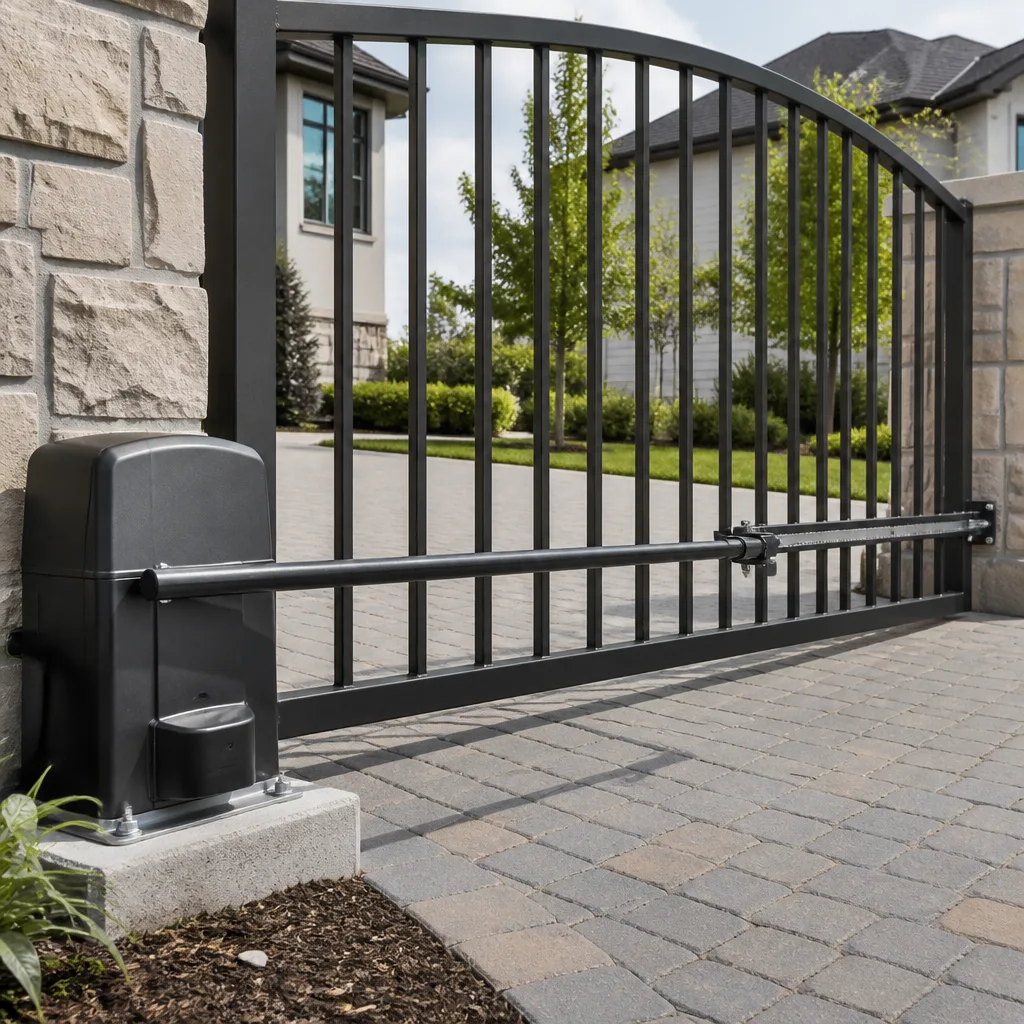
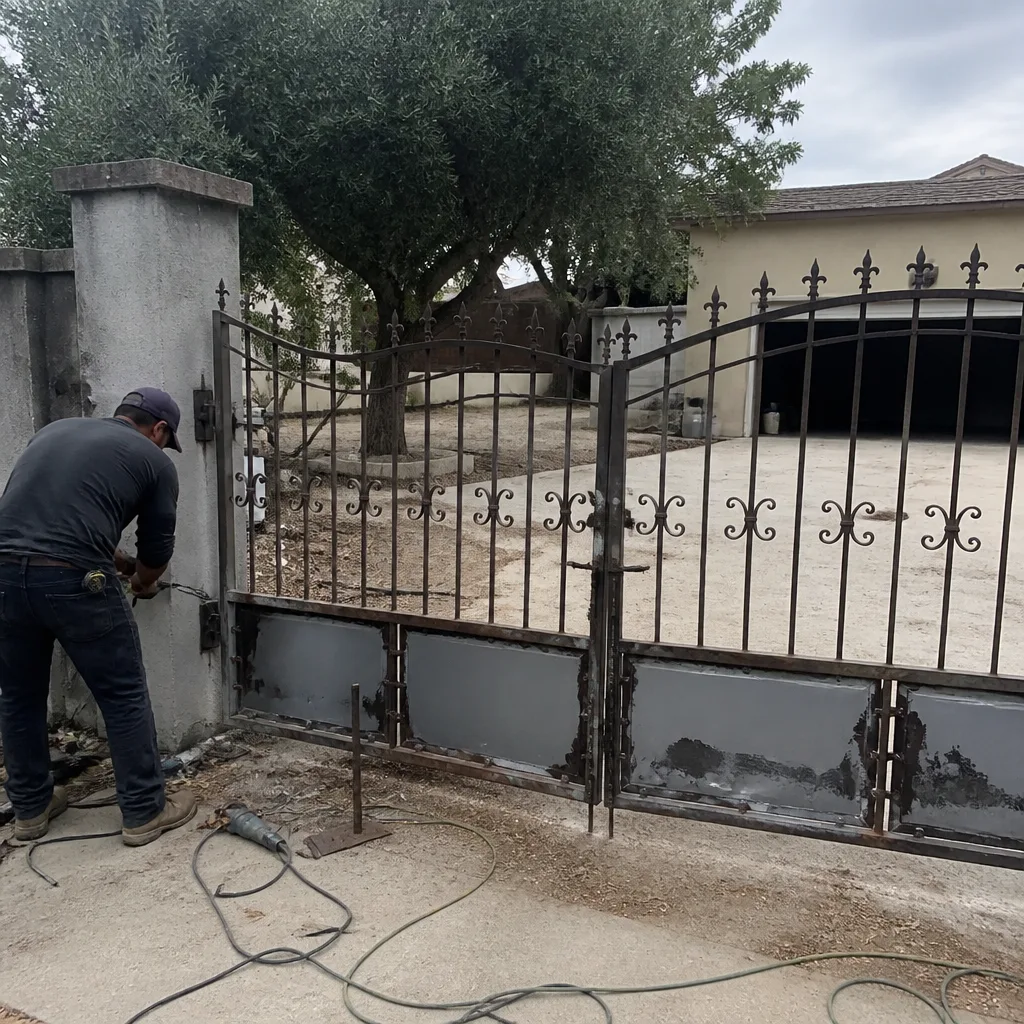 Before
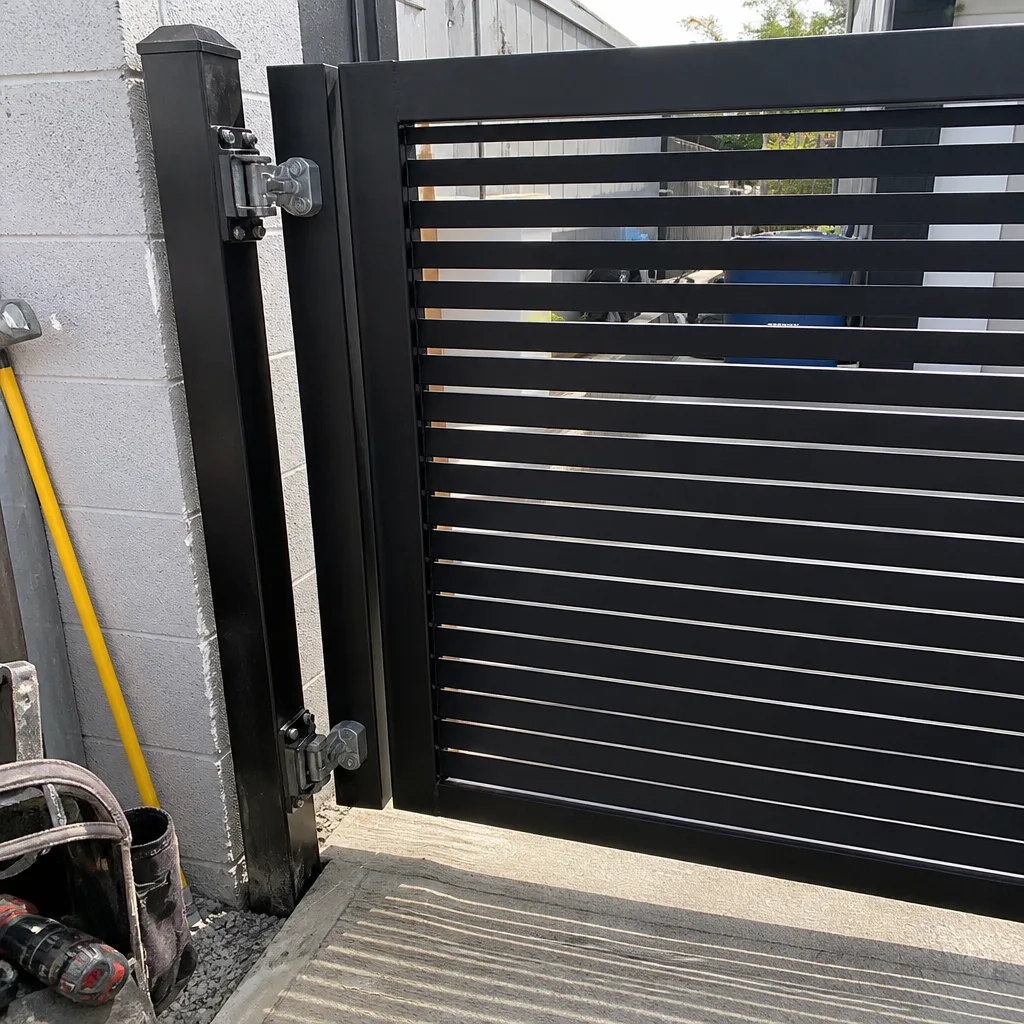 After
After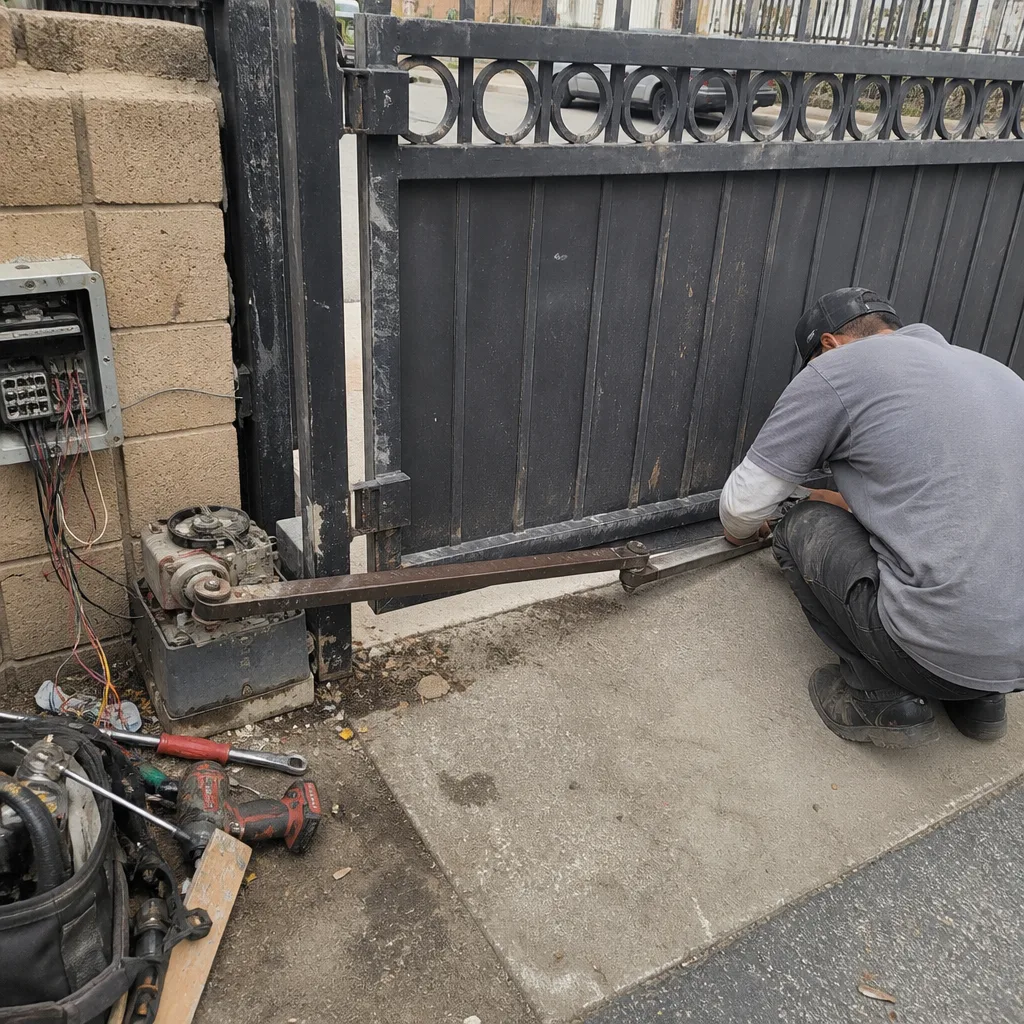 Before
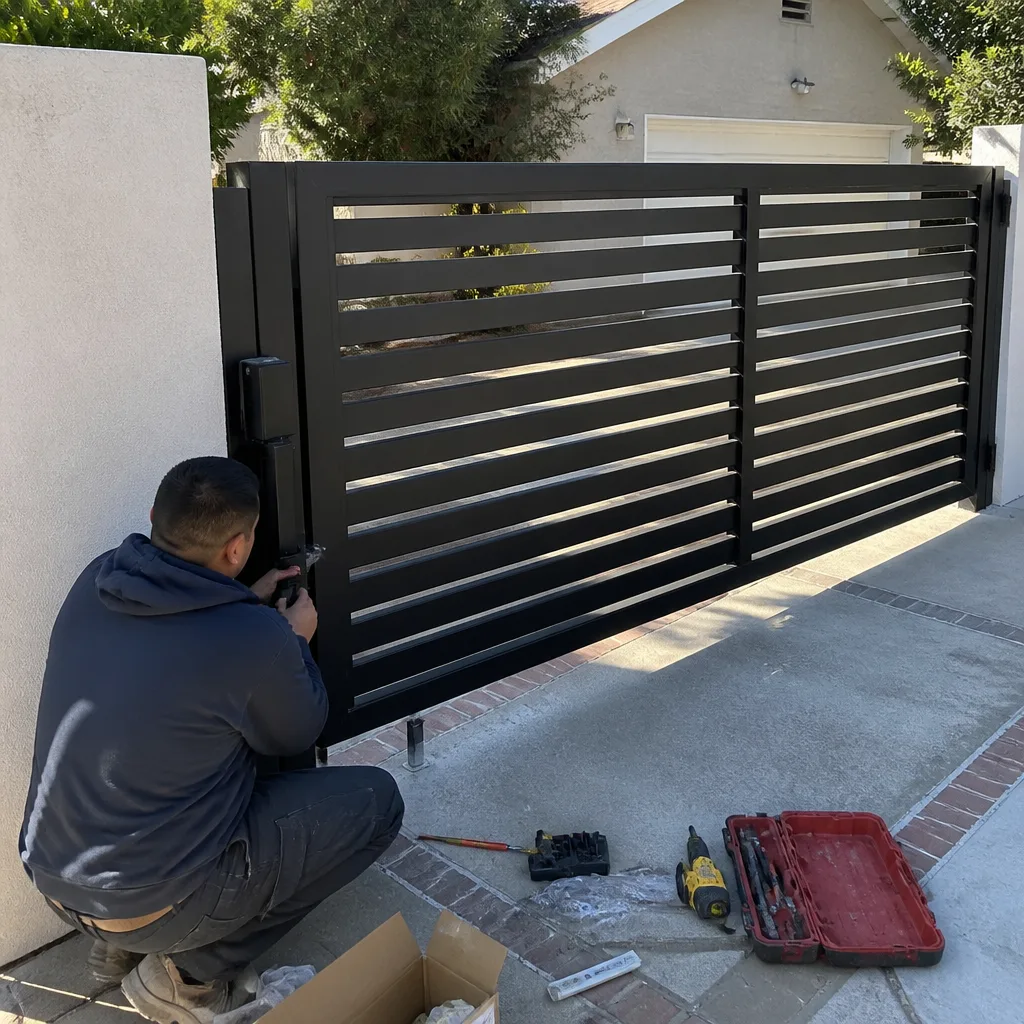 After
After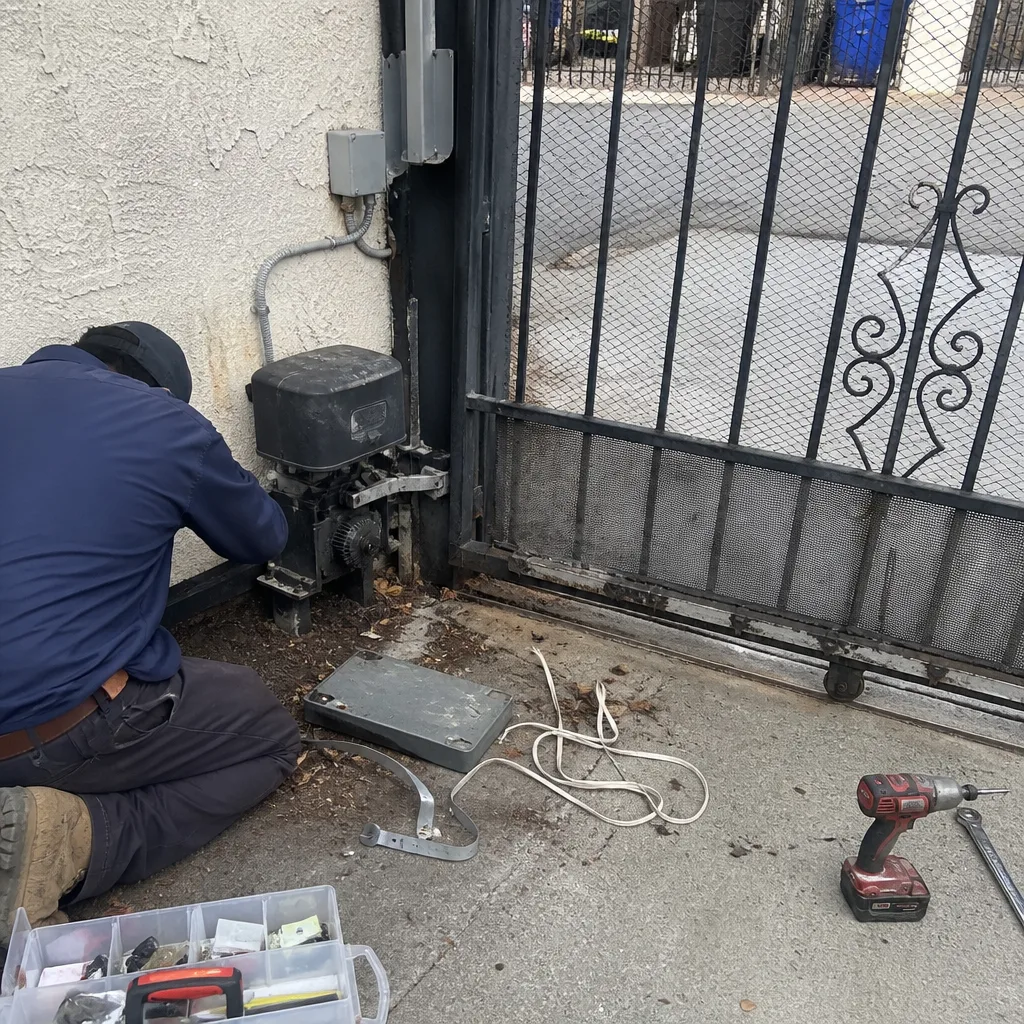 Before
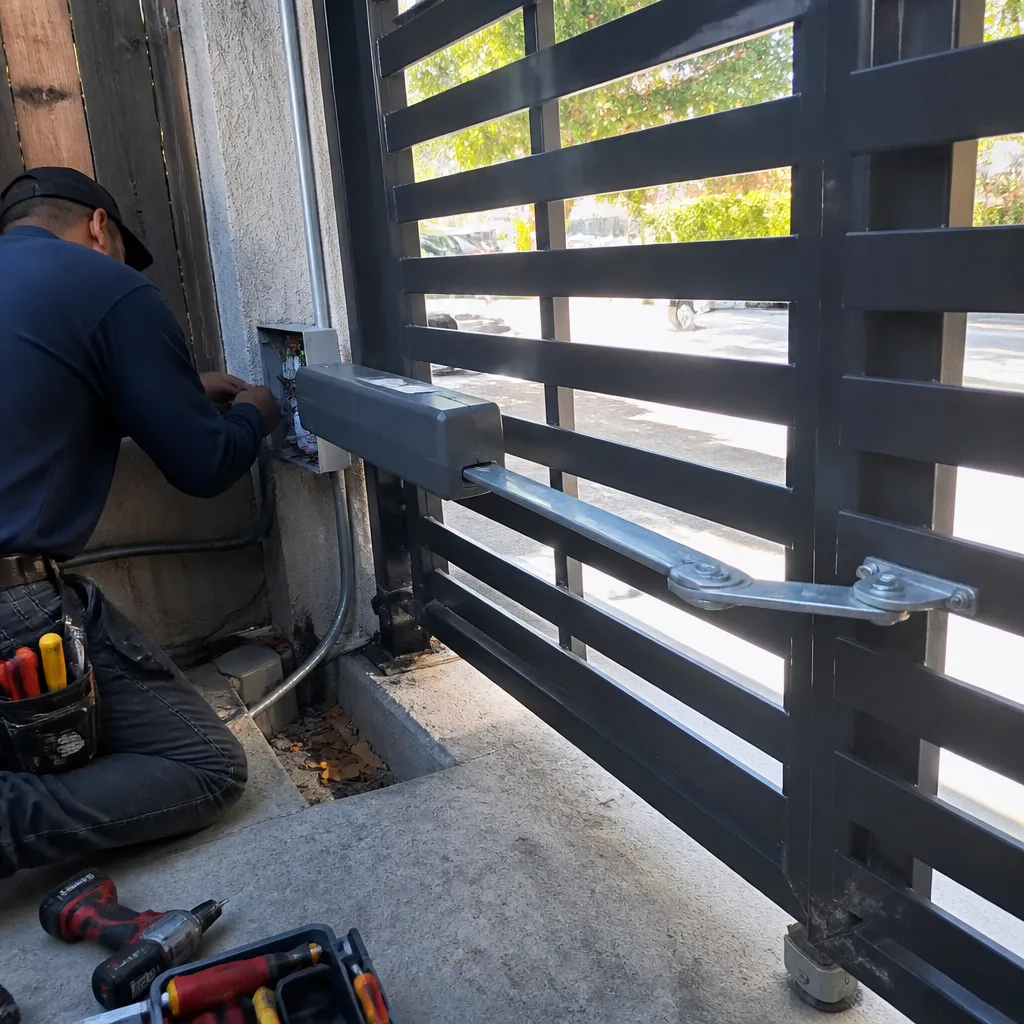 After
AfterGate Repair Warning Signs Every Homeowner Should Know
A gate that suddenly moves faster than usual isn’t a welcome upgrade. It almost always means a counterbalance spring is failing, and that’s one of the most dangerous failure modes a gate can have. In Los Angeles, where driveway gates run thousands of open-close cycles a year in sun, salt air, and occasional rain, these failures follow patterns we’ve seen hundreds of times. This guide translates what your gate is telling you into plain language, ranked by how urgently you need to act. By the time you finish reading, you’ll know which sounds are normal, which ones mean “schedule a service call,” and which ones mean “stop using the gate today.”
Quick Answer
A gate that hesitates mid-travel, reverses without a car or person nearby, makes a grinding or squealing noise, or moves faster than it used to is showing signs of failure. These warnings usually mean a failing spring, a worn limit switch, a dying capacitor, or a control board starting to short out. Most Gate Repair jobs in Los Angeles cost between $200 and $600 when caught early. Ignored, the same problems routinely become $1,200-plus emergency calls for a gate that won’t open at all.
Table of Contents
- Warning Signs, Ranked by Urgency
- What Intermittent Operation Actually Signals
- Structural Stress: Rust, Sag, and Hinge Gaps
- How to Document Warning Signs with Your Phone
- Commonly Misdiagnosed Warning Signs
- Real Costs of Gate Repair in Los Angeles
- What Your Opener Brand Tells Us Before We Arrive
- Common Mistakes to Avoid
- When to Call a Professional
- Frequently Asked Questions
Warning Signs, Ranked by Urgency
Not every gate problem is an emergency. Some can wait a month. Others are a matter of days before the gate fails completely or, worse, causes injury. We break every warning sign we see in Los Angeles into three buckets: Immediate, Soon, and Monitor. Here’s how we classify them, based on what actually fails and how fast it deteriorates in this climate.
Immediate: Stop Using the Gate
- Gate moves noticeably faster than normal. This means a counterbalance spring has snapped or is about to. The opener is now fighting the full weight of the gate without help. A spring under sudden release can cause the gate to slam and injure someone. In hillside neighborhoods like Mount Washington or Silver Lake, where gates sit on slopes, this is even more dangerous because gravity adds speed.
- Loud bang or snap followed by the gate not moving. That’s the spring letting go. Do not try to force the gate open or closed manually with the opener still engaged. Call someone who handles high-tension springs every week.
- Gate reverses toward a car or person already cleared of the sensor. Your safety loop or photo eye has failed. In Los Angeles, many homes have secondary safety edges that the homeowner doesn’t know exist. If the gate closes on something and doesn’t immediately reverse, the safety system is dead. Stop using it until it’s inspected.
- Sparks, burning smell, or a breaker that trips repeatedly when the opener runs. This is an electrical fault inside the opener or the underground power line. In older Los Angeles neighborhoods with original 1960s and 1970s wiring, we see this more than anywhere else.
Soon: Schedule Within Two Weeks
- Gate hesitates for a second or two after you press the remote. Usually the opener’s capacitor is getting weak, or the limit switch is drifting. In our experience across Los Angeles, this is the most common early warning on LiftMaster and DoorKing units that are three to seven years old.
- Grinding, squealing, or a rhythmic thumping while the gate moves. Bearings and rollers dry out fast in Southern California heat. The noise is friction. Friction creates wear. Wear turns into a gate that binds and eventually stalls.
- Gate stops midway and reverses without anything in the path. This can be a failing limit switch, an obstruction sensor picking up dew or dust, or a control board on its way out. In coastal areas like Playa del Rey and San Pedro, salt corrosion accelerates this failure.
- Remote works only from ten feet away when it used to work from fifty. The receiver board is degrading, the antenna wire is loose, or a neighbor installed a device on the same frequency. More on interference in the misdiagnosis section below.
Monitor: Log It and Check Again in 30 Days
- Gate closes fully but then makes a small clicking sound for a few seconds. The opener may be trying to seat against the close limit switch. It’s usually benign but worth logging.
- Gate leaves a one-inch gap when closed. This often develops gradually. Keep an eye on it. If the gap grows to two or three inches, the limit switch or the chain tension deserves a look.
- Remote works fine but the keypad buttons stick occasionally. Los Angeles sun cooks keypads. The membrane degrades. It usually gets worse, but slowly enough that you can plan for it.
- Gate is slightly louder in cold weather (relative cold, anyway). Southern California doesn’t get real winters, but the 20-degree overnight drops in the Valley do make grease stiffen and old bearings complain. If the noise goes away when it warms up, note it and move on.
If you’re in Los Angeles and any of the Immediate items are happening on your gate, stop using it and call a professional. The Calder Gate Repair home page has our service details and our phone number is at the bottom of this guide.
What Intermittent Operation Actually Signals
An intermittent gate is one that works fine in the morning, ignores the remote at 2 p.m., then works again at dinner. Homeowners in Los Angeles often blame the remote battery. Sometimes it is the battery. More often, it’s one of three things, and they’re very different repairs with very different price tags.
A dying circuit board. When the main control board starts to fail, it commonly fails when it gets hot. In Los Angeles, that means a gate that works perfectly in the cool morning and quits in the afternoon sun. The board expands, a micro-crack opens in a solder joint, and the logic stops. An hour later, as it cools, the crack closes and the gate works again. This is a classic DoorKing symptom on units in full afternoon western exposure. A board repair or replacement typically runs $250 to $450 before parts, depending on the model.
A failing capacitor. The capacitor is the part that gives the motor the burst of energy to start moving. When it weakens, the opener may hum but not move, or may click and do nothing on the first remote press but work on the second or third. Capacitors fail gradually. The failure worsens in cool weather and gets better in heat, the opposite of the circuit board pattern. A capacitor replacement is one of the cheapest gate opener repairs there is, often $80 to $150 installed.
RF interference from a neighbor’s device. We see this every month somewhere in Los Angeles. A new smart sprinkler controller, a wireless security camera, a baby monitor, sometimes a ham radio setup two doors down. The interference steps on the frequency your remote uses. The gate doesn’t open, you press again, it opens. The tell is that the keypad and hardwired button on the inside post work perfectly when the remote doesn’t. If that’s your pattern, a frequency swap on the receiver is usually a quick fix. If you want a specialist to diagnose it, call our gate opener repair team in Los Angeles and describe the pattern over the phone before booking. Twenty years of those phone calls means we can usually tell you what it is in five minutes.
Structural Stress: Rust, Sag, and Hinge Gaps
Gate openers fail for electrical reasons, but gates fail for structural reasons. The frame bends, the hinges wear, the post shifts, and the opener takes the blame. Meanwhile, the opener was the only thing still doing its job. Here’s what to look for on the physical gate itself, especially in Los Angeles neighborhoods near the coast where salt air accelerates everything.
Rust patterns and what they mean. Surface rust is cosmetic. What concerns us is rust at the weld joints, the hinge barrels, and the bottom rail. Rust at a bottom rail means water pools inside the gate. In neighborhoods like Venice and Marina del Rey, where marine moisture plus cool overnight temperatures create condensation cycles, a gate can rust from the inside out while the outside powder coat still looks fine. Tap the bottom rail with a knuckle. If it sounds dull and solid, good. If it sounds hollow and tinny or flakes come off, the steel is thinning. A gate that’s rusted through its bottom rail can collapse under its own weight, usually right at the hinge side.
Gate sag. A gate that used to sit level and now has a noticeable diagonal droop on the latch side is telling you the frame or the hinges are giving up. On a manual gate, sag just makes it annoying to close. On a motorized gate, sag makes the opener push against its own track. The motor strains, the chain or belt stretches, the limit switch can’t find home, and eventually the opener burns out. Fixing sag early often means a hinge replacement or a frame weld, $150 to $350. Fixing it late often means a new gate leaf plus a new opener.
Hinge gaps. Stand at the closed gate and look at the gap between the gate and the post at the top hinge versus the bottom hinge. They should look equal. If the top gap is wider, the top hinge pin is wearing, or the post is leaning. If the bottom gap is wider, the bottom hinge is the problem. Either way, the gate is putting uneven load on the opener and on itself. In Los Angeles, where many homes in the hills have gate posts set into sloped footings, post lean is common after a heavy rain season loosens the soil.
This kind of structural work is part of what our gate repair service in Los Angeles handles every week, but catching it before the opener dies is much cheaper than replacing both.
How to Document Warning Signs with Your Phone
You can’t always describe a gate noise over the phone, but you can record it. A good recording plus a few photos gets our team a surprisingly accurate diagnosis before we send a truck. Here’s exactly how to document what your gate is doing so a technician in Los Angeles can give you a straight answer when you book.
- Record video, not just audio. Start the video with the gate fully closed, then open it and let it run through the full cycle. Keep the camera steady and close enough to capture the sound clearly. Most of our best remote diagnoses come from videos under 30 seconds.
- Narrate the pattern. While recording, describe out loud what you’re seeing and hearing: “It’s been doing this squeal for about a week” or “It hesitated twice on the open, right there.” Your narration tells us the timeline and the frequency, which we can’t hear in the recording.
- Photograph the hinges, the bottom rail, and the opener. Three still photos. One of the hinge side, one of the bottom rail from a low angle, one of the opener with the cover on and the model badge visible. For brand-name openers like Mighty Mule or Elite, the model number on the badge is worth more than a paragraph of description.
- Log the pattern over three days. Note the time of day, the temperature, and whether the gate worked normally. Write it down in a note on your phone. “Tuesday 8 a.m., fine. Tuesday 2 p.m., no response to remote twice, keypad worked.” Three days of logs beats three weeks of “it works sometimes.”
- Include a shot of the gate fully open and fully closed. This shows us the travel distance, the gate’s resting position, and whether it’s stopping flush or leaving a gap. All of that matters for setting the limit switches correctly when we arrive.
Most homeowners who call us for electric gate repair in Los Angeles have already replaced the remote battery and checked the breaker. Having the documentation ready before the call means the technician shows up knowing roughly what’s wrong, with the right parts in the truck more often than not.
Commonly Misdiagnosed Warning Signs
Here’s where we earn our keep. Several gate warnings get diagnosed wrong, sometimes by the homeowner watching a video, sometimes by a general handyman who doesn’t work on gates every day. These are the ones we see misidentified most often in Los Angeles.
Misdiagnosis 1: “The remote battery is dead.” The homeowner replaces the battery, the remote works again for a day, then it stops. The actual problem is usually the remote’s internal board failing, or the receiver board in the opener losing sensitivity. If a fresh battery doesn’t fix it for more than a week, the remote itself is likely done. Universal remotes that work with Mighty Mule or Ghost Controls openers are available, and programming them is quick. Stop buying batteries.
Misdiagnosis 2: “The gate needs grease.” A squealing gate might need grease, but the grease someone sprays from a hardware store can make it worse. Most gate hinges and rollers need a specific heavy lithium or silicone lubricant. The wrong spray attracts grit, the grit acts like sandpaper, and now the hinge is worse than before. If the squeal doesn’t go away with proper lube, the bearing or roller is already worn and lubrication won’t save it.
Misdiagnosis 3: “The sensor is dirty.” A gate that reverses randomly near the closed position often gets blamed on a dirty photo eye. Sometimes that’s true, and a wipe with a dry cloth fixes it. But when the gate reverses even after cleaning, it’s often the limit switch misreading the closed position. The gate thinks it has hit an obstruction when it has actually reached its normal stop. That’s a limit switch adjustment or replacement, not a cleaning issue.
Misdiagnosis 4: “The motor is burned out.” If the gate hums but doesn’t move, the motor itself is usually fine. The first suspects are the capacitor and the limit switches. We replace far more capacitors and limit switches than motors. Jumping straight to a new opener is the expensive way to fix a $90 part.
Misdiagnosis 5: “The circuit board is fried.” Sometimes it is. But on LiftMaster and DoorKing units especially, a board that appears dead is sometimes just not receiving clean power. A loose neutral wire, a corroded terminal, or a partially tripped GFCI can kill the board intermittently. Testing the power supply before condemning the board has saved Los Angeles homeowners thousands of dollars collectively.
Real Costs of Gate Repair in Los Angeles
Here’s what gate repairs actually cost in Los Angeles, based on the work we do every week. These are real ranges, not promises. Your gate, your opener, and your specific issue determine the final number, but this gives you an honest starting point. Every price on our work orders is written down and agreed to before a single bolt is turned.
- Capacitor replacement: $80 to $150 installed. Typical for openers that hum but don’t start moving.
- Limit switch adjustment or replacement: $120 to $250. Fixes gates that stop short, overshoot, or reverse at the wrong spot.
- Remote or receiver board replacement: $75 to $350 depending on brand and whether it’s a universal remote or a factory replacement board.
- Hinge replacement, both hinges: $150 to $350. Common on sagging gates in older neighborhoods like Hancock Park and Highland Park.
- Control board replacement: $250 to $450 plus the board itself. Board prices range from $150 to $500 depending on the opener brand and model.
- Spring replacement (torsion or tension): $250 to $600. Springs are tension-loaded and dangerous. We treat this as a safety-critical repair every time.
- Full gate opener replacement: $800 to $1,800 for the unit, plus installation, depending on the brand and whether you need a LiftMaster, DoorKing, Elite, or Mighty Mule class of opener.
- Emergency same-day callout: $350 to $700 to get a gate opened and made safe when it’s stuck closed blocking your car, plus parts to restore normal operation.
The pattern should be obvious: the early warning signs at the top of this guide map to the cheap repairs on this list. The Immediate items, ignored for a month, map to the expensive end. That’s the whole point of paying attention before the gate falls silent.
What Your Opener Brand Tells Us Before We Arrive
We open up openers from nine major brands every week in Los Angeles, and each brand has its own failure fingerprints. Knowing the brand often narrows the diagnosis before the first screw comes out. Here’s what we see most often from the brands we service the most.
DoorKing. The workhorse of gated communities and hillside homes across Los Angeles. The boards on older DoorKing units are known for heat-related intermittent failures, as covered above. They also have a distinctive clicking relay sequence when the board is powering up, which is normal. Where homeowners make mistakes is ignoring the clicking when it happens twice: once should start the gate, twice means the first cycle didn’t engage. That second click is the board already compensating.
Elite. Common on newer high-end installs in Brentwood, Pacific Palisades, and Bel Air. Elite openers are sensitive to power quality. If the incoming voltage is even a few volts low, the opener can act erratically in ways that look like a board problem but are actually a supply problem. In older Los Angeles neighborhoods with aging transformers on the pole, that matters.
Mighty Mule and Ghost Controls. The most common DIY-installed openers in Los Angeles backyards and small driveway gates. These brands are honestly built for their price point. Where we see failures is usually in the connection terminals after a few years of exposure. Los Angeles’s dry heat plus occasional rain means corrosion inside the terminal block is common. A poor connection causes the same intermittent symptoms as a failing board.
LiftMaster. The brand most homeowners know from their garage door and often also find on their driveway gate. LiftMaster gate openers share control board architecture with their garage openers, which means the failure patterns are similar: travel modules that wear out, limit switches that drift, and remote encryption that occasionally needs a refresh. The good news is that parts support for LiftMaster in Los Angeles is strong, and we can usually turn a diagnosis around the same day.
We don’t need to know your brand before you call, but if you know it, say so. It changes which truck parts we load and how quickly we can finish the job in one visit.
Common Mistakes to Avoid
- Spraying WD-40 on a squealing hinge. WD-40 is a solvent, not a long-term lubricant. It strips whatever grease is left and then evaporates, leaving the hinge drier than before. In Los Angeles’s dry air, the squeal comes back within days, now worse. Use proper lithium or silicone grease, or let a technician do it.
- Manually forcing a gate that won’t open. When the opener is engaged and the gate is stuck, forcing the gate can bend the chain, strip the gear, or snap a tension spring under load. If the gate won’t open and your car is trapped inside, that’s an emergency call, not a muscle job.
- Replacing the entire opener when the capacitor has failed. This is the one we see push homeowners into spending $1,200 when $120 would have done it. Humming with no movement, or needing multiple remote presses to start, usually means a capacitor, and capacitors are cheap.
- Ignoring a gate that reverses for no apparent reason. We hear “it’s been doing that for months, we just got used to it” all the time. What’s happening is a safety sensor or limit switch acting up. The day it stops reversing is the day the gate closes on someone or something.
- Not knowing where the manual release is. Every motorized gate has a manual release mechanism, usually a keyed cylinder or a pull lever. Knowing where it is and keeping the key accessible means you can get the gate open in an emergency, like a power outage or an opener failure blocking your car. Most Los Angeles homeowners don’t know theirs exists until we show them during a service call.
- Waiting until the gate completely stops to call. By the time a gate is dead, the repair is almost always more expensive than it would have been three weeks earlier at the first sign of trouble. The whole purpose of this guide is to catch the problem while it’s still a cheap fix. In Los Angeles, where a day without a working gate is a real security problem, waiting costs more than money.
When to Call a Professional
Call a professional the same day if your gate moves faster than normal, won’t reverse when it hits an obstruction, is making a grinding noise, or won’t open at all and your car is blocked. Call within a week or two if the gate hesitates, reverses without reason, or the remote range is shrinking. And honestly, call if you’re not sure. A phone call costs nothing. Calder Gate Repair offers free estimates in Los Angeles, and a live person answers the phone 24/7 at (903) 417-0793. Describe what the gate is doing, and we’ll tell you whether it sounds urgent or can wait. If it can wait, we’ll help you book it for a day that works.
Frequently Asked Questions
Most gate repairs in Los Angeles cost between $200 and $600, with the most common single repairs like capacitor replacement and limit switch replacement falling in the $80 to $250 range. More involved repairs like control board replacement or spring replacement run $250 to $600. Full opener replacement starts around $800 and goes up depending on brand. Every price at Calder Gate Repair is written and agreed to before work starts. Call (903) 417-0793 for a free estimate specific to your gate.
For emergency repairs like a gate stuck closed or a snapped spring, we dispatch same-day technicians to homes across Los Angeles. For standard repairs that aren’t blocking a car or leaving the property unsecured, we typically schedule within a few days. A live person answers the phone around the clock, so call (903) 417-0793 and we’ll tell you how soon we can get there.
A full opener replacement includes removing the old opener, installing and mounting the new unit, setting the open and close limit switches, programming remotes and keypads, and testing the full safety system. For openers with battery backup or solar options, setup of those systems is included. In Los Angeles we also check the gate itself, because a new opener on a sagging gate is wasted money.
Yes. Underground power runs, conduit, safety photo eyes, safety edges, keypads, intercom wiring, and vehicle exit loops are all part of the gate system we service in Los Angeles. If the problem is in the low-voltage wiring rather than the opener itself, we find it and fix it. Call (903) 417-0793 to describe what’s happening and we’ll help you figure out what kind of repair you’re likely looking at.
Yes, and it’s the cheapest kind of problem to fix. A gate that grinds, squeals, or thumps while it moves is telling you that a bearing, roller, or hinge is wearing. Left alone, the wear accelerates and the gate eventually binds, which strains the opener and shortens its life. In Los Angeles’s dry climate, lubrication without addressing the worn part only hides the problem for a few weeks at most.
In Los Angeles, this pattern almost always points to a heat-related failure on the control board. The board expands in the afternoon sun, a micro-crack in a solder joint opens, and the opener loses its brain until it cools down. The repair is usually a board replacement or a reflow of the solder joints, and catching it early keeps a weak board from damaging the transformer or the motor. Call (903) 417-0793 for an exact quote; estimates are free.
The Bottom Line
Your gate talks to you weeks before it stops working. The hesitation, the new noise, the slight sag, the remote that needs two presses instead of one, these are not quirks. They are diagnostics, and in Los Angeles, where your gate is your first line of security and your daily exit route, listening early saves real money and real headaches. The fix for a gate you catch early runs a few hundred dollars. The fix for a gate you’ve ignored runs four figures, and it usually happens on the worst possible day, with your car on the wrong side of it. Learn the warnings. Act on them. And when you’re not sure what your gate is saying, a five-minute phone call to a live person beats three weeks of hoping it goes away.
Written by Nico Alvarez, Owner at Calder Gate Repair, serving Los Angeles since 2009.