
Last updated October 9, 2026
Free on-site gate assessment - hinges, posts, and your LiftMaster or Nice gate operator checked before anything is quoted
The assessment is free and the quote is the invoice.
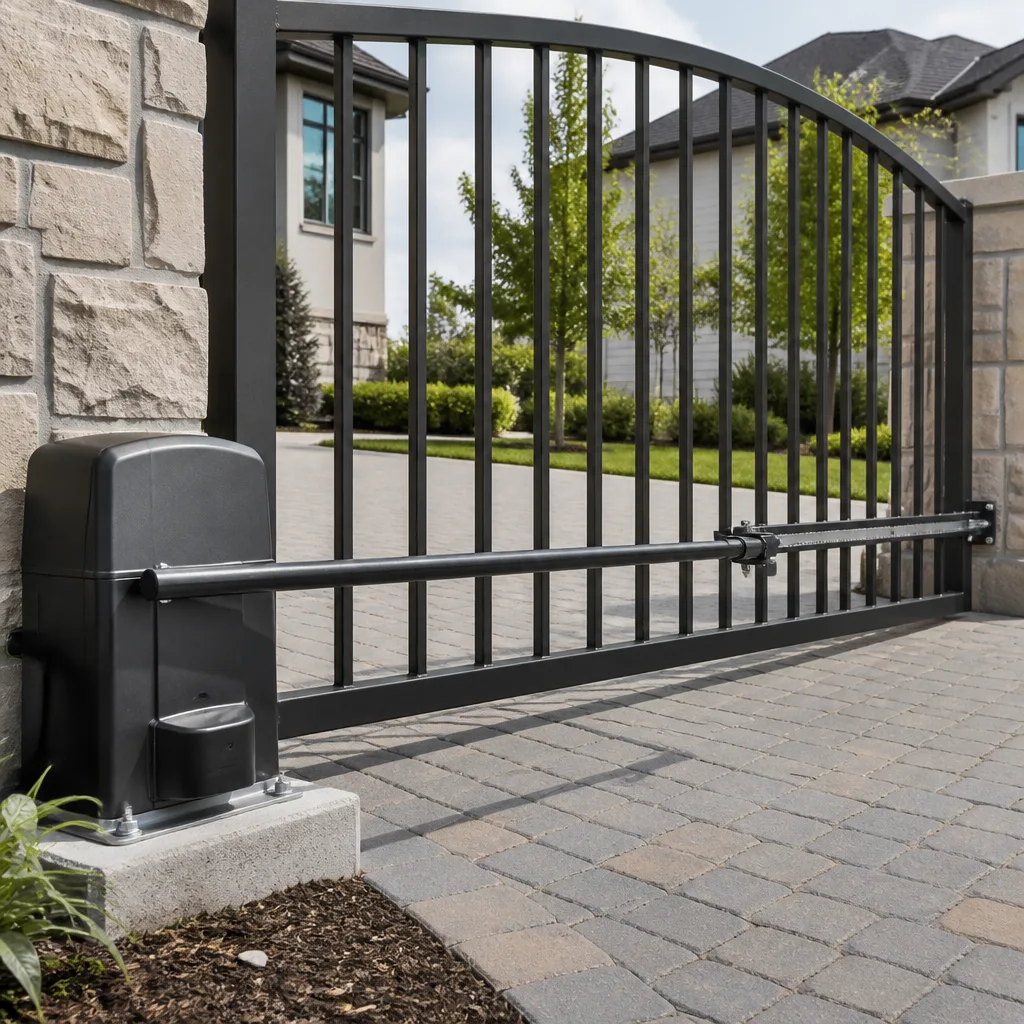
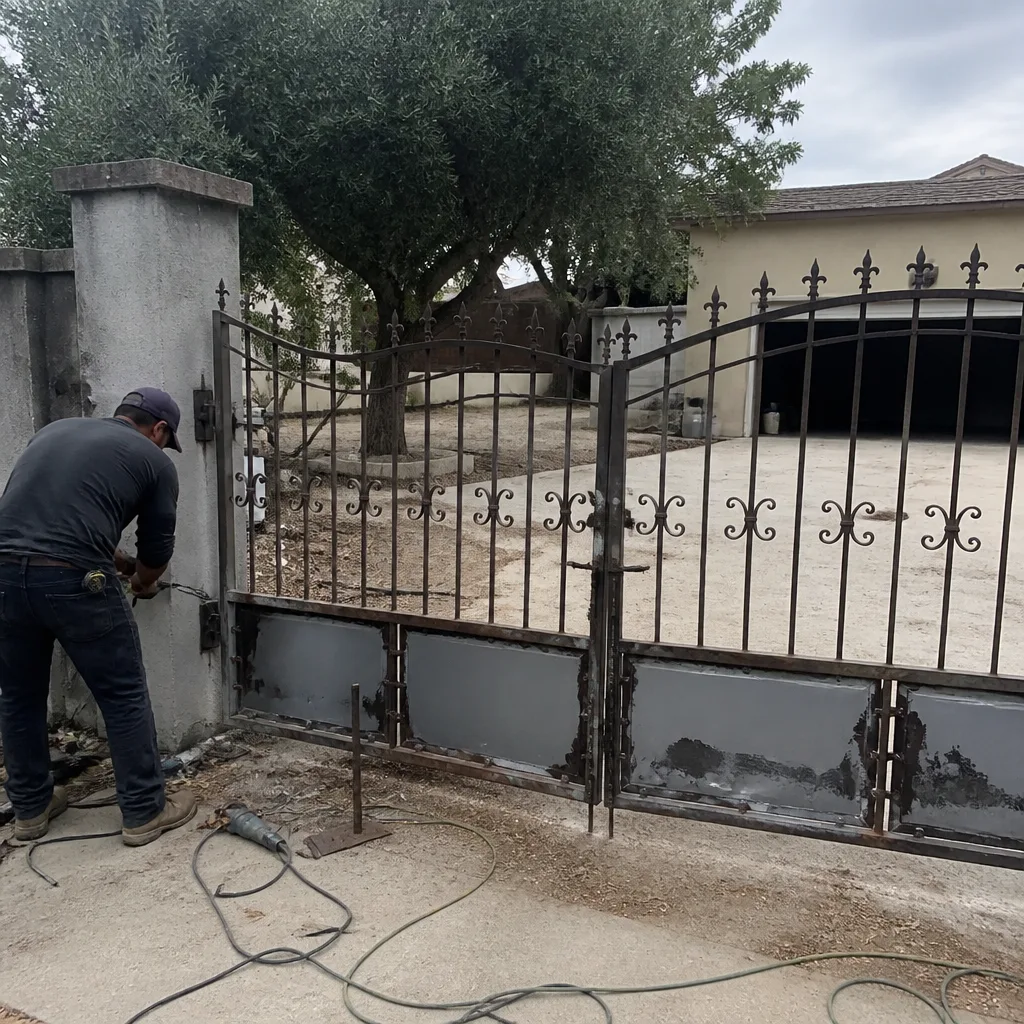 Before
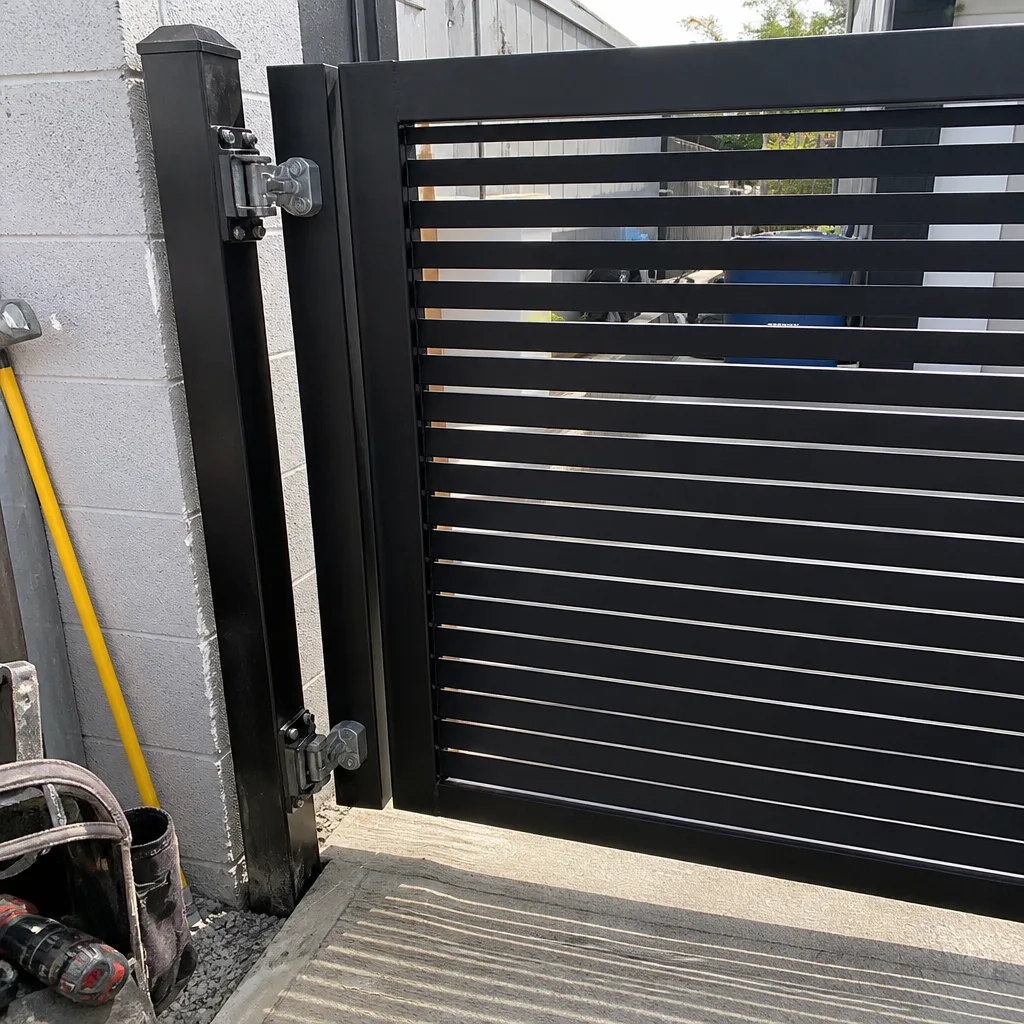 After
After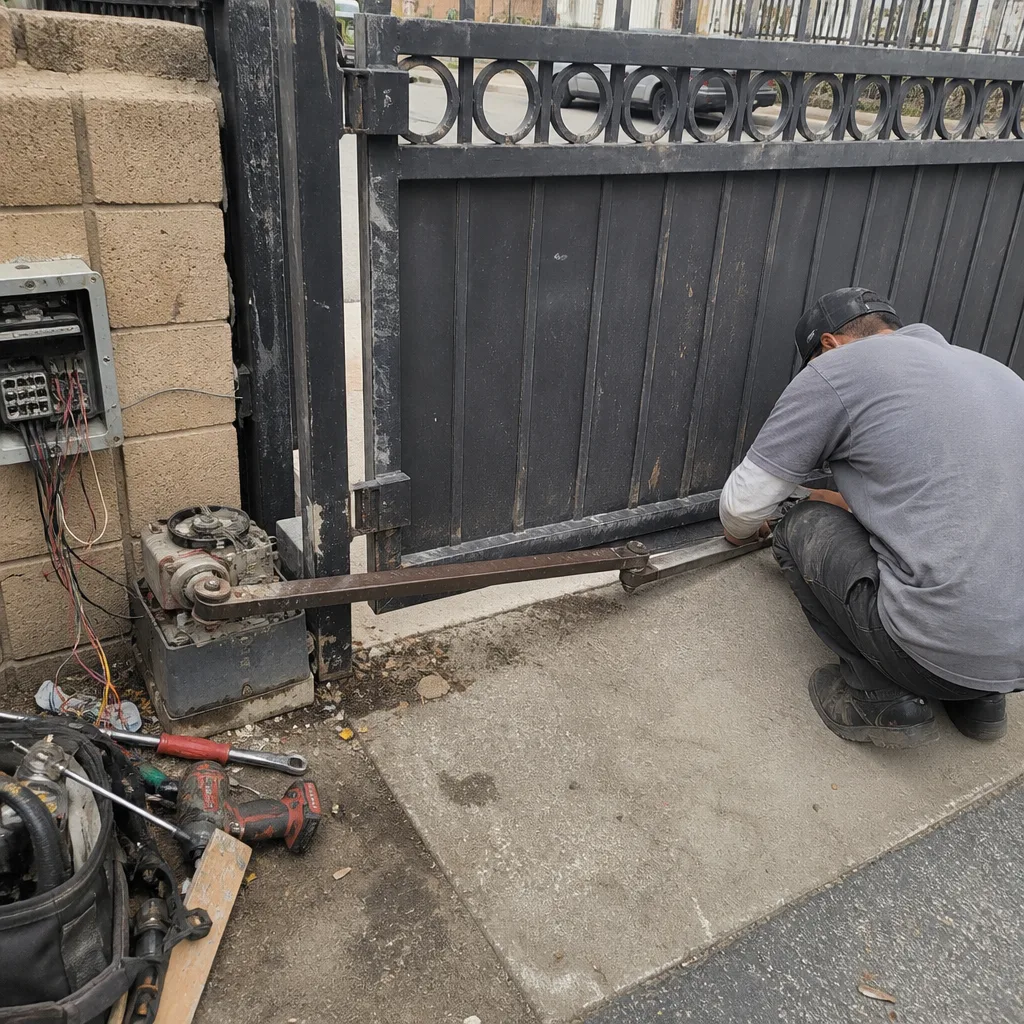 Before
 After
After Before
 After
AfterChoosing the Right Gate Repair Brand: A Buyer’s Guide for Los Angeles
One luxury gate opener brand with a sterling national reputation has a three-week parts lead time in Los Angeles because no local distributor stocks its boards. A repair that should take one day takes 22. Brand loyalty has a zip-code problem, and in a city where a broken driveway gate means an open invitation to your property, that delay is more than an annoyance, it’s a genuine security exposure. This guide walks through what actually matters when choosing a gate opener brand in Los Angeles: parts availability, corrosion resistance, smart-home compatibility, warranty transfer rules, and which brands train their technicians properly.
Quick Answer
The best gate opener brand in Los Angeles is the one with local parts stock, a warranty that transfers to new homeowners, and a technician network that actually knows how to install and repair it. For most LA homes, that means LiftMaster, FAAC, or Mighty Mule depending on your gate type, automation setup, and distance from the coast. Avoid brands with no local distributor support, because a cheap opener becomes expensive when you’re waiting three weeks for a control board from another state and need our Gate Repair services urgently.
Table of Contents
- The Parts Availability Problem: Why Local Stock Beats National Reputation
- Coastal Corrosion: What the Specs Actually Mean in 90266 and 90291
- Smart-Home Compatibility: Matching Opener Brands to Ring, Google, and HomeKit
- Warranty Transfer Policies: What LA’s High Home Turnover Demands
- Technician Certification: Hands-On Training vs. Online Quizzes
- Brand-by-Brand Breakdown: LiftMaster, FAAC, Mighty Mule, and BFT
- What Repairs Actually Cost in Los Angeles
- Common Mistakes to Avoid
- When to Call a Professional
- Frequently Asked Questions
The Parts Availability Problem: Why Local Stock Beats National Reputation
When your gate opener fails, the repair timeline comes down to one question: does anyone in Los Angeles have the part on a shelf? We’ve seen the same failure take one afternoon or three weeks depending entirely on the brand. A LiftMaster control board is almost always available same-day from local distributors. A BFT hydraulic pump seal may be a week out. A high-end European brand can mean waiting on a shipment from the East Coast while your gate sits open.
Here’s what local parts availability looks like in practice for the brands we work with most:
- LiftMaster and Chamberlain: Same-day or next-day board and motor availability at several LA-area distributors, including locations near the 110 and 405 corridors.
- FAAC: Next-day on common hydraulic and electromechanical parts. Specialized valves may take 3-5 days.
- Mighty Mule: Control boards and sensors are widely stocked at local home centers and distributor warehouses. Same-day in many cases.
- BFT: Two to five days on most parts. Some specialized Italian components stretch to two weeks.
- European luxury brands (not worth naming individually): We have seen multi-week waits because no LA distributor carries their stock. These are well-engineered machines, but a broken gate in Los Angeles needs a part today, not in March.
The gate opener repair timeline you actually experience is set before the technician even arrives. Before you buy, call one or two local gate repair companies and ask which brands they can source parts for same-day. Their answer tells you more than any marketing brochure.
Coastal Corrosion: What the Specs Actually Mean in 90266 and 90291
Los Angeles is two climates wearing one city name. A gate opener in Manhattan Beach (90266) lives in salt air, fog, and marine moisture nearly every morning. A gate opener in Pasadena deals with heat, dust, and almost zero condensation. The same brand and model will age completely differently in these two environments.
Corrosion resistance in gate openers comes down to three things: the control board coating, the motor housing material, and whether internal connections are sealed or exposed. Brands publish corrosion specs, but we’ll translate what matters in the field:
- Control board conformal coating: Look for boards explicitly described as coated or potted. LiftMaster and FAAC boards are generally coated against moisture. Some budget Mighty Mule boards are not, which means a board that lives five blocks from the beach may fail in three years.
- Motor housing material: Aluminum housings hold up better than steel in marine air. Galvanized steel with a powder coat is decent but will eventually show rust pinholes near the coast.
- Sealed connectors: Moisture intrusion at wire connections is the silent killer. Brands that use weatherproof plugs or heat-shrink connections survive coastal conditions far better than those with bare spade terminals.
The homes we serve near Venice, Santa Monica, and the 90401 range tell the story clearly: a properly matched opener lasts 10 years within 3 miles of the ocean. A poorly matched one may last four. The difference is rarely the motor itself, it’s the electronics slowly corroding until a control board replacement joins the repair bill.
Smart-Home Compatibility: Matching Opener Brands to Ring, Google, and HomeKit
Los Angeles homeowners run three smart-home ecosystems more than any others: Ring, Google Home, and Apple HomeKit. Your gate opener brand largely determines whether the gate joins those systems smoothly or requires a third-party bridge that introduces another failure point.
Here’s the real-world picture of how the major brands integrate:
- LiftMaster: Native support for Google Home and Amazon Alexa. HomeKit support is available on select models via the myQ ecosystem, but not all LA-area installers will mention the model-specific limitation. Ask before you buy.
- FAAC: Works with most smart-home ecosystems through third-party relays or the FAAC Simply Connect module. The integration is solid, but budget for the module, it is not always included.
- Mighty Mule: Direct compatibility with Alexa and Google Home on newer models. HomeKit is not natively supported, which is a dealbreaker for some LA homeowners who run everything through Apple.
- BFT: Uses the BFT U-Link platform, which supports Google Home and Alexa. HomeKit integration is limited and often requires a workaround that installers in Los Angeles charge extra for.
Before you choose a brand, decide which ecosystem you’ll actually use. If your front door lock, cameras, and garage are all on HomeKit, a brand without native HomeKit support will frustrate you every single time you open the app and see the gate is the only device that doesn’t respond cleanly.
Warranty Transfer Policies: What LA’s High Home Turnover Demands
Los Angeles homes change hands often. The median homeowner in many LA neighborhoods moves within seven years, and the gate opener they installed often outlives their tenure. When the new owner calls for a repair, the question becomes: does the manufacturer still stand behind the hardware?
Warranty transfer policies vary significantly by brand:
- LiftMaster: Transferable on most residential models if the new owner registers the unit. This is one of the reasons LiftMaster remains a safe recommendation for LA’s resale-heavy market.
- FAAC: Warranty is generally tied to the original purchaser, but FAAC’s durability record is strong enough that many LA homeowners encounter their first FAAC repair well after the warranty window anyway.
- Mighty Mule: Warranty follows the product, not the owner, but coverage periods are shorter, typically one to two years depending on the model. The practical tip: check the original purchase date, not the move-in date, when evaluating coverage.
- BFT: Warranty is original-purchaser only. If you bought a house with a BFT opener installed, you are generally outside the warranty from day one.
For homeowners who know they might sell in the next five years, a transferable warranty is a real selling point, not a marketing bullet. It means the next owner’s first repair is covered, which means fewer surprises during escrow negotiations when a home inspector flags the gate.
Technician Certification: Hands-On Training vs. Online Quizzes
Every gate opener brand offers some form of technician certification. The difference between them is enormous, and it directly affects repair quality in Los Angeles, where thousands of gates were installed decades ago and mismatched parts are the norm, not the exception.
Some brands issue certifications after a short online course and a multiple-choice quiz. A technician who passes that quiz understands the product line conceptually but has never touched a limit switch, never diagnosed a failed capacitor, and never seen what a corroded control board looks like in person.
Contrast that with brands that require in-person training:
- Brands with hands-on certification requirements: LiftMaster and FAAC both run regional training sessions where technicians work on actual equipment. A technician certified by these programs has diagnosed real failures under supervision.
- Brands with online-only certification: Mighty Mule and BFT certification can largely be completed through online modules. The information is useful, but it does not prove hands-on competence.
- Why this matters in Los Angeles: This city has gates installed by every contractor imaginable over the last 40 years. A technician who only knows the book answer to a problem will struggle with a 2004-era system that has been rewired twice by previous handymen. Hands-on training is the difference between a 45-minute repair and a four-hour saga.
When you call a gate repair company, ask whether their technicians are factory-certified and, specifically, whether that certification involved in-person training. For The Complete Electric Gate Repair Guide for Los Angeles Homeowners, certification standards are a key factor. At Calder Gate Repair, our technicians have hands-on familiarity with all nine major brands we service, because that’s the only way to arrive at a Los Angeles driveway and fix the gate correctly the first time.
Brand-by-Brand Breakdown: LiftMaster, FAAC, Mighty Mule, and BFT
LiftMaster: The All-Around Safe Choice for LA
LiftMaster is the default recommendation for most Los Angeles homes because it wins on the two things that matter most: local parts availability and transferable warranty coverage. The boards are common enough that every supply house in the LA basin stocks them, and when the gate fails, a technician can typically complete the repair the same day.
LiftMaster also makes sense for homeowners who run myQ already for their garage door. The same app controls both, which eliminates a second login and a second ecosystem to maintain. Smart-home support is broad, including Google Home and Alexa, with HomeKit available on specific models.
FAAC: The Heavy-Duty Choice for Big Gates and Driveway Systems
FAAC builds hydraulic and electromechanical operators that handle heavy gates, long driveways, and commercial-style residential installations. If your gate is a 20-foot wrought-iron monster on a hillside in the Hollywood Hills or Bel Air, FAAC is built for that job.
The trade-off in Los Angeles is that FAAC parts are not as universally stocked as LiftMaster parts. Common components arrive next-day, but specialized hydraulic seals and valves can take several days. If you own a FAAC system, the repair strategy is proactive maintenance, not calling only when the gate is already stuck open.
Mighty Mule: The Practical Choice for Light Gates and Budgets
Mighty Mule dominates the entry-level segment, and for a lightweight gate in a dry inland area, it is genuinely hard to beat on price. The parts are available everywhere, including big-box home centers, which means a control board replacement is often a same-day event.
The important caveat is coastal exposure. Mighty Mule boards are not always conformal-coated, which means marine air in 90266 or 90291 shortens their lifespan measurably. We recommend Mighty Mule without hesitation for inland LA, and with clear expectations for coastal zip codes.
BFT: Solid Engineering, Slower Parts Pipeline
BFT makes well-designed Italian gate automation equipment, and the engineering quality is real. The challenge in Los Angeles is the supply chain: parts typically take two to five days, and some specialized components stretch longer. If you have a BFT system, the best move is to identify a repair company that knows the line well enough to diagnose accurately the first time, because a wrong diagnosis plus a slow parts pipeline is the worst-case scenario. Our team at electric gate repair sees BFT systems regularly and keeps common components on hand to shorten that wait.
What Repairs Actually Cost in Los Angeles
Gate opener repair pricing in Los Angeles is consistent across reputable companies. Here is what you should expect before parts, based on the work we see week to week:
- Limit switch replacement: $140 to $210. The limit switch is the small sensor that tells the gate when to stop, and it is one of the most common failures we repair.
- Control board replacement: $260 to $420 before parts, depending on the brand. LiftMaster and Mighty Mule boards are generally at the lower end; FAAC and BFT boards run higher.
- Sensor and safety edge repair: $120 to $190. These components protect people and vehicles, and when they fail, the gate usually refuses to close properly.
- Full opener replacement: $900 to $2,800 before parts. The wide range reflects the difference between a light Mighty Mule swing opener and a heavy-duty FAAC hydraulic system on a 500-pound gate.
- Service call and diagnostic: $75 to $120, generally applied toward the repair if you proceed. At Calder Gate Repair, the price you are quoted is the price you pay, written down before any work starts.
Every reputable company in Los Angeles should give you a written price before touching the gate. If someone quotes a price over the phone and then changes it at the door, that is not a minor annoyance, it is a signal that this company should not be on your property.
Common Mistakes to Avoid
- Choosing a brand before checking local parts stock. A gate opener with a great national reputation may still leave you waiting three weeks for a part in Los Angeles. Ask about local parts availability before you buy.
- Ignoring coastal corrosion in the 90266, 90291, and 90401 range. A board without conformal coating will die early in marine air. The brand that works for your friend in Sherman Oaks may be the wrong brand for your house in Venice.
- Buying a brand with no transferable warranty when you know you’ll move. In a city with LA’s turnover rate, the next owner will be the one filing the repair claim. A non-transferable warranty means that repair comes out of their pocket, which is not a good look during escrow.
- Assuming all technician certifications are equal. Online-quiz certifications do not represent hands-on competence. Ask whether the technician has in-person factory training, and do not accept a vague answer.
- Deferring maintenance on a gate that works fine, right up until it doesn’t. A gate that is noisy, slow, or reversing unexpectedly is sending a clear signal. The repair cost is almost always lower when you address the warning signs early.
- Picking a smart-home brand that does not match your ecosystem. If your home runs on HomeKit and your gate opener does not support it natively, you will pay for a bridge and you will be annoyed by it every day.
When to Call a Professional
If your gate is making grinding noises, reversing mid-cycle, failing to close fully, or showing signs of corrosion around the control box, call a professional before it fails outright. See The Complete Gate Opener Repair Guide for Los Angeles Homeowners for warning signs to watch for. A gate that stops working is an emergency, but a gate that is working badly is an early warning. The repair is less expensive when you catch it before the motor burns out or the board shorts.
If your gate has already failed and will not open or close, that is a security issue for your home, not a weekend project. Gate springs and heavy gate leaves under tension can cause serious injury to anyone who tries to force them manually. Calder Gate Repair offers free estimates in Los Angeles, call (903) 417-0793 and we’ll give you a written price before any work begins.
For a full picture of what gate service looks like in this city, see our Gate Repair in Los Angeles guide. If your opener has failed completely, our Calder Gate Repair home page explains the three guarantees every job carries.
Frequently Asked Questions
For coastal homes in zip codes like 90266 and 90291, LiftMaster is the safest recommendation because its control boards are conformal-coated against moisture, parts are available same-day, and the warranty transfers to new owners. A FAAC system is also a strong choice if you have a heavy gate, but be prepared for slightly longer parts timelines. Call (903) 417-0793 for a free estimate and we will match the brand to your exact location.
Most gate opener repairs in Los Angeles run $140 to $420 before parts, depending on the component. A limit switch replacement typically runs $140 to $210, while a control board replacement runs $260 to $420 before the cost of the board itself. Full opener replacement with a new unit generally lands between $900 and $2,800 before parts, depending on gate weight and brand.
Yes, most established gate repair companies in Los Angeles offer same-day or next-day service for urgent failures. Calder Gate Repair answers calls with a live person 24/7 and dispatches background-checked, uniformed technicians with a trackable arrival time, not a four-hour window. Call (903) 417-0793 and we will confirm availability immediately.
A full replacement typically includes removing the old opener, installing the new operator, mounting all hardware, wiring the motor to the control board, programming remotes and keypad, testing safety sensors and edges, and demonstrating operation. At Calder Gate Repair, the full scope and price are written down before work starts, and the invoice never changes at the door.
Yes. Our technicians are factory-familiar with LiftMaster, FAAC, BFT, Linear, Viking, Ghost Controls, DoorKing, Elite, and Mighty Mule, which covers virtually every residential gate opener in Los Angeles. We carry common parts for the brands we see most often, which shortens repair timelines across most of the city.
Some light swing openers are designed for DIY installation, but we generally recommend professional installation in Los Angeles. Gate motors involve electrical wiring, safety sensors, and heavy moving parts that can cause serious injury if misinstalled, and many LA municipalities require permits for gate automation tied to vehicle access. A professional installation also preserves the manufacturer warranty, which some brands void for DIY installs.
The Bottom Line
Choosing a gate opener brand in Los Angeles is a local decision. The right brand for a coastal home in Venice is not the same as the right brand for a hillside property in Pasadena, and the wrong choice shows up later as a corroded board, an incompatible smart-home setup, or a warranty that died with the previous owner. Check local parts availability, match corrosion resistance to your zip code, verify smart-home compatibility against your ecosystem, and insist on a technician with hands-on factory training. That sequence eliminates 90% of the bad outcomes we see. The best gate opener is the one that keeps your gate working, and in Los Angeles, that depends on the details most national guides never mention.
Written by Nico Alvarez, Owner at Calder Gate Repair, serving Los Angeles since 2009.