
Last updated October 9, 2026
Free on-site gate assessment - hinges, posts, and your LiftMaster or Nice gate operator checked before anything is quoted
The assessment is free and the quote is the invoice.
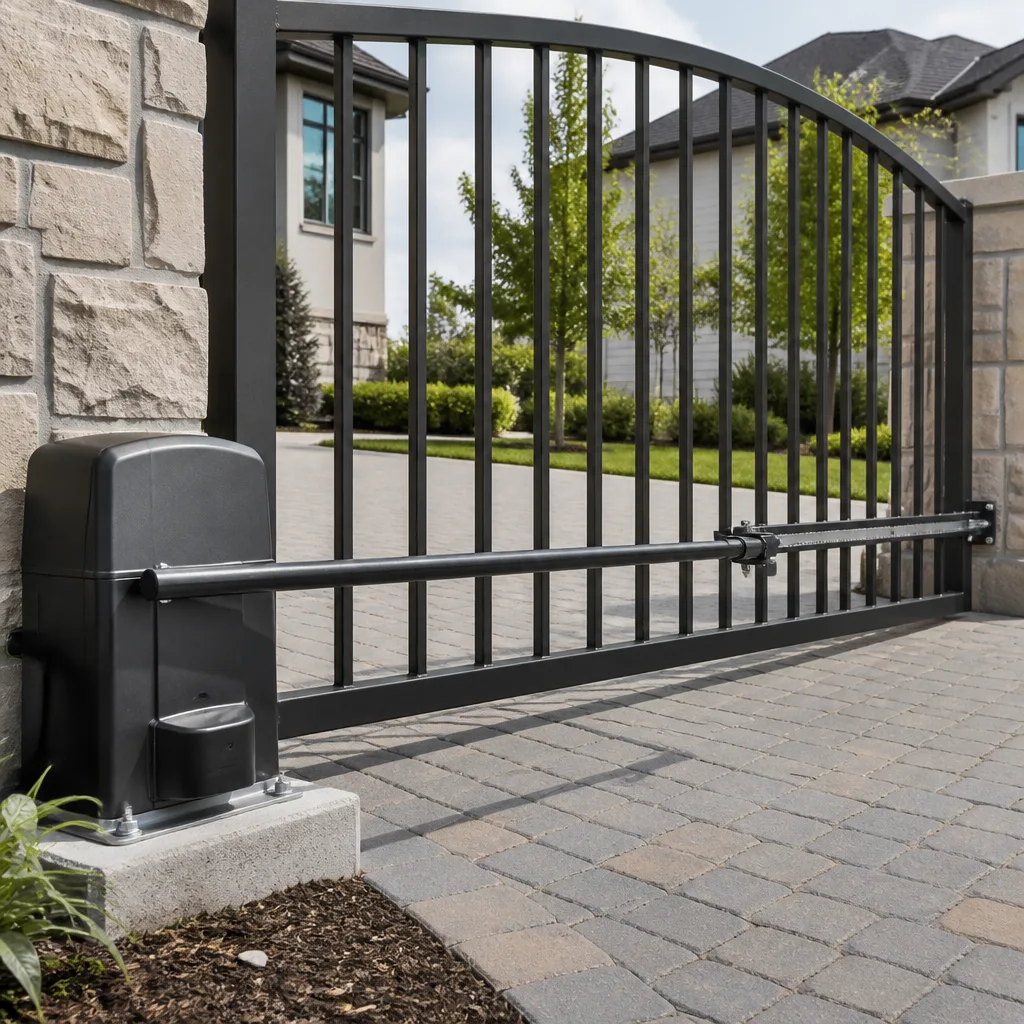
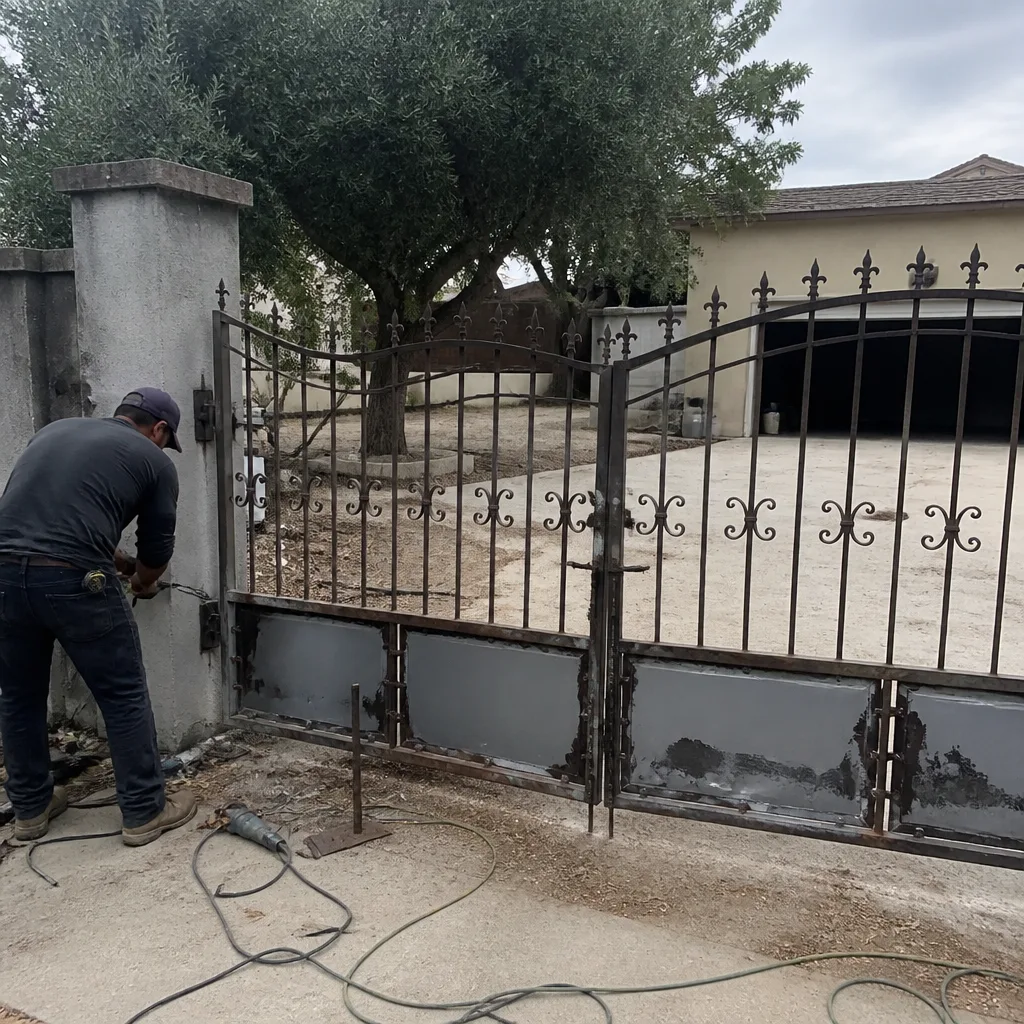 Before
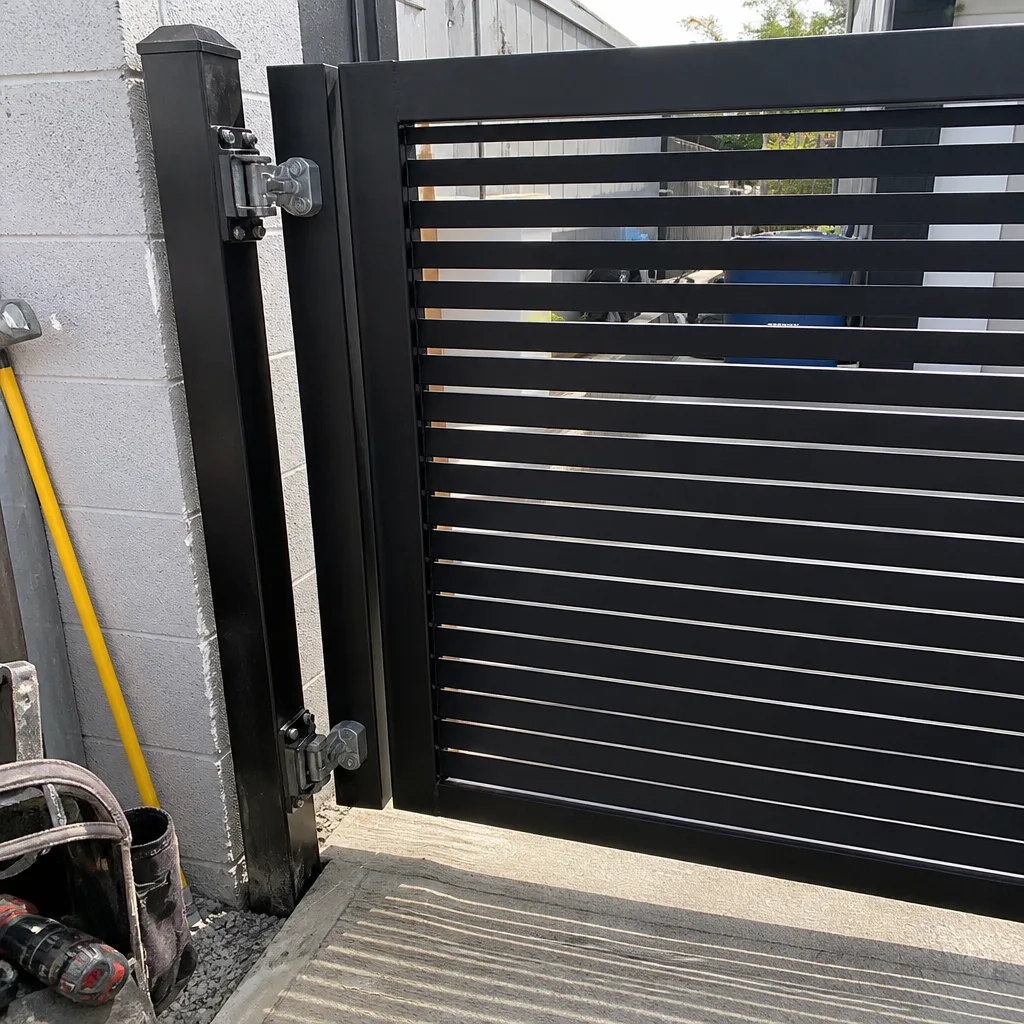 After
After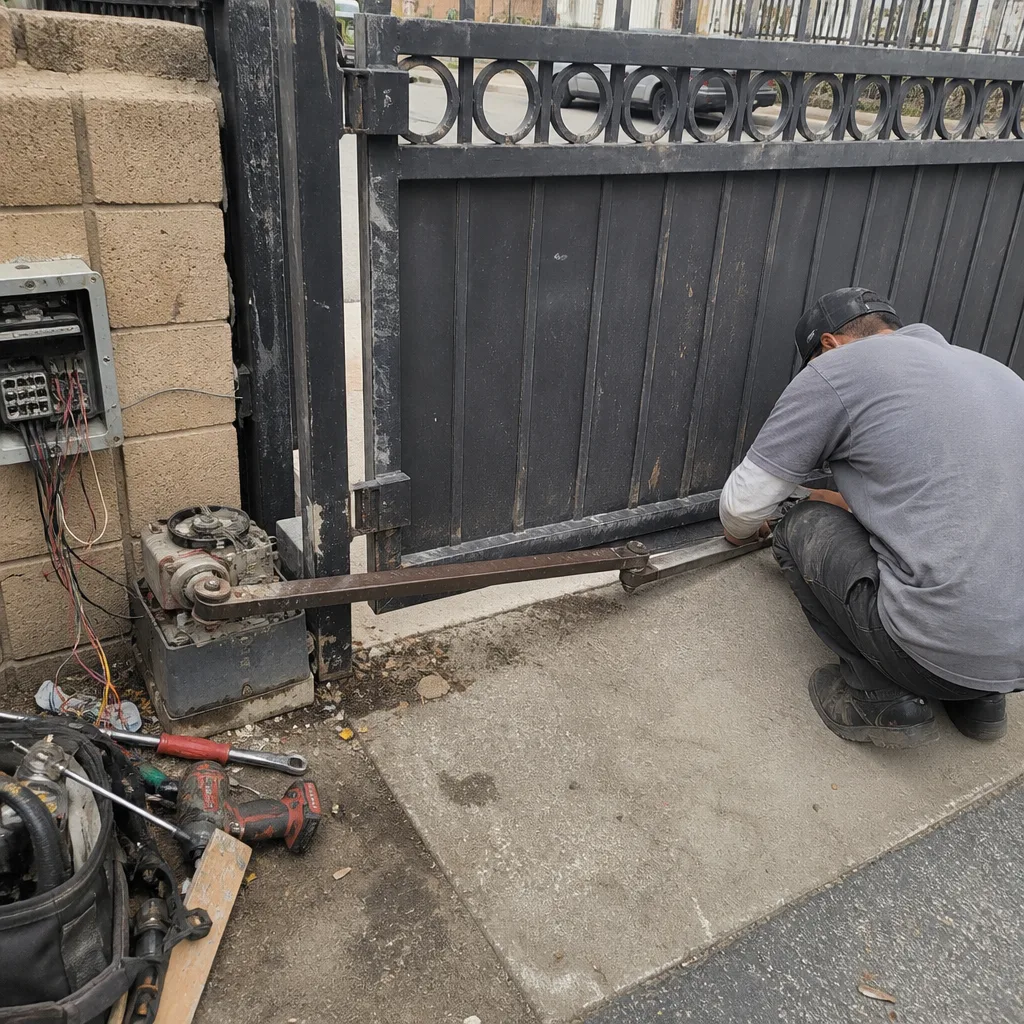 Before
 After
After Before
 After
AfterThe Complete Electric Gate Repair Guide for Los Angeles Homeowners
LADWP’s grid delivers some of the most unpredictable voltage in Southern California. One brownout in Sherman Oaks, one surge in Silver Lake, and the control board inside your gate opener can fry without warning. Most gate repair guides skip this entirely. They’ll talk about broken hinges and dead remotes while ignoring the single biggest killer of electric gates in Los Angeles: unstable power. This guide explains how our city’s electrical environment ages your gate faster than it should, which brands survive it best, what LA code requires, and what protection actually works.
Quick Answer
Electric gate repair in Los Angeles typically costs $225 – $575 depending on the failed component, with control board replacement running $350 – $900 including labor and parts. Most repairs are completed the same day, and the most common failures we see across the city are directly linked to LADWP voltage fluctuations damaging control boards. You’ll get the most life out of your gate by investing in proper surge protection and choosing an opener brand known to hold up in LA’s climate.
Table of Contents
- Why LA’s Power Grid Is Hard on Electric Gates
- Brand-by-Brand Reliability in LA’s Climate
- Los Angeles Code Requirements for Electric Gates
- Surge Protection That Actually Works
- Gate Repair Company vs. Electric Gate Specialist
- What a Proper Electric Gate Repair Looks Like
- Electric Gate Repair Costs in Los Angeles
- Common Mistakes to Avoid
- When to Call a Professional
- Frequently Asked Questions
- The Bottom Line
Why LA’s Power Grid Is Hard on Electric Gates
Los Angeles doesn’t have one power grid. It has a patchwork of aging substations, overhead lines through fire zones, and demand spikes that arrive every summer afternoon when air conditioners across the Valley switch on at once. The result is voltage that fluctuates more than homeowners expect. A control board that runs fine in Irvine or Burbank may fail three years sooner in Los Angeles simply because it’s been subjected to thousands of small brownouts and micro-surges.
Here’s what happens inside your gate opener. The control board, which is the small circuit panel that manages every function of the gate, has capacitors and chips designed to operate within a narrow voltage range. When LADWP voltage dips or spikes, those components absorb the stress. Over time, solder joints crack, capacitors swell, and one day the board stops responding entirely. The gate won’t open, the remote does nothing, and the keypad blinks but the motor stays silent.
In our experience repairing gates from Echo Park to Encino, we see a clear pattern. Homes on circuits that also feed commercial strips or dense apartment buildings suffer more board failures. Homes with solar installations can also experience voltage irregularity when inverters cycle. The damage is cumulative and quiet, which is why it catches so many homeowners off guard.
The fix isn’t complicated: a proper surge protector installed at the gate’s power source, and on higher-end systems, a line conditioner. We’ll cover what actually works later in this guide.
Brand-by-Brand Reliability in LA’s Climate
Not all gate openers respond to Los Angeles conditions the same way. Some control boards are overbuilt and tolerant of voltage swings. Others are sensitive, and we replace them regularly. Here’s what years of repair work across LA has taught us about the brands most common in local driveways.
LiftMaster. The most common brand in Los Angeles, and for good reason. LiftMaster control boards are generally robust, and parts are widely available. Their swing gate openers hold up well in coastal neighborhoods like Playa del Rey, where salt air is the bigger threat. The weak point is the logic board on older models, which doesn’t always recover from a hard surge. Surge protection strongly recommended.
FAAC. Popular on high-end properties in Brentwood and Pacific Palisades. FAAC hydraulic operators are mechanically excellent and can last 10 – 15 years. The electronics, however, are Italian-designed and sometimes less forgiving of LA’s voltage swings. If you own a FAAC, a line conditioner is worth the investment. When the board goes, it’s usually a $400 – $700 repair.
BFT. Another Italian brand, common on condominium and small commercial gates. BFT boards are compact and tightly packed, which makes them harder to repair and more often replaced outright. They’re fine gates, but LA’s electrical conditions tend to shorten board life compared to LiftMaster.
Linear. Often found on sliding gates in the Valley. Linear’s strength is simple, proven electronics. Boards are less expensive to replace, and the mechanical components are solid. We see fewer catastrophic Linar failures, but when a Linear board dies, it tends to be from a lightning-adjacent surge or a major grid event, not gradual wear.
Viking. Common on estate properties and long residential driveways. Viking operators are workhorses, but their control boards are expensive. A Viking board replacement in Los Angeles routinely runs $500 – $900. Proper surge protection is essential because the cost of failure is high.
Ghost Controls. A newer brand popular on DIY-installed gates, especially in the Hollywood Hills. Ghost Controls boards are affordable and easy to source, but they’re not as hardened against voltage fluctuations as commercial-grade brands. Many of our Ghost Controls calls are board replacements after a Santa Ana wind event knocked out power and spiked the line on restoration.
DoorKing, Elite, and Mighty Mule. DoorKing and Elite are built for commercial-grade use and hold up well in Los Angeles, though their boards are expensive when they do fail. Mighty Mule is a budget-friendly option we see on smaller gates, but its boards are the most sensitive to power issues. If you have a Mighty Mule and no surge protection, it’s not a question of if the board fails, but when.
Los Angeles Code Requirements for Electric Gates
Los Angeles has specific rules for automatic gates, and they exist for a reason. A gate that closes on a car is a repair bill. A gate that closes on a person is a catastrophe. The city’s building and safety codes require automatic gates to include safety systems that detect obstructions and reverse the gate’s direction before injury occurs.
Here are the key requirements Los Angeles homeowners should know:
- Automatic reversing systems. Every electric gate in Los Angeles must reverse automatically when it encounters an obstruction. This is the law, not a recommendation. If your gate doesn’t reverse when it hits resistance, it’s out of compliance and genuinely dangerous.
- Loop detectors. Most LA driveways use an induction loop buried in the pavement. This is the system that detects your car’s metal mass and tells the gate to stay open or open on approach. Loop detectors degrade over time, especially in neighborhoods with shifting soil or heavy rain, and must be recalibrated or replaced periodically.
- Edge sensors. These are the pressure-sensitive strips mounted along the leading edge of swing gates or the closing edge of slide gates. They’re your first physical line of defense against entrapment. LA inspectors look for edge sensors that are intact, properly mounted, and wired to immediately trigger a reverse command.
- Photo eyes. Infrared beams that create an invisible tripwire across the gate opening. If a child or pet breaks the beam, the gate stops and reverses. Photo eyes need clean lenses and proper alignment, which is a simple but often-forgotten maintenance item.
- Manual release. Los Angeles code requires every automatic gate to have a manual release mechanism accessible from outside the gate. This is what allows firefighters and emergency responders to open your gate during a power outage or malfunction. If your manual release is padlocked or rusted shut, that’s a compliance failure that can also delay emergency access to your home.
If you’re buying a home with an existing electric gate, have the safety systems inspected. Many older gates in Los Angeles were installed before current code requirements, and homeowners often don’t realize their gate is non-compliant until something happens.
Surge Protection That Actually Works
Surge protection is where marketing outpaces reality. You’ll see $20 plug-in surge strips sold as “whole home gate protection,” and they are almost worthless for an electric gate. Here’s what actually protects your gate electronics in Los Angeles.
Step 1: Install a dedicated surge protector at the gate’s power source. This is a hardwired device installed in the electrical box or junction box that feeds your gate operator. It diverts voltage spikes to ground before they reach the control board. A quality unit costs $80 – $150 installed, and it’s the minimum protection every electric gate in LA should have.
Step 2: Add a low-voltage surge protector for accessory wiring. Your keypad, phone entry system, and loop detector all run on low-voltage wiring that can carry a surge straight to the control board. A low-voltage surge module costs $40 – $80 and protects the pathways most homeowners forget about.
Step 3: Consider a line conditioner for expensive systems. If you have a FAAC, Viking, or DoorKing opener, a line conditioner is the upgrade that actually protects against brownouts, not just spikes. It smooths out voltage dips before they reach the board. This runs $200 – $400 installed and pays for itself if it prevents one board failure.
What doesn’t work: cheap plug strips, relying on a whole-home breaker panel surge protector alone (they’re better than nothing but insufficient for electronics this close to the street), and doing nothing because “it hasn’t happened yet.” Every gate we repair after a surge shares one trait: the owner didn’t know surge protection for gates existed.
Gate Repair Company vs. Electric Gate Specialist
Any handyman can swap a hinge. Few can diagnose a control board failure, program a new board for a BFT, or troubleshoot an intermittent loop detector. When your electric gate fails in Los Angeles, you need someone who works on electric gates specifically, not someone who happens to have a truck and a socket set.
Here’s what separates a general repair company from an actual electric gate specialist:
- Brand familiarity. A specialist works on these systems daily. They know that a Viking board has different programming menus than a Ghost Controls board, and they don’t waste two hours of billable time reading the manual while standing in your driveway.
- Diagnostic approach. Generalists replace parts and hope. Specialists trace the failure path: power input, transformer, board, limit switch, motor. They replace the failed component, not the whole system, because they know how to isolate the fault.
- Proper tools and inventory. An electric gate specialist arrives with multimeters, programming dongles, and common replacement boards for major brands. A generalist arrives and then leaves to “go get a part,” which means a second trip charge and days of waiting.
- Safety compliance knowledge. Electric gates involve force settings, reversing sensitivity, and entrapment codes. A specialist calibrates the gate to pass an LA inspection. A generalist leaves it “working” but potentially dangerous.
When you call Calder Gate Repair, the technician who arrives is trained on nine major opener brands, including the BFT and Linear systems common in Los Angeles. You won’t get a generic “gate person.” You’ll get someone who can name the exact board revision in your opener and tell you why it failed. That’s the difference between a repair that lasts one month and one that lasts ten years.
What a Proper Electric Gate Repair Looks Like
A good repair follows a repeatable process. Here’s the sequence we use, and what you should expect from any reputable gate repair company in Los Angeles.
- Initial diagnosis. The technician asks what happened, when it started, and what you’ve already tried. Then they test the system: remote, keypad, safety sensors, manual operation. Most diagnoses take 20 – 30 minutes.
- Written price before work begins. This is non-negotiable. You receive a written price for the repair, including parts and labor, before anything gets disassembled. The number on that quote is the number on the invoice. If a company won’t put the price in writing first, call someone else. Calder Gate Repair never starts work without it.
- The repair itself. Parts are replaced, wiring is corrected, boards are reprogrammed. For most repairs, this takes one to two hours. Complex jobs, like full board replacement with accessory reprogramming, can run three hours.
- Testing and calibration. The gate is cycled multiple times. Force settings are checked. Safety sensors are verified. The auto-reverse function is tested with actual resistance, because that’s what LA code requires, not just what looks right.
- Documentation. You receive a digital invoice you can pay from a link, along with notes on what was replaced and why. This is the Relay Standard, the booking-to-invoice experience that means you always know who’s coming, when they’ll arrive, and what the job will cost.
Every repair from Calder Gate Repair carries the 365-Day Done Right Promise. If the repair fails within 365 days, we return at no charge. Not a prorated visit. Not a diagnostic fee. A free return visit to make it right, stated in writing on every job.
Electric Gate Repair Costs in Los Angeles
Here’s what Los Angeles homeowners should expect to pay for common electric gate repairs. These are real ranges from our work across the city, from Atwater Village to Woodland Hills. Parts availability and opener brand shift these numbers, but they’ll get you close.
| Repair Type | Typical Cost in Los Angeles | Time on Site |
|---|---|---|
| Remote programming / replacement | $85 – $180 | 30 – 45 minutes |
| Limit switch adjustment | $120 – $225 | 45 – 60 minutes |
| Photo eye realignment or replacement | $140 – $280 | 1 – 1.5 hours |
| Loop detector replacement | $250 – $450 | 1.5 – 2 hours |
| Control board replacement (LiftMaster, Linear) | $350 – $550 | 1.5 – 2.5 hours |
| Control board replacement (FAAC, Viking, DoorKing) | $500 – $900 | 2 – 3 hours |
| Full motor replacement | $600 – $1,400 | Half day |
Every price above is quoted in writing before work starts. The invoice matches the quote. That’s not a selling point for us; it’s the floor of professional conduct. If you’re comparing repair companies in Los Angeles, ask specifically whether the quote is guaranteed before you book. Not all of them will say yes.
For a more detailed breakdown of what electric gate work costs across the city, see our Electric Gate Repair in Los Angeles page.
Common Mistakes to Avoid
- Skipping surge protection because “the gate worked for years without it.” That’s exactly how surge damage works: cumulative, silent, and expensive when it finally surfaces. Every unprotected gate in Los Angeles is living on borrowed time.
- DIY board repair without disconnecting power. Control boards carry live current even when the gate is off. A wrong move turns a $400 board repair into a hospital visit. Also, installing a new board without programming the force and safety settings correctly leaves you with a gate that doesn’t reverse in time.
- Replacing the opener when the problem is the loop detector. We see this constantly. A door won’t open, so someone buys an entire new operator, and the real issue was a failed loop in the driveway. A proper diagnostic saves thousands.
- Ignoring a gate that reverses mid-cycle. That’s a safety system doing its job. It means something is blocking the photo eye or the edge sensor is triggering, and ignoring it doesn’t make it go away; it makes the gate unpredictable.
- Painting over sensors and limit switches during a gate repaint. A fresh coat of paint on photo eye lenses or edge sensors renders them useless. If you repaint the gate, mask off the safety components.
- Hiring by hourly rate instead of written price. Hourly billing on gate work creates bad incentives. You want a fixed, written price for the repair before anything starts, not a clock that rewards slowness.
- Forgetting the manual release. The day will come when the power fails and you can’t open your gate. If the manual release is seized, rusted, or locked shut, you’re trapped in your own driveway, and so is every emergency vehicle that may need to reach you.
When to Call a Professional
High-tension springs, exposed wiring, and control boards with live current are not DIY territory. If your gate makes a grinding noise, won’t respond to any input, reverses unexpectedly, or shows scorch marks anywhere near the board, stop tinkering and call someone who handles these systems daily. A misdiagnosed electrical issue can turn a $200 repair into a $1,200 replacement, and a mishandled spring can cause serious injury.
If your gate is showing any of the symptoms in this guide, a trained technician can diagnose it in under an hour. Calder Gate Repair offers free estimates in Los Angeles, call (903) 417-0793 to book a visit with a clear arrival time.
Frequently Asked Questions
Most electric gate repairs in Los Angeles run $225 – $575, with the final price determined by which component failed. Control board replacement for premium brands like FAAC or Viking runs $500 – $900. You’ll get an exact written quote before any work starts, so there are no surprises. Call (903) 417-0793 for a free estimate.
Most gate opener repairs are completed the same day, since common failures like limit switches, photo eyes, and LiftMaster boards are parts our technicians keep on the truck. Complex repairs requiring a special-order part may take 2 – 3 days. Call us and we’ll tell you the real timeline for your specific opener.
Power outages in Los Angeles often end with a voltage spike when service is restored, and that spike can damage the control board in your gate opener. If your gate stopped responding after an outage, the board likely absorbed the surge. This is one of the most common failures we repair across the city, and it’s exactly why surge protection matters.
Yes. Los Angeles building code requires automatic gates to have reversing systems, and most installations include photo eyes, edge sensors, and loop detectors. If your gate doesn’t reverse on contact or lacks these components, it’s out of compliance and needs attention.
We repair all major brands, including LiftMaster, FAAC, BFT, Linear, Viking, Ghost Controls, DoorKing, Elite, and Mighty Mule. If you’re not sure what brand you have, check the motor housing for a label, or call us and describe the gate; we can usually identify it from that.
If the gate and operator are less than 10 years old, repair is almost always the better financial decision. Even a $700 board replacement beats a $2,500 – $5,000 new installation. Replacement makes sense when the motor is worn out, the gate itself is failing, and you’re looking at multiple major repairs within a year. A diagnostic visit will give you the straight answer. For a broader look at what’s involved in gate work across the city, visit our Gate Repair in Los Angeles page.
The Bottom Line
Electric gates in Los Angeles fail more often than they should, and the city’s unstable power grid is a major reason. Understanding that connection changes how you protect your gate. For more guides & resources, visit our blog. Invest in proper surge protection, know which brands hold up best in our climate, keep an eye on safety sensors, and hire a specialist who works on your brand daily. When you need a repair, get the price in writing before work starts, and make sure the company backs the job with a real guarantee. Calder Gate Repair does exactly that, on every job, for every Los Angeles homeowner who calls.
If your gate is acting up today, call (903) 417-0793 for a free estimate from a live person, 24/7. Or explore our Calder Gate Repair home page and Gate Opener Repair in Los Angeles page to learn more about what we do.
Written by Nico Alvarez, Owner at Calder Gate Repair, serving Los Angeles since 2009.