
Last updated October 9, 2026
Free on-site gate assessment - hinges, posts, and your LiftMaster or Nice gate operator checked before anything is quoted
The assessment is free and the quote is the invoice.
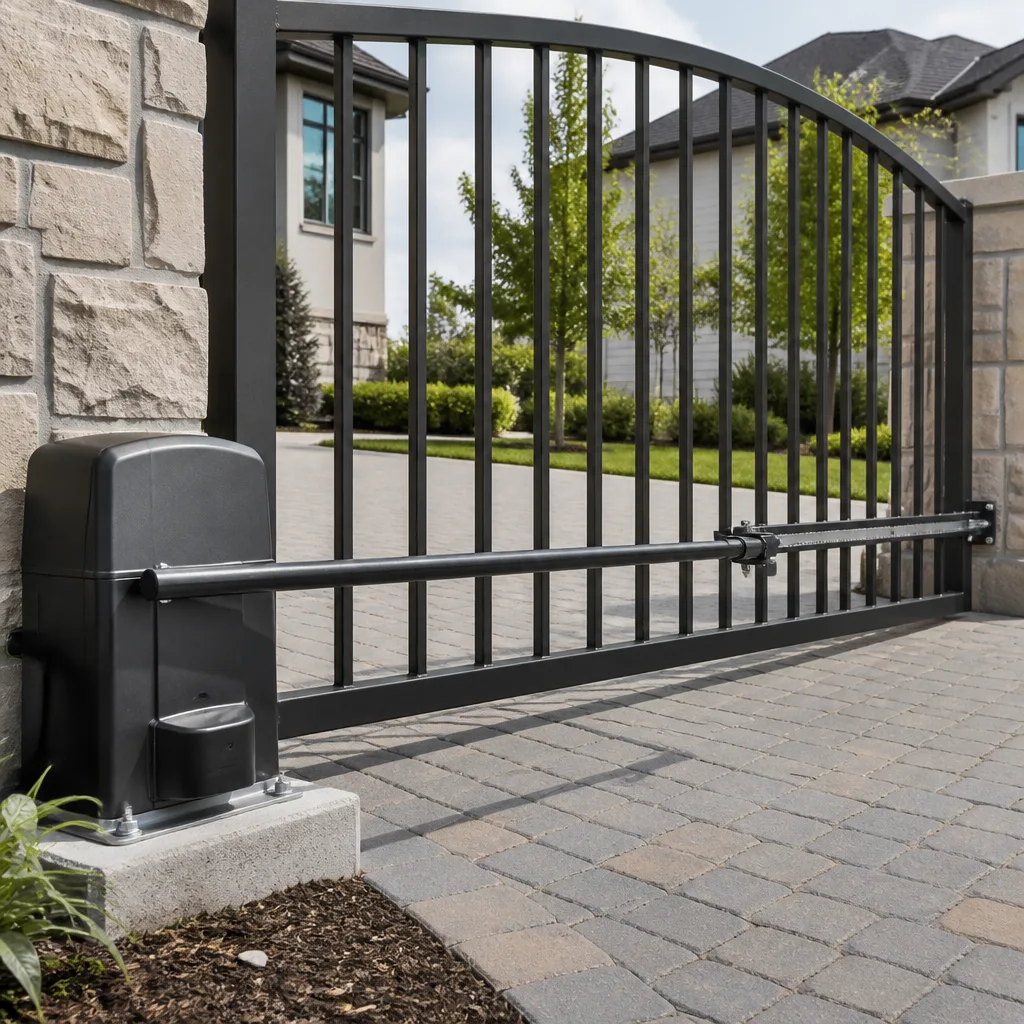
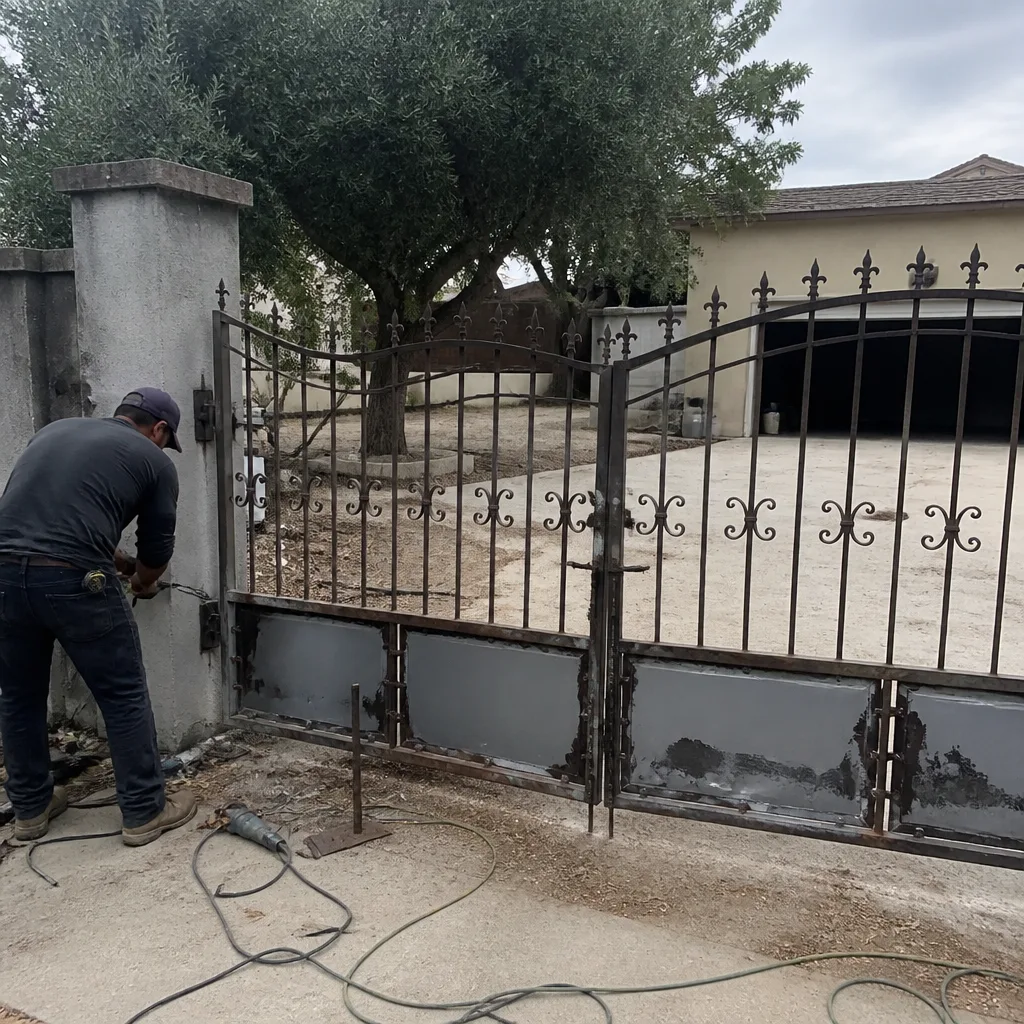 Before
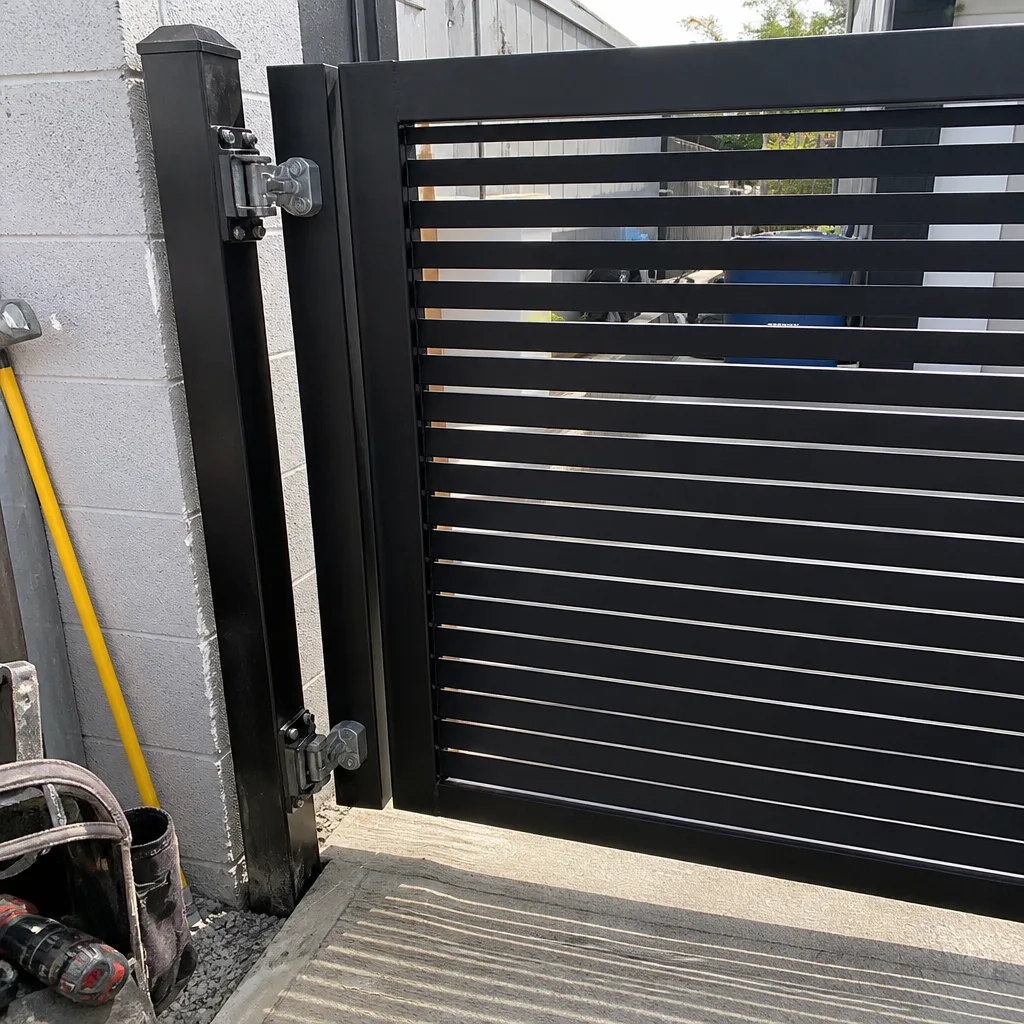 After
After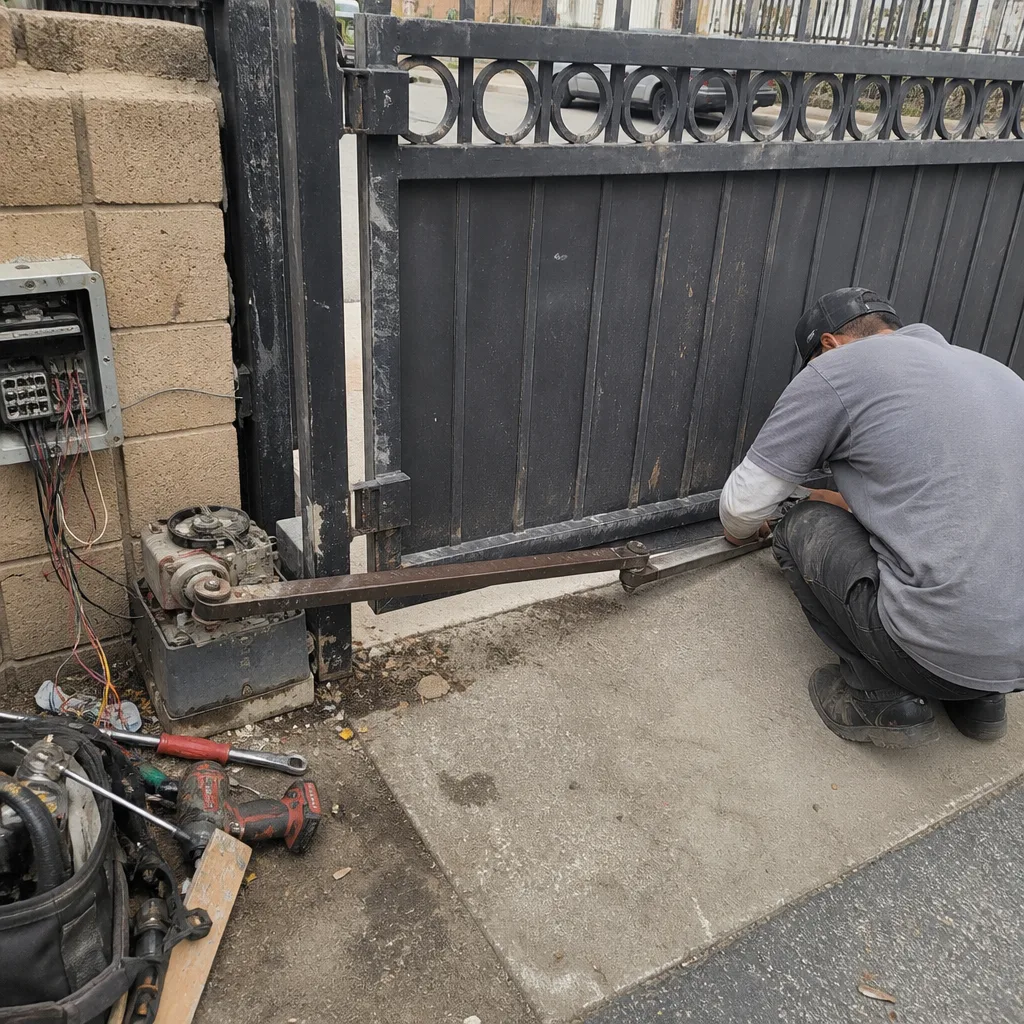 Before
 After
After Before
 After
AfterThe Complete Gate Repair Guide for Los Angeles Homeowners
A gate installed in Malibu corrodes at nearly twice the rate of the same model in Pasadena, but most repair guides treat every California home the same. That’s a costly mistake. Los Angeles isn’t one climate; it’s a dozen microclimates stacked on top of shifting soil, and each one attacks your gate in a different way. This guide maps those failure zones to the right fixes so you stop paying for generic solutions to local problems.
Quick Answer
Gate repair in Los Angeles typically costs between $180 and $850 depending on the failure type, your gate’s drive system, and where you live. For a deeper breakdown, see our Complete Guide to Gate Repair in Los Angeles. Most slide gate roller replacements, opener limit switch adjustments, and hinge repairs are done in a single visit. The repairs that cost more are usually the ones deferred too long: a misaligned gate left for six months becomes a burned-out motor for $1,400.
Table of Contents
- Why LA Gates Fail Differently Than Anywhere Else
- Gate Materials That Actually Last in Each LA Zone
- Real Repair Costs Across Los Angeles Neighborhoods
- When LA Requires a Permit (and When It Doesn’t)
- The 6 Most Common Gate Failures by LA Region
- How to Vet a Gate Repair Company in Los Angeles
- What the Relay Standard Gets You on Every Call
- Common Mistakes to Avoid
- Frequently Asked Questions
Why LA Gates Fail Differently Than Anywhere Else
Los Angeles has three distinct gate killers, and in our experience, most homeowners don’t realize which one applies to their lot until the gate is already down. Understanding your zone is the single fastest way to diagnose a gate repair before you call anyone.
The coastal salt belt. From Malibu through the Palisades, Marina del Rey, and down through the South Bay, marine air carries chloride that settles on metal surfaces daily. That salt film works into hinge pins, chain drives, and circuit boards. In Manhattan Beach and Playa del Rey we regularly replace hinge assemblies on gates less than five years old because the pins have seized from salt intrusion. The opener motor itself often survives; the mounting hardware around it doesn’t.
Valley heat. In Woodland Hills, Northridge, Tarzana, and Sherman Oaks, summer temperatures routinely exceed 100 degrees, and the surface of a dark iron gate can hit 160. That heat degrades control board capacitors and causes solder joints to fail on opener circuit boards. We see a surge of “the gate opens but won’t close” calls every August because the logic board overheats and loses its limit switch calibration. Heat also accelerates oil evaporation in gearboxes, so gear-driven openers in Encino need more frequent lubrication than the same models in Santa Monica.
Hillside soil movement. Silver Lake, Echo Park, Mount Washington, and the Hollywood Hills sit on expansive clay that shrinks in drought and swells after rain. Gate posts set in that soil creep out of alignment by fractions of an inch per season. A slide gate that ran smoothly in February binds in September because the track has shifted. These are foundation problems masquerading as opener problems, and the fix is post re-seating or track re-leveling, not a new motor.
Gate Materials That Actually Last in Each LA Zone
What looks good in a showroom does not always survive a Los Angeles microclimate. Here’s what we’ve seen hold up and what fails early, zone by zone.
Coastal Zones (Malibu, Pacific Palisades, Playa del Rey, Long Beach)
- Best: Powder-coated aluminum frames with stainless steel hinges and stainless fasteners. Aluminum won’t rust, and the powder coat resists salt pitting far longer than liquid paint.
- Acceptable: Galvanized steel with a two-coat marine-grade paint job, provided you inspect hinges and chain drives every six months and rinse with fresh water.
- Fails early: Painted mild steel, especially ornamental iron from big-box retailers. We’ve seen rust through on a two-year-old gate in Playa del Rey because the paint was a single coat over ungalvanized steel.
Valley Zones (Woodland Hills, Sherman Oaks, Burbank, Glendale)
- Best: Light-colored powder-coated steel or aluminum. Dark colors absorb heat and accelerate board failures inside the opener housing mounted on the gate.
- Acceptable: Wrought iron with heat-stable enamel, as long as the opener is a belt-drive or screw-drive model rated for high-heat environments. LiftMaster and FAAC both make heat-tolerant boards for these conditions.
- Fails early: Vinyl gate inserts and PVC compenents left in direct sun with no shade structure. They warp, then the frame warps, then the gate won’t latch.
Hillside Zones (Silver Lake, Echo Park, Mount Washington, Hollywood Hills North)
- Best: Heavier steel posts set in deep concrete piers with mechanical post adjusters. The adjuster lets a tech re-level the gate without digging out the post.
- Acceptable: Lighter gates with a solid track system and a chain-drive opener; lighter gates shift less when the soil moves.
- Fails early: Cantilevered gates (no track at all) on sloped lots with expansive soil. Without a track to guide them, any post movement throws the gate out of plane, and the opener binds. We see this more in Laurel Canyon than anywhere else in Los Angeles.
Real Repair Costs Across Los Angeles Neighborhoods
Los Angeles gate repair pricing varies by labor market, job access, and parts availability. Here is what we quote and what we see across the city, line by line.
| Repair Type | Typical LA Range | Notes |
|---|---|---|
| Limit switch replacement or adjustment | $180 – $260 | Most common single visit repair. Part is cheap; labor is the bulk. |
| Hinge replacement (pair) | $220 – $380 | Higher on the coast if stainless steel is required. |
| Slide gate roller replacement (set of 4) | $200 – $350 | Cost climbs if the track is bent and needs re-leveling. |
| Opener logic board replacement | $350 – $650 | Brand-dependent. LiftMaster boards run lower; FAAC and BFT boards run higher. |
| Full opener motor replacement | $850 – $1,600 | Includes new motor, installation, and limit calibration. |
| Gate re-leveling or post re-seating | $450 – $1,100 | Hillside lots with clay soil are the top of the range. |
| Full gate replacement (single driveway, steel) | $2,800 – $6,500 | Depends on material, finish, and whether the opener is reused. |
A simple truth from the field: the neighborhoods with the highest per-call repair costs in Los Angeles are not the wealthiest ones. They’re the hillside ones. A gate in Benedict Canyon that needs post re-seating plus track leveling plus a new gearbox is a $2,000 job, while a like-for-like opener swap in Torrance is $1,000. The difference is access and ground movement, not affluence.
Every Calder Gate Repair job comes with one thing that levels the field: a written price before any work starts. The number on the invoice is the number agreed to at the door. No surprise labor units, no “we had to add a second tech” adjustments after the fact. You know the cost before a single bolt comes out.
When LA Requires a Permit (and When It Doesn’t)
Los Angeles treats gate work differently depending on whether you’re repairing or replacing. This confuses a lot of homeowners, and the city doesn’t go out of its way to explain it.
Repair: no permit required. Replacing a hinge, swapping a roller, rebuilding a gearbox, installing a new circuit board, swapping the opener motor, replacing the chain or belt – all of this falls under routine maintenance and repair. The Los Angeles Department of Building and Safety (LADBS) does not require a permit for repairs that restore the gate to its original function without altering its structure.
Replacement: often permitted. In the City of Los Angeles, replacing a gate or gate system that changes the structure, height, or support posts typically requires a building permit, and if the gate is part of a multi-family or commercial property, the requirements are stricter. A single-family residential driveway gate replacement that uses existing posts and does not increase the gate height or width can sometimes proceed without a permit, but the moment you change the posts, widen the opening, or add a pedestrian gate alongside, you’re in permit territory.
Here’s the step-by-step that applies to most Los Angeles homeowners:
- Determine whether your work is repair or replacement. Repair = no permit. Replacement with new posts or a larger gate = permit likely.
- If a permit is required, the gate contractor or homeowner files with LADBS, typically a simple plan review for residential work.
- After the permit is issued, the contractor does the work and calls for inspection. LADBS inspects the posts, footings, and any electrical.
- For any opener wired to a new circuit, the electrical portion must be done by a licensed electrician or a contractor working under a C-10 or C-61 license with the right classification.
One more LA-specific note: many hillside neighborhoods fall under the Hillside Construction Regulation ordinance, which adds grading and retaining restrictions to gate footings. If you live in a hillside area and the gate contractor doesn’t mention this, they may not be familiar with the ordinance. Calder Gate Repair handles gate repair exclusively; when a full replacement crosses into permit territory, we’ll tell you plainly and point you to the right path instead of burying it in an estimate footnote.
The 6 Most Common Gate Failures by LA Region
These are the failures we see most often in Los Angeles, region by region. Each entry names the failure, the cause, and the fix we recommend.
1. Seized Hinges (Coastal Zones)
A swing gate that creaks, then starts to sag, then won’t close all the way is usually a hinge pin issue. Salt air from Manhattan Beach to Malibu accelerates pin corrosion, and the hinges bind. The fix is removing the gate, extracting the old pins, and installing stainless steel. Elite and Mighty Mule swing gate hinges both benefit from this upgrade, regardless of which brand you own.
2. Overheated Control Boards (Valley Zones)
An opener that works in the morning and fails in the afternoon is a classic Valley heat signature. The board overheats inside the housing, the thermal cutoff trips, and the gate closes for the day. Our fix is a heat-tolerant board (LiftMaster’s current logic boards are rated for higher ambient temperatures than older models) plus a vented housing if the unit sits in direct afternoon sun.
3. Misaligned Slide Gates (Hillside Zones)
In Echo Park and Silver Lake, a slide gate that’s been working for years suddenly binds at one end of the track. The track hasn’t moved; the ground underneath it has. We re-level the track, re-seat the posts if needed, and re-calibrate the opener limits. Skipping the re-level and just adjusting the limits buys you a month, not a fix.
4. Stripped Gearboxes (Everywhere, but Fastest in the Valley)
Many openers built in the last decade use a nylon or composite gear to reduce noise. In Los Angeles heat, that gear can strip in three to five years. The symptom is a motor that runs but a gate that doesn’t move. The repair is a gearbox rebuild, about $280 to $420 on most common models, and it’s routine work for us.
5. Sensor and Photo-eye Failures (Everywhere, but Worst in Coastal Fog)
Salt and humidity create oxide buildup on photo-eye lenses and wiring connectors in beach-adjacent neighborhoods. A gate that reverses for no reason is often a dirty photo-eye, but not always. We clean and test first; if the sensors are failing, we replace them. FAAC and BFT sensors have known failure patterns in marine air, and we stock replacements for both.
6. Undersized Openers (Hillside Driveways in Particular)
More common than anyone wants to admit: a gate installed with an opener rated for a lighter gate than the one it’s actually moving. The motor strains, the gearbox wears, and the board fails early. This is common on long, steep driveways in Bel Air and the Hollywood Hills where the gate is decorative but heavy. The correct fix is an opener properly matched to gate weight and duty cycle, installed and calibrated by a technician who knows the difference.
How to Vet a Gate Repair Company in Los Angeles
Los Angeles has hundreds of contractors who say they repair gates. Here is how to separate the real specialists from handymen with a truck and a Google listing.
- Check the CSLB license. In California, gate repair work over $500 requires a contractor’s license. Look the company up on the Contractors State License Board website. No license, no work. This is the single most important filter.
- Ask which opener brands they service. A real gate repair company can name the brands they work on: LiftMaster, FAAC, BFT, Linear, Viking, Ghost Controls, DoorKing, Elite, Mighty Mule. If the answer is “all of them” without specifics, that’s not a specialty.
- Ask if they provide a written quote before work starts. If the answer is “we’ll see when we get there,” hang up. A professional gate repair company quotes the repair in writing before a single bolt is turned.
- Ask about their warranty in writing. How long, what it covers, and what happens if the repair fails? If the answer is vague, that tells you everything.
- Ask who’s coming to your house. In Los Angeles, gate repair techs are often subcontractors the company has never met. Calder Gate Repair dispatches background-checked, uniformed technicians with a live, trackable arrival time. You know who’s coming and when they’ll be there.
One more LA-specific wrinkle: allow time for traffic in your schedule. Techs are dispatched with live ETAs that account for real-time conditions, not a four-hour window. That’s part of what we call The Relay Standard: the booking-to-invoice experience where every visit includes a live arrival time, before-and-after photos, and a digital invoice you pay from a link. No paper, no phone tag, no “the invoice is in the mail.”
What the Relay Standard Gets You on Every Call
Calder Gate Repair is part of the Relay Home Co. family, founded in 2009 and independently owned and operated under The Relay Visibility Guarantee. That name means something specific, and we want Los Angeles homeowners to hold every contractor to it.
When you call one of our locations, here’s what happens from booking to invoice:
- A live person answers. Not a voicemail, not a chat bot. Twenty-four hours a day, seven days a week. Someone who can book the appointment or troubleshoot over the phone.
- You get a trackable arrival time. The tech is dispatched with a live ETA you can follow from your phone, the same way you track a rideshare.
- The tech arrives in uniform, background-checked, and ready with a written price before any work starts. That number is the number on your invoice. Period.
- Every repair carries our 365-Day Done Right Promise, in writing. If the repair isn’t right, Calder makes it right. And if the repair fails within 365 days, we return at no charge.
We’re factory-familiar with nine major opener brands, including LiftMaster, FAAC, BFT, Linear, Viking, Ghost Controls, DoorKing, Elite, and Mighty Mule. That depth matters because a technician who knows the brand’s failure patterns fixes the gate faster and more accurately than one learning on your driveway.
Common Mistakes to Avoid
- Ignoring a noisy gate for months. A grind or squeal is the gearbox or hinge asking for help. Waiting turns a $200 hinge job into a $1,200 motor replacement.
- Using WD-40 on hinges and chains. It cleans briefly, then attracts dust and dries out. Use a dry graphite lubricant on hinges and a proper chain lube on chains.
- Buying the cheapest opener on Amazon and hiring a neighbor to install it. Undersized or mismatched openers are a recurring cause of early failure throughout Los Angeles, especially on heavy decorative gates.
- Spraying the gate with a pressure washer every weekend. Water gets forced into the opener housing and sensor wiring. Coastal homeowners trying to fight salt often cause worse electrical problems with the pressure washer.
- Assuming “no permit needed” from the last contractor means the work was legal. If a previous replacement changed the posts or the gate footprint without a permit, the next repair may reveal it. A licensed contractor will tell you what happened and what it means.
- Hiring based on the lowest quote without checking the license. In Los Angeles, the lowest quote is often an unlicensed operator without insurance. If something goes wrong, you own the liability.
When to Call a Professional
Call a professional immediately when the gate won’t close fully, when the opener motor runs but the gate doesn’t move, when the gate reverses unexpectedly, or when you see visible sag or rust through on a hinge or post. Not sure whether to DIY? Read our guide on DIY vs Professional Electric Gate Repair: What’s Safe to Do Yourself. These are compounding failures: every day the gate runs with a misaligned track or a seized hinge, the motor works harder and the gearbox wears faster. If the gate is sparking, smoking, or tripping a breaker, cut power at the breaker and call without touching anything else. Calder Gate Repair offers free estimates in Los Angeles – call (903) 417-0793, and a live person will pick up.
Frequently Asked Questions
Most gate repair jobs in Los Angeles run between $180 and $850, with the most common repairs (limit switch adjustment, roller replacement, hinge replacement) landing in the $180 to $380 range. Opener motor replacement and post re-seating are the higher end, from $850 to $1,600. Call (903) 417-0793 for an exact quote – estimates are free and the price is written before any work starts.
Yes, Calder Gate Repair dispatches technicians across Los Angeles every day with live, trackable arrival times, not four-hour windows. For urgent repairs, call (903) 417-0793 and a live person will give you the soonest available time and a real ETA.
No permit is required to repair a gate in Los Angeles. Replacing hinges, rollers, opener motors, circuit boards, or realigning a track all fall under routine maintenance. A permit is generally required only when a replacement changes the posts, the gate’s size, or the electrical circuit.
In coastal Los Angeles, the most common problems are seized hinges from salt air, corrosion on sensor wiring, and rust on ungalvanized steel. These failures are most common from Malibu through the Palisades and down to Long Beach, and they respond to stainless hardware and regular freshwater rinsing.
A properly installed gate opener in Los Angeles lasts 7 to 12 years on average, though coastal and Valley extremes shorten that. Salt air near the beach and extreme heat in the Valley both stress circuit boards and gearboxes. Regular maintenance extends life; neglect shortens it sharply.
Our technicians are factory-familiar with nine major opener brands, including LiftMaster, FAAC, BFT, Linear, Viking, Ghost Controls, DoorKing, Elite, and Mighty Mule. If you know your brand, we know its failure patterns and the right repair. If you don’t know your brand, the tech identifies it on arrival.
The Bottom Line
The right gate repair in Los Angeles starts with knowing your failure zone. Coastal salt attacks hinges and wiring; Valley heat attacks boards and gearboxes; hillside soil attacks tracks and posts. Repair the real problem and the gate runs for years. Repair the symptom and you’ll be calling again in a season. For more guides & resources on keeping your gate running, visit our blog. Calder Gate Repair has been serving Los Angeles since 2009 with one promise on every job: a written price before work starts, a written warranty on every repair, and a free return visit if the fix fails within 365 days. Call (903) 417-0793 when you’re ready for a real diagnosis.
Written by Nico Alvarez, Owner at Calder Gate Repair, serving Los Angeles since 2009.