
Last updated October 9, 2026
Free on-site gate assessment - hinges, posts, and your LiftMaster or Nice gate operator checked before anything is quoted
The assessment is free and the quote is the invoice.
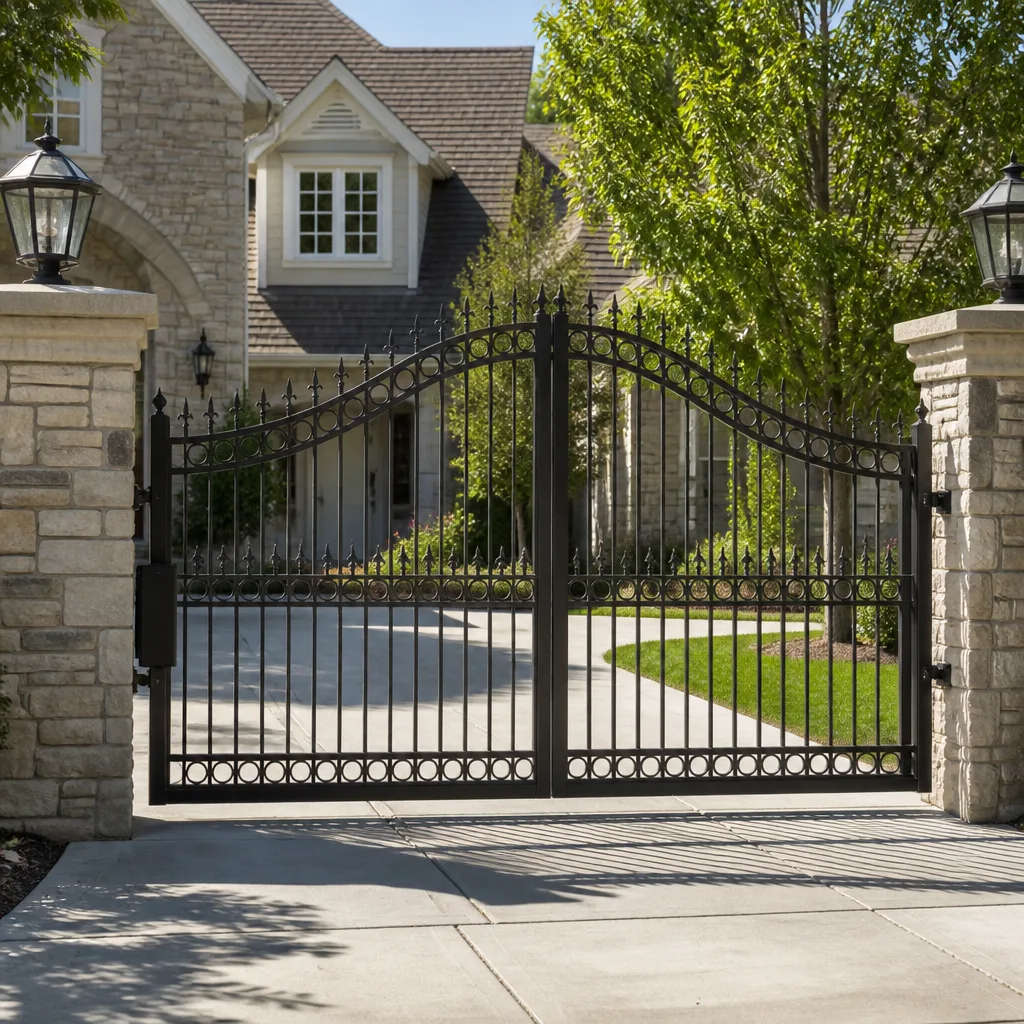
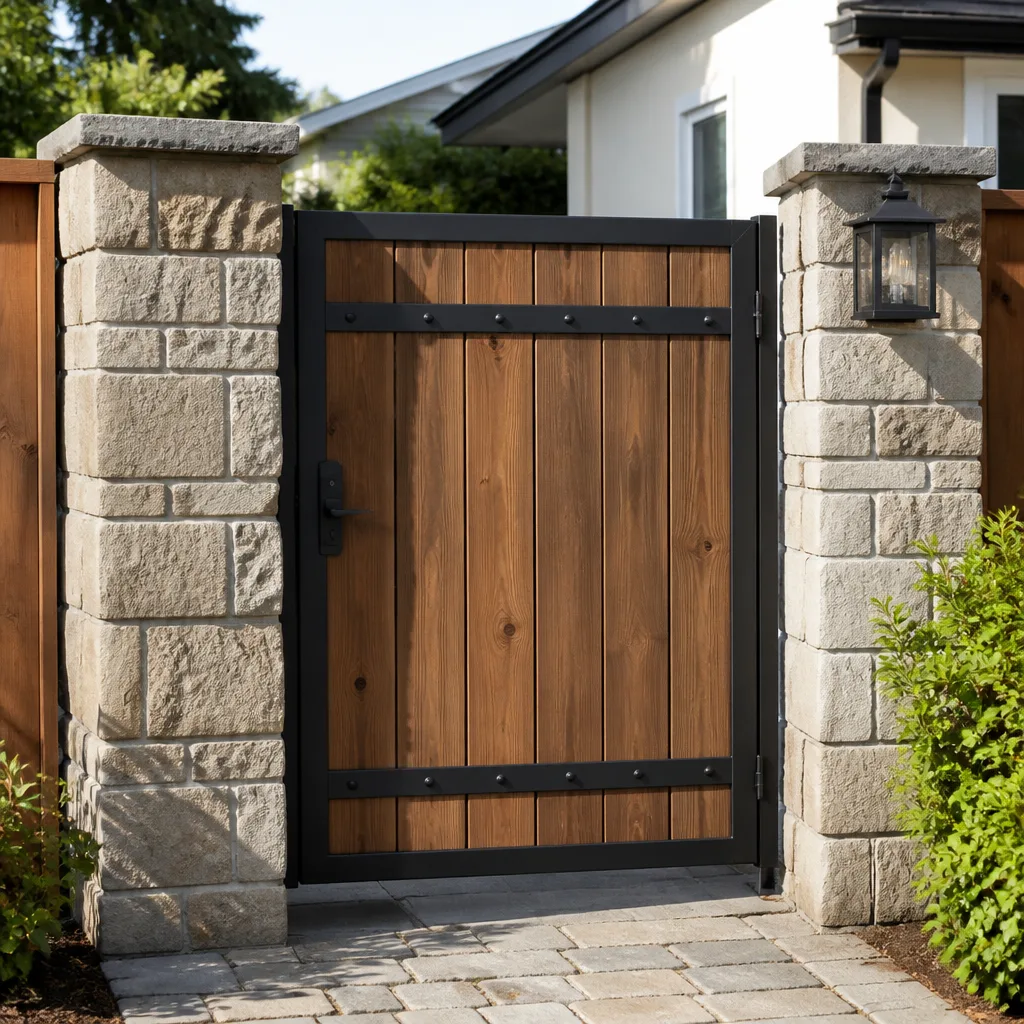
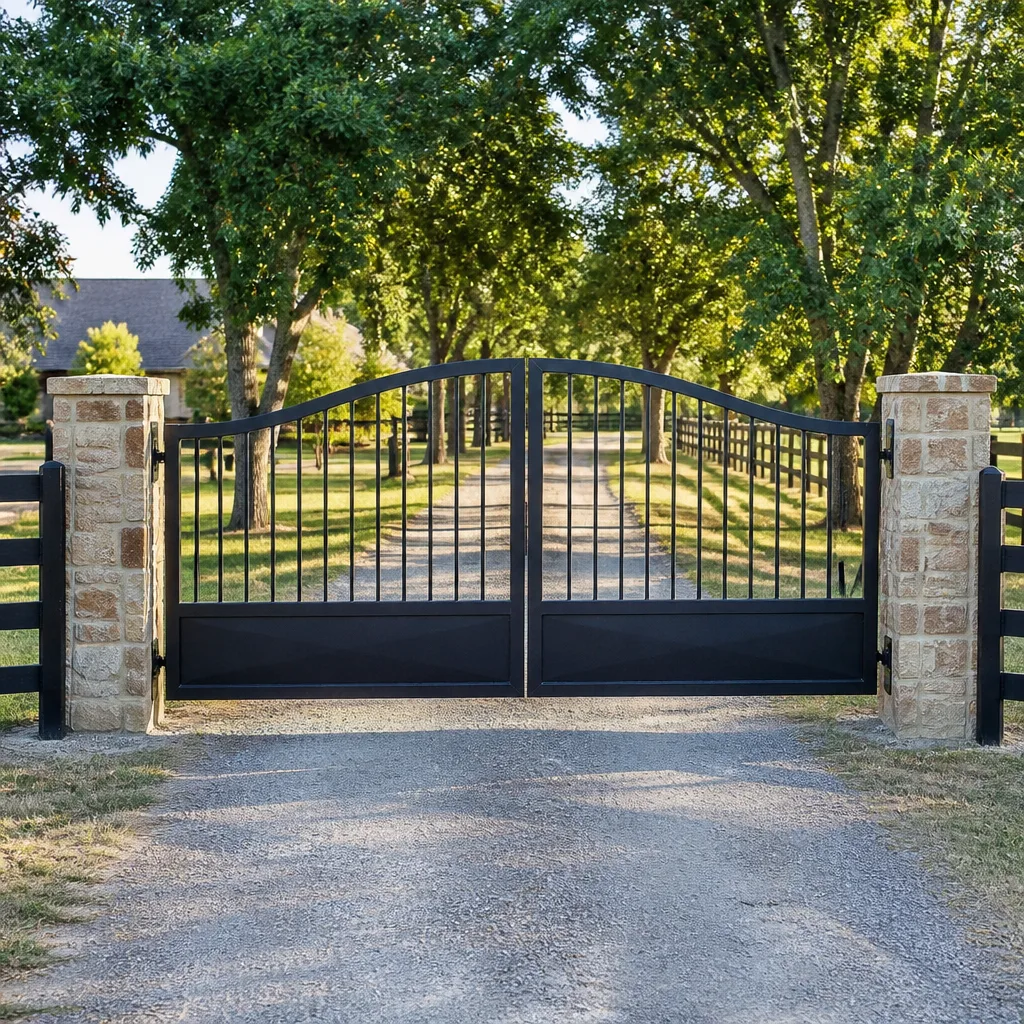
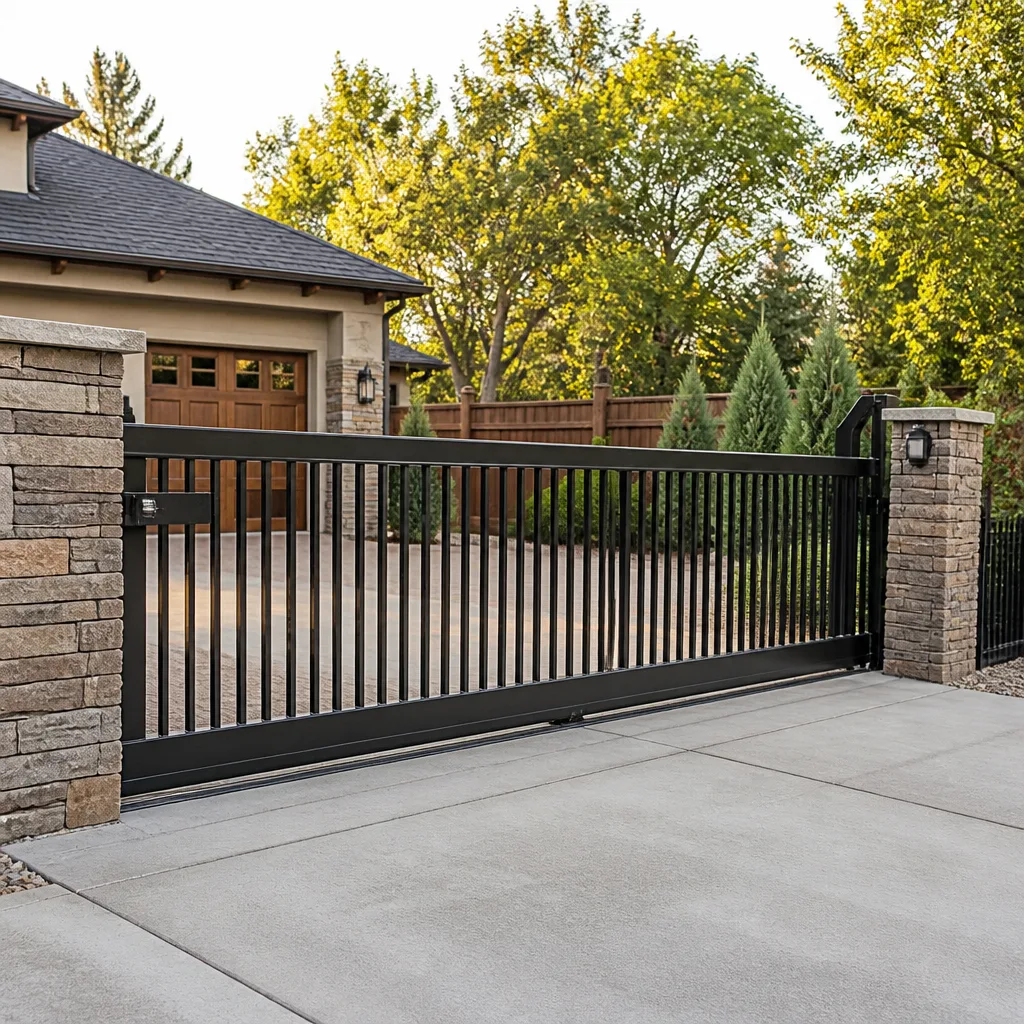
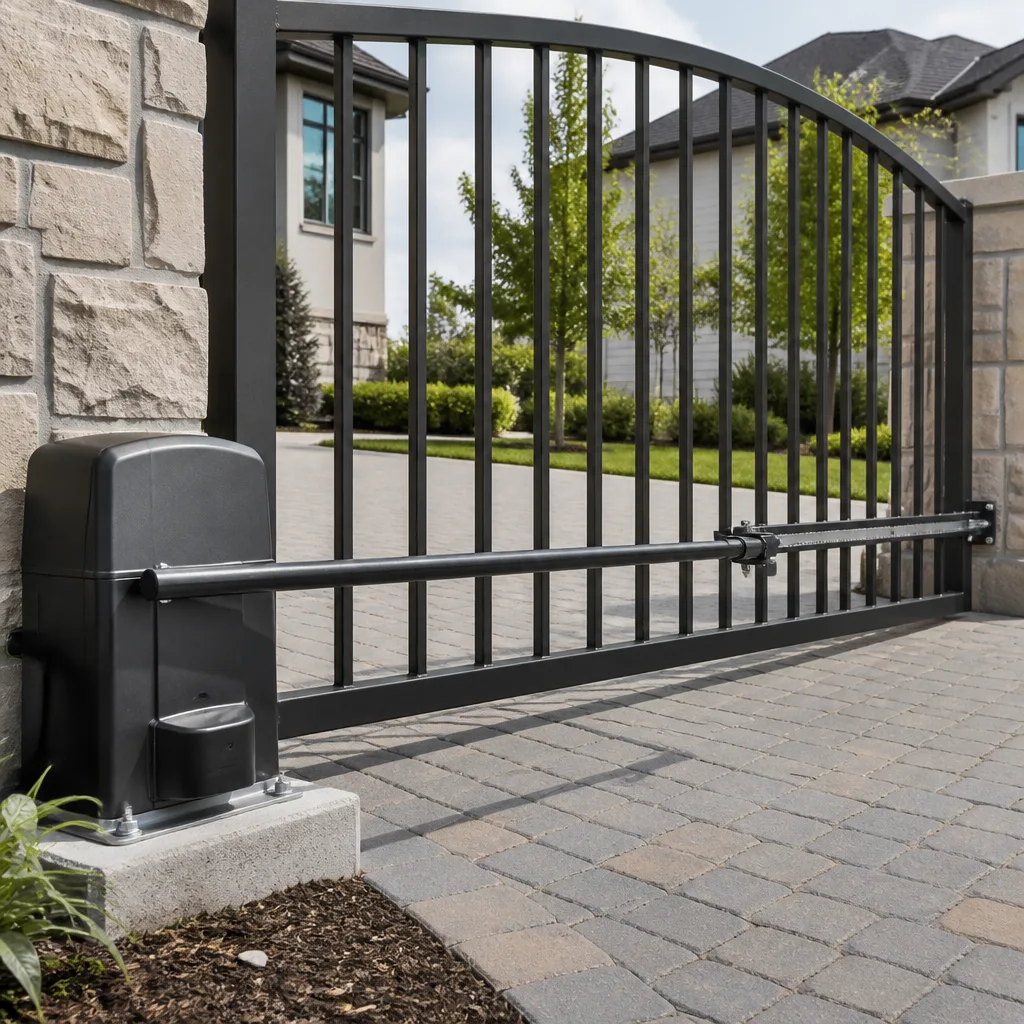
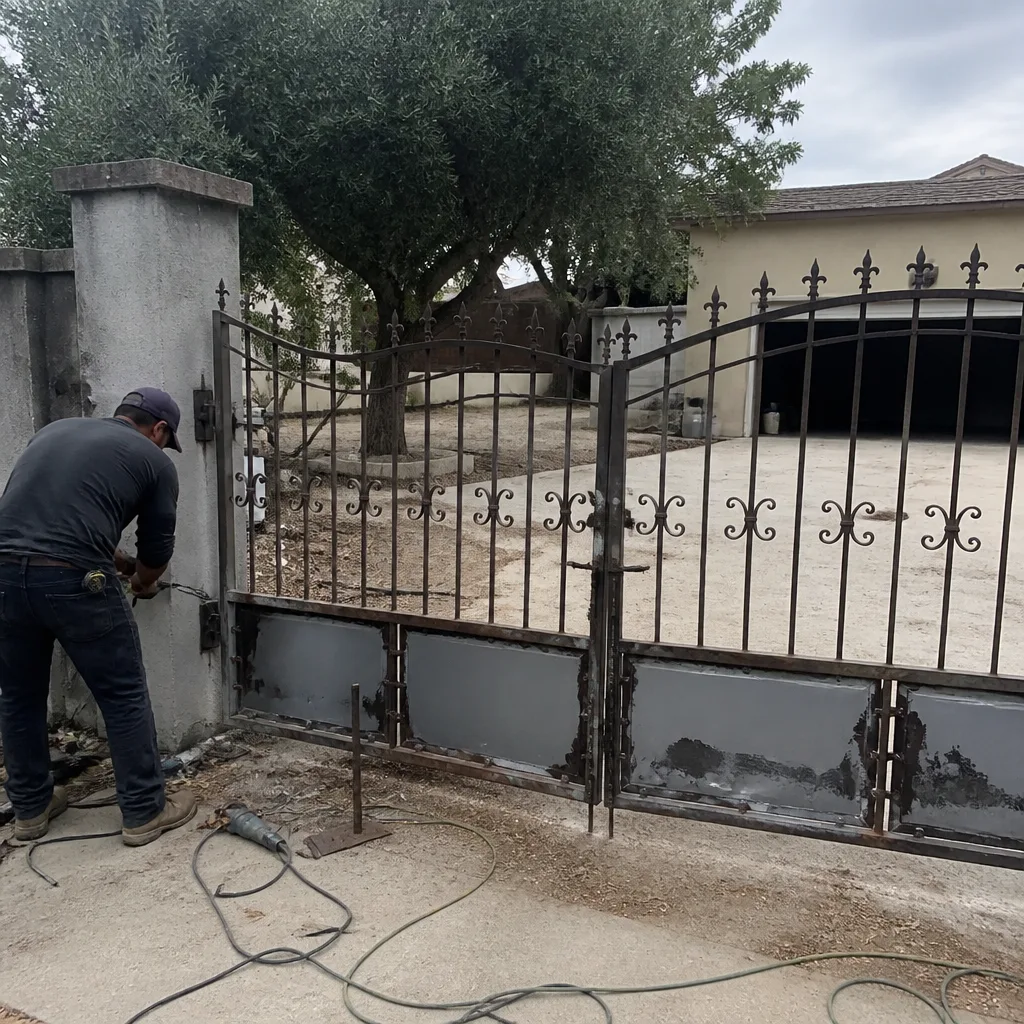 Before
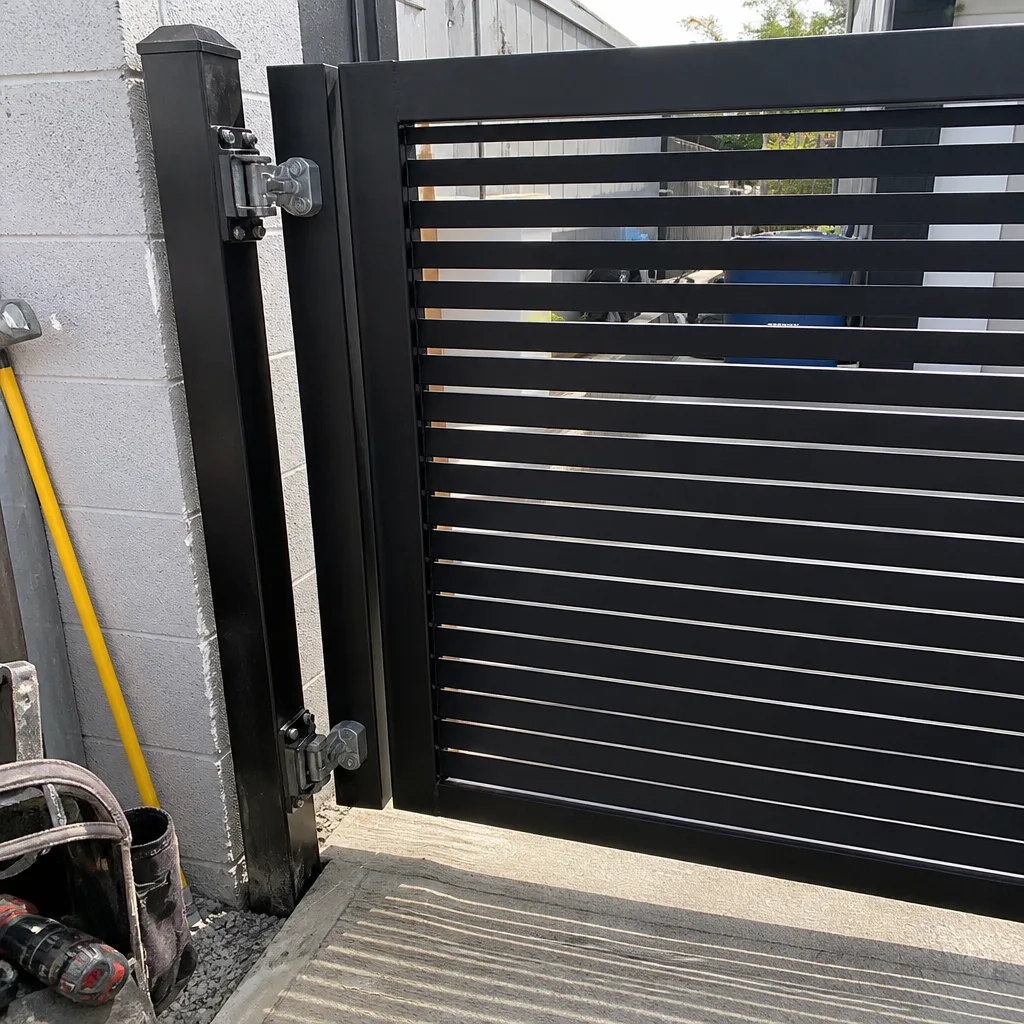 After
After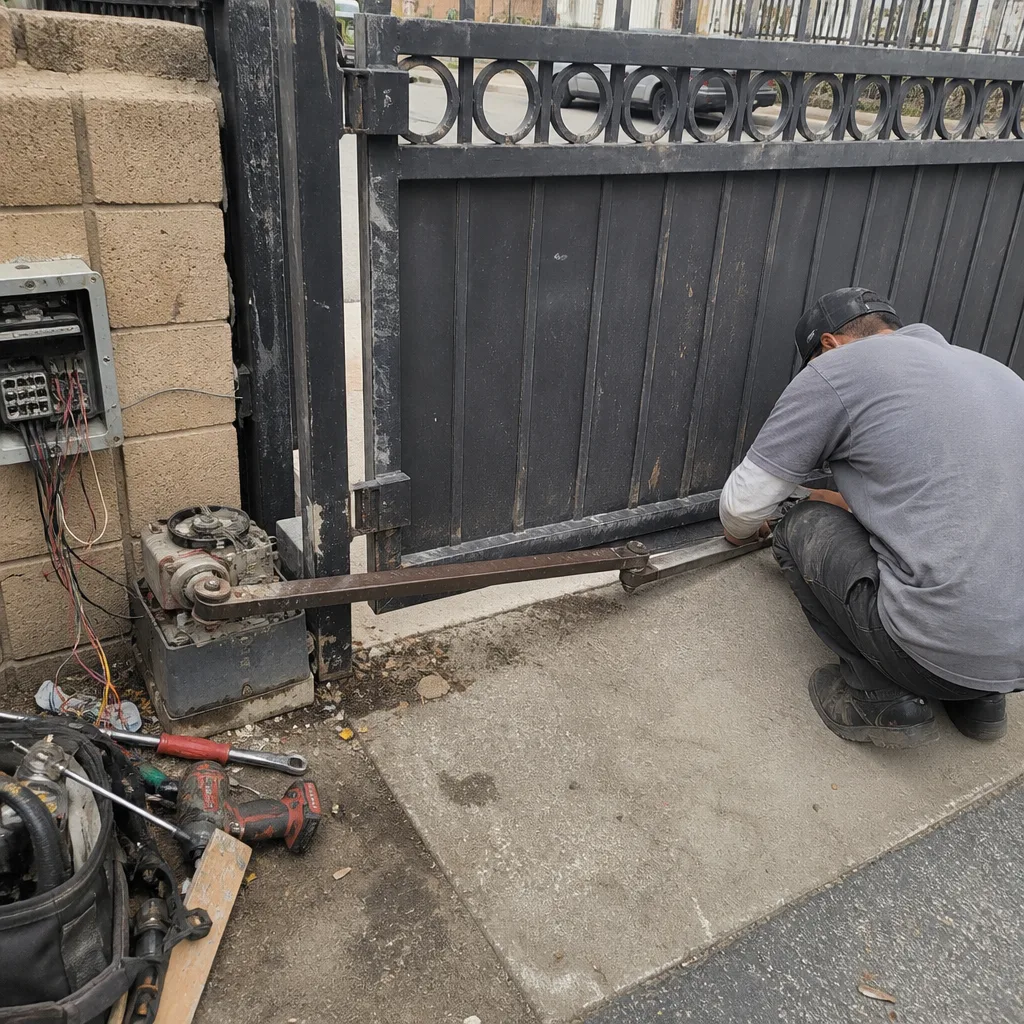 Before
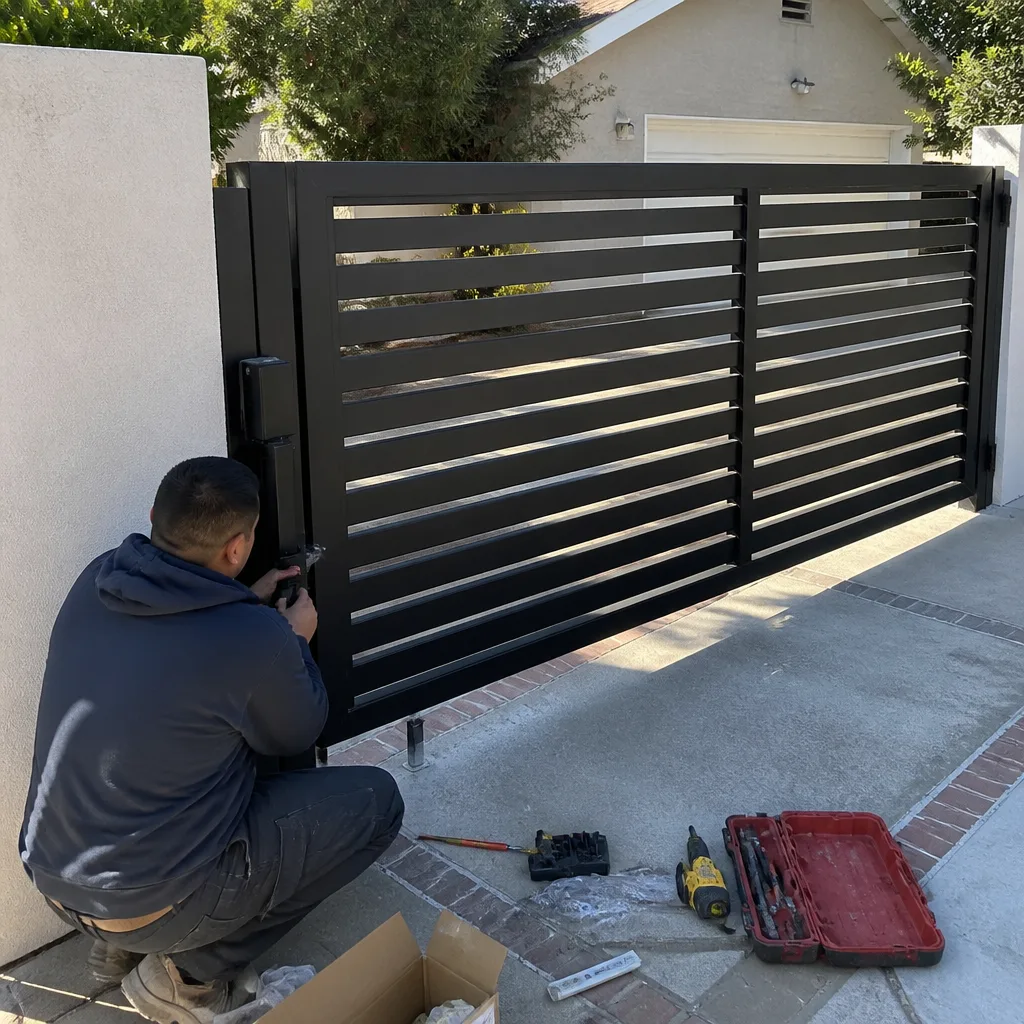 After
After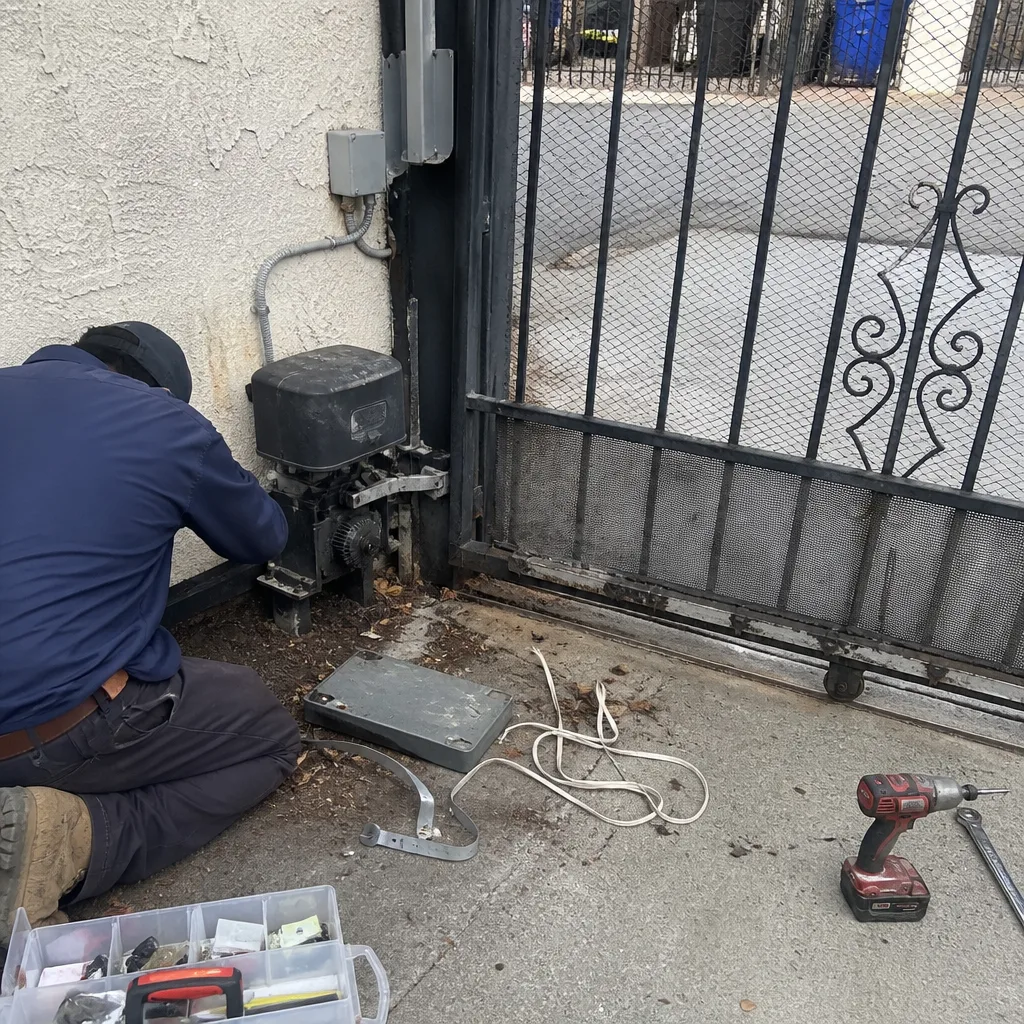 Before
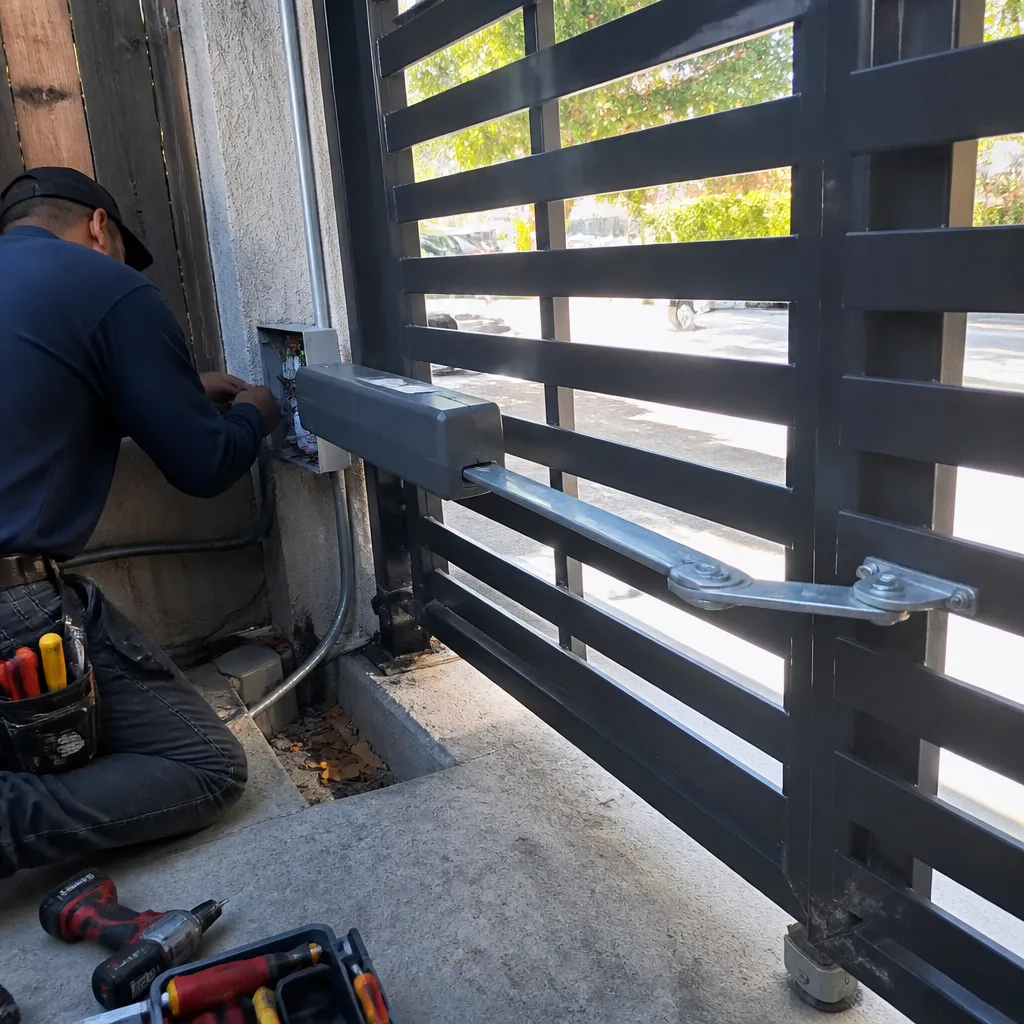 After
AfterHow Long Does Electric Gate Repair Take? Timelines and What to Expect
The repair itself rarely takes more than 90 minutes. It’s the ‘figuring out what’s wrong’ part that can stretch a job to four hours, and most companies don’t tell you that upfront because they’d rather you book a full-day window and wait. Here’s what actually happens on the clock: electric gate repair in Los Angeles breaks into three phases, and only one of them involves turning a wrench. By the time you finish this guide, you’ll know exactly where the time goes, what triggers a same-day fix versus a follow-up visit, and the one question to ask any technician that separates a real timeline from a guess. For related reading, see our post on How Long Does Gate Repair Take? Timelines and What to Expect.
Quick Answer
Most electric gate repairs take between 90 minutes and 4 hours on site, with roughly 60% of that time spent on diagnosis rather than physical repair. Simple fixes like limit switch adjustments or photo-eye realignment are often done in under 2 hours same-day. Repairs requiring a replacement control board, motor, or brand-specific part typically need a second visit once the part arrives, usually 2 to 5 business days later.
Table of Contents
- The Three Phases of Electric Gate Repair
- Phase 1: Diagnosis – Where the Hidden Time Lives
- Phase 2: Parts Procurement – The Same-Day vs. Ordered Fork
- Phase 3: The Physical Repair – The Fast Part
- How Gate Type Changes the Timeline
- How Opener Brand Affects Repair Speed
- Los Angeles Factors That Add Real Time
- The One Question to Get a Realistic ETA
- Common Mistakes to Avoid
- When to Call a Professional
- Frequently Asked Questions
- The Bottom Line
The Three Phases of Electric Gate Repair
Electric gate repair is not one continuous block of work. It’s three distinct phases, and each has its own realistic time range. Understanding this split is the difference between planning your day around a 20-minute fix and getting blindsided by a four-hour job. Here’s how the clock breaks down on a typical service call in Los Angeles:
- Diagnosis (30 to 90 minutes): Testing the opener, control board, safety sensors, motor, limit switches, and wiring to identify the root cause. This is the phase most homeowners underestimate.
- Parts procurement (15 minutes to 5 business days): Depending on what failed, the technician either has the part on the truck or needs to source it from a local distributor or the manufacturer.
- Physical repair (20 to 90 minutes): Swapping the failed component, recalibrating travel limits, testing safety features, and cycling the gate multiple times to confirm the fix holds.
The total on-site time for most jobs lands between 90 minutes and 4 hours. When a job stretches longer, it’s almost never because the repair itself is complicated. It’s because the diagnosis uncovered a second issue, or the part wasn’t readily available. At Calder Gate Repair, we’ve seen a LiftMaster swing gate that took 35 minutes to fix and another that took 3.5 hours because a failing capacitor had damaged the control board, and both issues needed addressing in sequence. Knowing which situation you’re in starts with understanding Calder Gate Repair home service approach: diagnose first, quote second, wrench third.
Phase 1: Diagnosis – Where the Hidden Time Lives
In our experience, roughly 60% of an electric gate repair call in Los Angeles is spent on diagnosis, not repair. The reason is straightforward: electric gates have multiple points of failure that produce identical symptoms. A gate that won’t open could be a dead remote battery, a blown fuse on the control board, a misaligned photo-eye, a seized motor, or a broken limit switch. The technician’s first job is to rule out what it isn’t.
A methodical diagnosis on a typical residential system looks like this:
- Power verification (5 to 10 minutes): Checking the breaker, the GFCI outlet, and the transformer that feeds the opener. In Los Angeles, power surges from summer grid strain are a common culprit.
- Remote and keypad testing (5 to 10 minutes): Ruling out a simple transmitter failure. A surprising number of “gate opener” repairs are actually remote reprogramming jobs.
- Safety sensor inspection (10 to 15 minutes): Photo-eyes and edge sensors get dirty, misaligned, or sun-damaged. In LA’s dry climate, cracked sensor housings from UV exposure are frequent.
- Control board testing (10 to 20 minutes): Using a multimeter to check for voltage at key terminals. This is where a good technician earns their fee: a symptom that looks mechanical is often electrical.
- Mechanical inspection (10 to 20 minutes): Checking the chain, belt, gearbox, hinges, wheels, and track for wear or binding. A gate that moves but struggles is usually a mechanical issue, not an electronic one.
The skill in this phase is not speed. It’s not ordering a $400 control board when the real problem is a $12 limit switch. Most legitimate electric gate repair companies in Los Angeles follow this same general sequence, including Electric Gate Repair in Los Angeles specialists who see this pattern daily. Diagnosis takes the time it takes, and a technician who skips steps to save minutes usually ends up costing you hours in return visits.
Phase 2: Parts Procurement – The Same-Day vs. Ordered Fork
Here’s the fork in the road that decides whether your gate is fixed today or later this week. Every repair reaches a moment where the technician knows exactly what part failed. What happens next depends on what that part is:
Same-day scenario: The failed component is a common consumable. Limit switches, photo-eyes, remote controls, fuses, capacitors, and basic wiring are items most well-stocked trucks carry. If your gate stopped working because of one of these, expect the technician to pull the part, show you the written price, and complete the repair in the same visit. Total time from arrival to working gate: often under 2 hours.
Parts-ordered scenario: The failure is in a brand-specific component. Control boards, motors, and gear assemblies for brands like FAAC, BFT, Linear, and Viking are rarely sitting on a truck because each brand uses proprietary electronics. The technician orders the part from a distributor, and you wait for it to arrive. In Los Angeles, that wait is typically 2 to 5 business days for most residential openers, thanks to the concentration of parts distributors in the region. More obscure or older models can take 7 to 10 days.
The important thing to know: a reputable company tells you which scenario you’re in before leaving your property. You should know the exact part name, the exact price, and the expected arrival window. At Gate Opener Repair in Los Angeles through Calder Gate Repair, that information is put in writing before any work starts on phase three. No vague “we’ll call you when it’s in” and no surprise invoice later.
Phase 3: The Physical Repair – The Fast Part
Once the diagnosis is done and the part is in hand, the actual repair is usually quick. Here are realistic timeframes for the most common electric gate repairs:
- Limit switch replacement: 20 to 40 minutes. The limit switch is the small sensor that tells the gate when to stop. Swap it, test the travel, done.
- Photo-eye replacement and realignment: 30 to 45 minutes. This is the safety sensor that keeps the gate from closing on a person or car. A dirty or misaligned eye is one of the most common causes of a gate that reverses or won’t close.
- Control board replacement: 45 to 75 minutes. The brain of the opener. The new board often needs programming to match your specific gate’s travel length and safety setup.
- Motor replacement: 60 to 90 minutes. The heavy lifting. Involves disconnecting power, removing the old motor, mounting the new one, and testing under load.
- Remote and receiver reprogramming: 15 to 30 minutes. The fastest job on the list. Often the entire call is done in under an hour.
- Gearbox or drive assembly repair: 60 to 90 minutes. Common on older sliding gates where the drive gear has worn down over years of use.
Every repair at Calder Gate Repair ends with a full cycle test: open, close, reverse on obstruction, and re-open. That testing adds 10 to 15 minutes but catches the failures that would otherwise send a technician back to your property. It’s the reason our 365-Day Done Right Promise exists, and why every job carries a written guarantee plus a free second visit if the repair fails within the covered window. Nico Alvarez, owner at Calder Gate Repair, insists on the cycle test on every single job. It’s non-negotiable.
How Gate Type Changes the Timeline
Sliding gates and swing gates fail differently, and that affects how long diagnosis takes. In Los Angeles, both types are common, and each has its own failure profile.
Sliding gates move along a track on wheels or a cantilever system. The most common failures we see are worn drive gears, debris in the track, and limit switch drift. Diagnosis is usually faster because the mechanical components are visible: you can see the gear teeth, you can see the wheels, you can see the track. A technician can often identify the problem in 20 to 30 minutes. The repair itself is usually straightforward too, unless the track itself is bent or the gate has been hit by a vehicle, which happens more than you’d think in tight Los Angeles driveways.
Swing gates pivot on hinges with an opener arm doing the work. The failure points are less visible: the arm mechanism, the hinge bearings, the underground wiring that runs to the opener. Diagnosis takes longer because the technician has to test components that aren’t immediately accessible. Add 20 to 40 minutes to the diagnosis phase for a typical swing gate compared to a sliding gate. The upside: swing gate openers from brands like FAAC and BFT are generally modular, so component swaps are quick once the failure is identified.
What this means for your schedule: if you have a sliding gate, budget for a potentially shorter visit. If you have a swing gate, especially an older one with buried wiring, expect the diagnosis phase to run longer. Neither gate type is inherently more expensive to repair. They just consume time differently.
How Opener Brand Affects Repair Speed
The brand of gate opener on your property has a direct impact on how quickly a repair gets completed. Here’s the honest breakdown based on what we see across Los Angeles:
FAAC and BFT: Both are Italian brands known for hydraulic and electromechanical swing gate operators. They use proprietary control boards and motors, which means parts are rarely on a truck and almost always ordered from a distributor. Diagnosis is straightforward for a technician trained on these systems, but the parts wait is real. Expect a follow-up visit for anything beyond a sensor or remote issue.
Linear and Viking: Domestic brands with strong distributor networks in Southern California. Linear openers are common on residential swing gates and parts are widely available, often same-day from a local supplier. Viking is more common on larger or commercial-style gates, and while parts are obtainable, the more robust build means repairs are slightly less frequent but slightly longer when they do happen.
The key variable is technician familiarity. A technician who works on all four brands regularly can diagnose a FAAC issue in 40 minutes that would take a less experienced tech 2 hours of trial and error. At Calder Gate Repair, our technicians are trained across nine major brands, including FAAC, BFT, Linear, and Viking, which means the diagnosis phase on your gate is faster because we’ve seen the exact failure pattern before. That training directly shortens the total repair timeline.
Los Angeles Factors That Add Real Time
Los Angeles is not like other markets when it comes to gate repair timelines. Here are the local factors that actually affect how long your repair takes, beyond the gate itself:
Traffic and dispatch time: A technician traveling from the San Fernando Valley to a job in Long Beach can lose 90 minutes to traffic before the clock on your repair even starts. Companies that dispatch from a central yard are at the mercy of the 405 and the 101. A good question to ask when you book: where is your technician coming from right now? At Calder Gate Repair, our live dispatch system gives you a trackable arrival time based on their actual location, not a four-hour window. That’s the Relay Standard in action: you see who’s coming, when they’ll arrive, and what the job will cost before a single bolt is turned.
Parts distributor geography: Los Angeles has a deep bench of gate opener parts suppliers, concentrated in areas like Van Nuys, Commerce, and the San Gabriel Valley. That’s good news for repair timelines compared to more rural markets. A Linear control board that takes 5 days to arrive in a small town often takes 2 days in LA because the distributor is 20 miles away. The flip side: a technician who doesn’t know which distributor stocks which brand can waste an afternoon driving between them.
Climate and environmental wear: LA’s combination of intense sun, coastal salt air, and Santa Ana wind dust means specific failure patterns. UV damage to plastic sensor housings and control board enclosures is extremely common in neighborhoods like Woodland Hills and Sherman Oaks. Salt corrosion on gate hardware appears more frequently near the coast in Santa Monica and Long Beach. Dust from Santa Ana winds works its way into limit switches and track mechanisms, especially in the foothills. A technician who knows these local patterns diagnoses faster because they check the likely suspects first.
The One Question to Get a Realistic ETA
You don’t need to become a gate technician to get an honest timeline. You need to ask one question, and you need to listen carefully to the answer.
The question is this: “After you diagnose the problem, will you be able to tell me today, in writing, whether this is a same-day fix or a parts-ordered repair, and what each option costs?”
A confident company says yes without hesitation. That single question reveals whether the technician works on a diagnosed, quoted, agreed-upon process or on an open-ended “we’ll see how it goes” basis. A company that can’t commit to a written price and a clear either/or outcome before they touch your gate is one that might hand you a surprise invoice at the end. We’ve talked to Los Angeles homeowners who had that exact experience: a “simple” gate repair that turned into a $900 control board replacement with no prior conversation.
The written-price guarantee is the standard at Gate Repair in Los Angeles through Calder Gate Repair. It’s part of every job, stated before any work starts, and it’s one of the three non-negotiables we never soften: a written price first, a written guarantee on every repair, and a free second visit if the repair fails within the 365-Day Done Right Promise window. If a company hedges on any of those three, that’s your answer.
Common Mistakes to Avoid
- Assuming the worst before the diagnosis: Homeowners in Los Angeles frequently tell us they expected to replace their entire gate opener when the actual fix was a $40 limit switch. Wait for the diagnosis before budgeting for a full replacement.
- Skipping the written quote step: A verbal estimate is not a quote. If the number isn’t written down before work starts, you have no protection against invoice creep. Ask for it in writing, every time, no exceptions.
- Resetting the breaker and calling it fixed: A gate that trips the breaker did that for a reason. If resetting the breaker “fixes” the problem, the problem is still there, and it will return. Usually at the worst possible time.
- Choosing a company based on the lowest dispatch fee: A low service fee sometimes means the company makes its real money on parts markups after the diagnosis. Compare the total picture, not the trip charge.
- Not asking about the brand before booking: If the company doesn’t know what a FAAC or BFT unit is when you mention it, they’ll be learning on your gate. That translates to longer diagnosis time and a higher chance of a misdiagnosis.
- Blocking out an entire day when you don’t need to: With a company that commits to a written price and a clear same-day versus parts-ordered call, you can plan your day around the actual timeline, not a worst-case scenario.
- Deferring safety sensor repairs: A photo-eye that’s misaligned or damaged means your gate can close on a person or a car. This is not a cosmetic issue. It’s a safety obligation that gets worse, not better, with time.
When to Call a Professional
Some repairs are obvious: the gate doesn’t move, the opener makes a grinding noise, the remote stopped working. The less obvious calls are the ones worth watching for. If your gate opens halfway and reverses, that’s likely a limit switch or safety sensor issue that needs calibration. If the gate moves slower than it did six months ago, the motor or drive mechanism is wearing down. If you hear a humming sound but nothing moves, the motor is receiving power but the drive system is jammed or the capacitor has failed. None of these conditions improve on their own, and all of them put additional strain on the rest of the opener, turning a small fix into a bigger one if left alone. Calder Gate Repair offers free estimates in Los Angeles, call (903) 417-0793.
Frequently Asked Questions
Most electric gate repairs in Los Angeles run between $150 and $450 before parts, depending on the complexity of the diagnosis and the repair itself. Simple fixes like remote reprogramming or photo-eye realignment sit at the low end, while motor replacements and control board swaps land higher once parts are included. A full opener replacement on a standard residential swing gate typically runs $800 to $1,500 installed. Call (903) 417-0793 for an exact quote – Calder Gate Repair provides free estimates with a written price before any work starts.
Yes, most electric gate repairs that involve common parts like limit switches, photo-eyes, remotes, and fuses are completed same-day in a single visit. Repairs requiring brand-specific parts like a FAAC control board or a BFT motor typically need a second visit once the part arrives from a distributor, usually 2 to 5 business days in Los Angeles. Call (903) 417-0793 and our dispatcher can give you a realistic expectation for your specific opener brand.
A full opener replacement includes removing the old motor and control board, installing the new unit, programming travel limits, calibrating safety sensors (photo-eyes and edge sensors), testing under load, and cycling the gate multiple times to confirm proper operation. At Calder Gate Repair, it also includes a written guarantee on the installation and the 365-Day Done Right Promise. Call (903) 417-0793 to schedule a free measure and written price.
Yes, power verification is the first step in every electric gate repair we perform, and safety edge sensors are inspected and tested on every job. If a safety edge has failed or the power run from the panel to the opener shows a fault, we’ll identify it during diagnosis, price it in writing, and include the repair in the same service call or a scheduled follow-up. Call (903) 417-0793 for a free estimate.
Most residential electric gate openers in Los Angeles last 10 to 15 years with proper maintenance, though coastal properties in areas like Santa Monica and Long Beach may see shorter lifespans due to salt corrosion. Regular maintenance, including cleaning limit switches and checking safety sensors, extends the life of the motor and control board significantly. If your opener is over 12 years old and requires a major part, replacement may be more cost-effective than repair. Call (903) 417-0793 for an honest assessment.
A malfunctioning electric gate is a safety risk, plain and simple. A gate that reverses unexpectedly or fails to stop on an obstruction can injure a person, damage a vehicle, or leave your property unsecured. The safety sensors exist to prevent exactly those outcomes. Any issue with the photo-eye, edge sensor, or limit switch should be treated as an urgent repair, not a deferred one. Call (903) 417-0793 to book a diagnosis – Calder Gate Repair is available 24/7 by phone with a live person on every call.
The Bottom Line
Electric gate repair in Los Angeles is a three-phase process: diagnosis, parts, and the actual fix. Diagnosis eats the most time, often 60% of the on-site visit, and that’s the part most homeowners don’t budget for. The repair itself is usually under 90 minutes once the problem is identified and the part is in hand. Same-day fixes happen when the failure is a common component; brand-specific parts like FAAC control boards or BFT motors mean a follow-up visit within a few days. The best thing you can do is ask for a written price and a clear same-day versus parts-ordered call before any work starts. That’s the standard Calder Gate Repair holds, and it’s the one that protects you. Explore more guides & resources for maintaining your gate system.
Written by Nico Alvarez, Owner at Calder Gate Repair, serving Los Angeles since 2009.