
Last updated October 9, 2026
Free on-site gate assessment - hinges, posts, and your LiftMaster or Nice gate operator checked before anything is quoted
The assessment is free and the quote is the invoice.
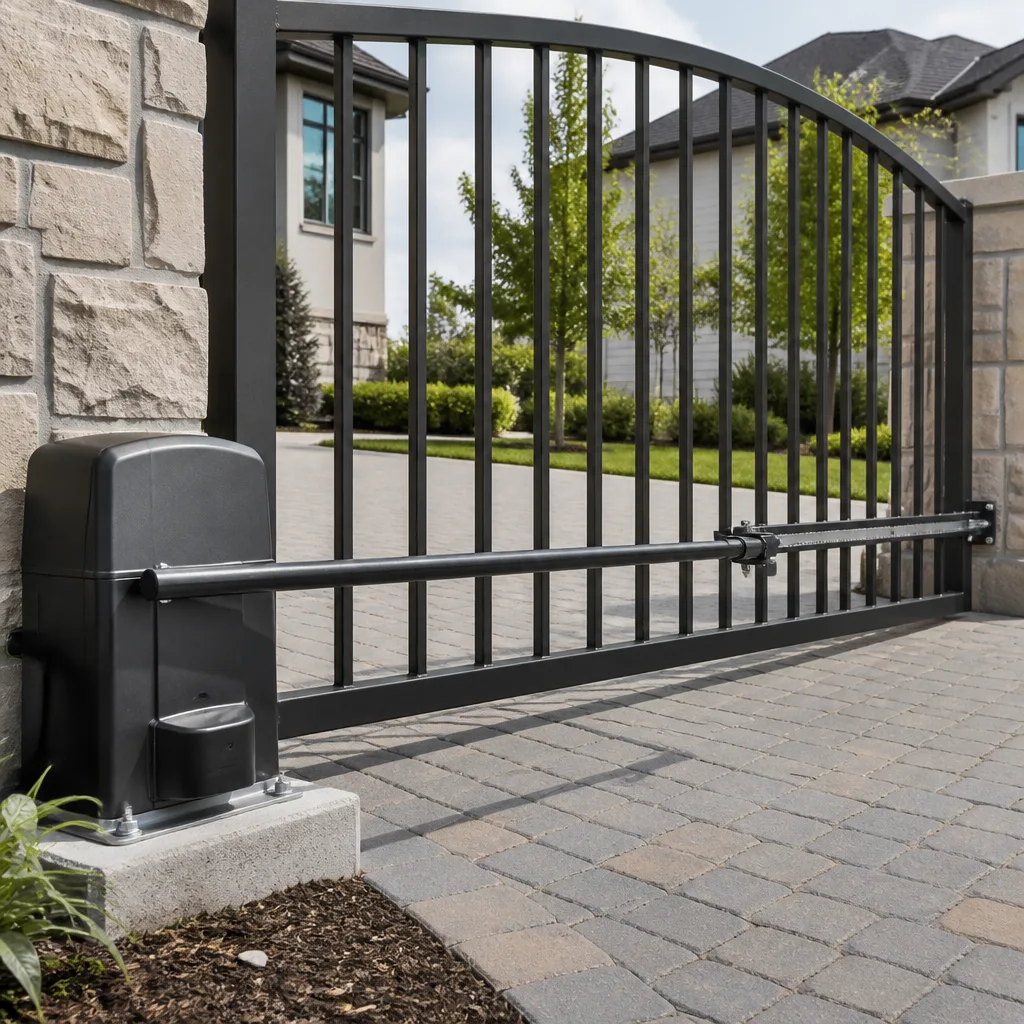
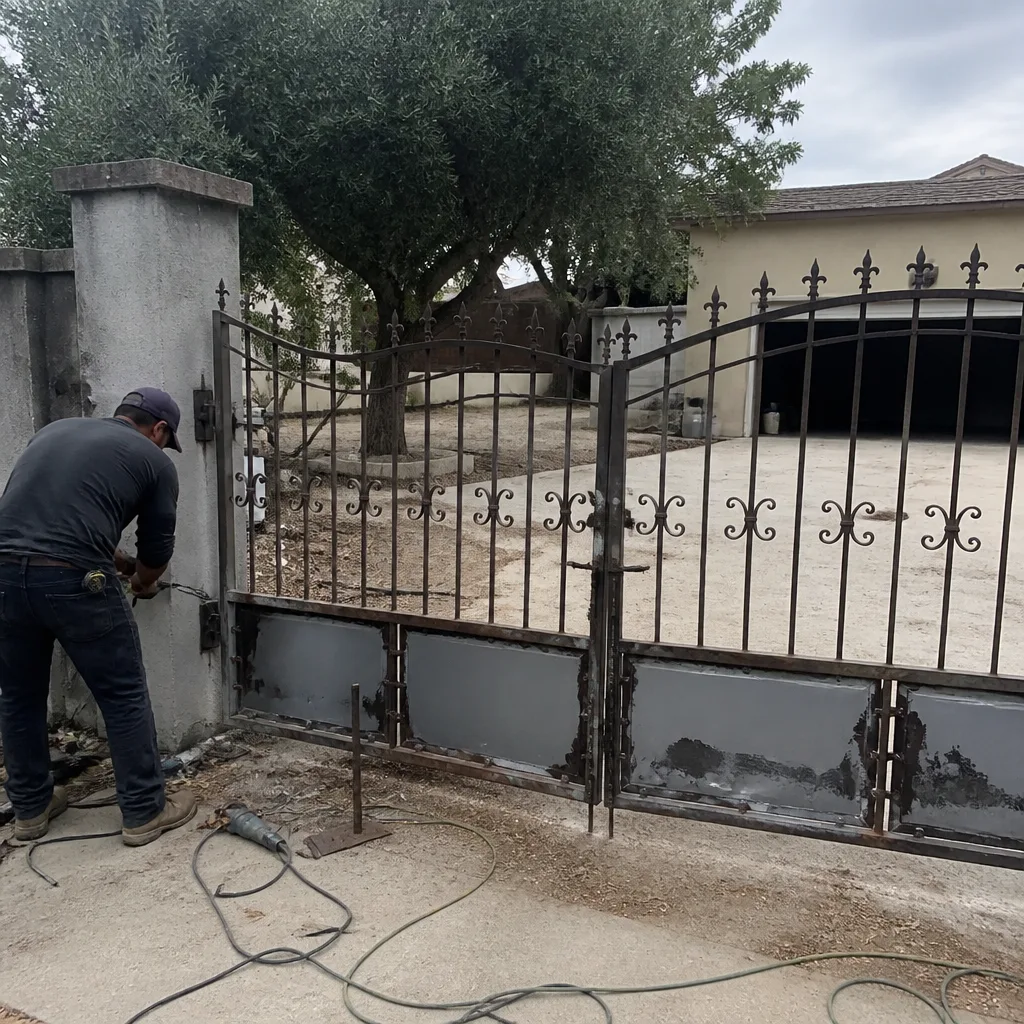 Before
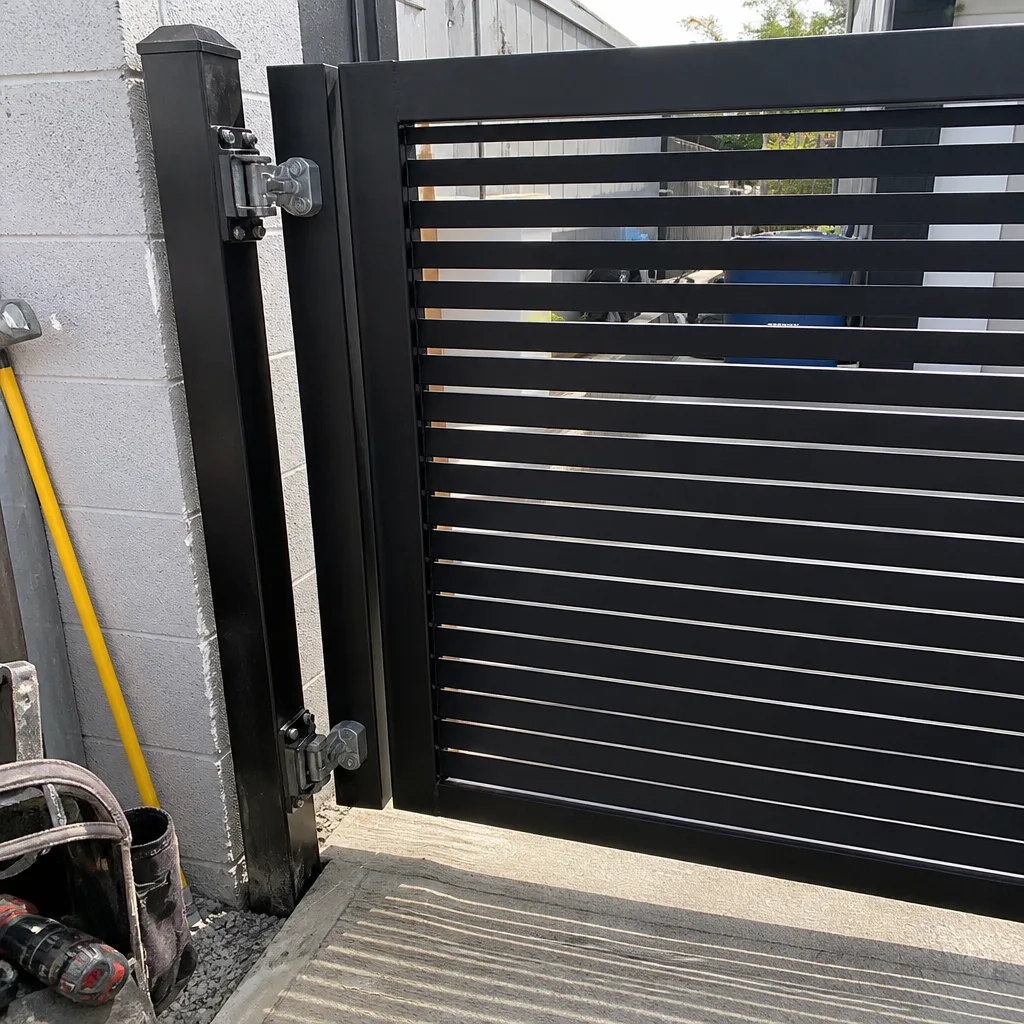 After
After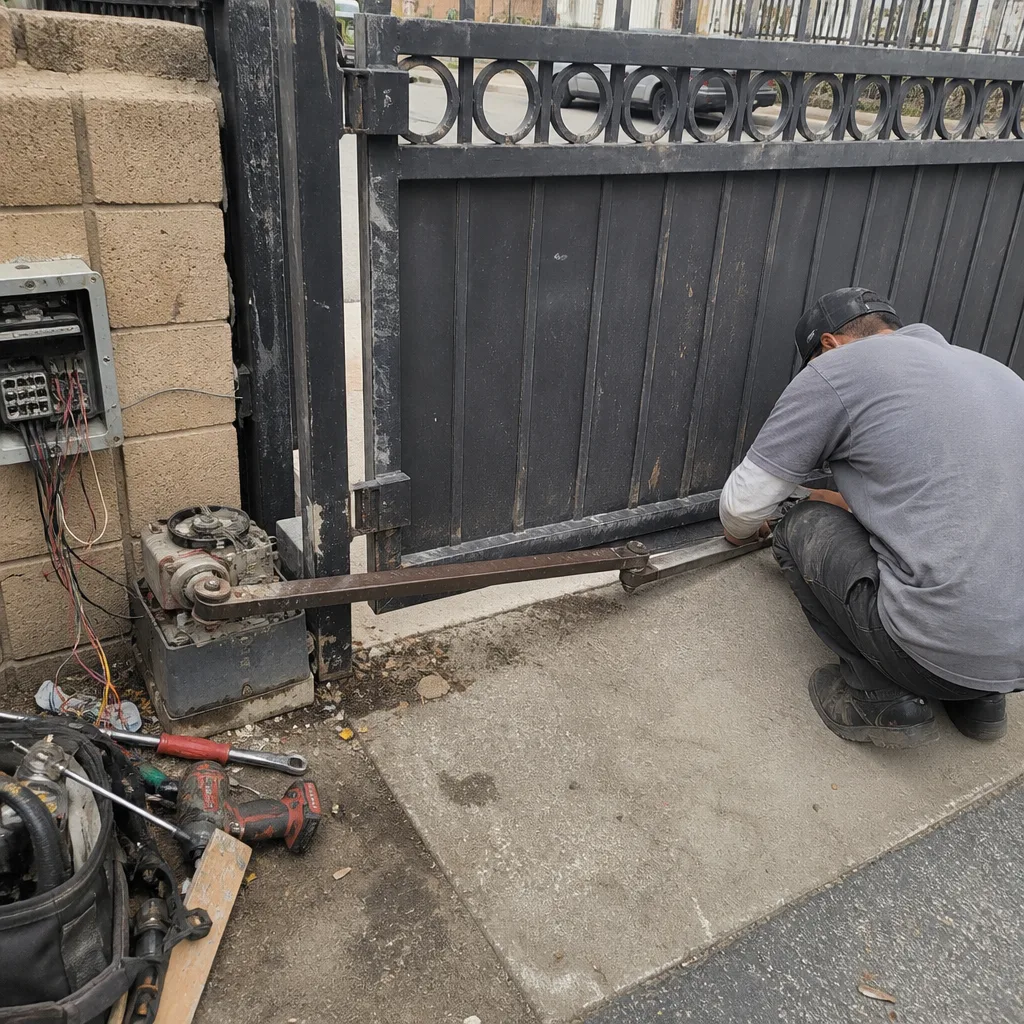 Before
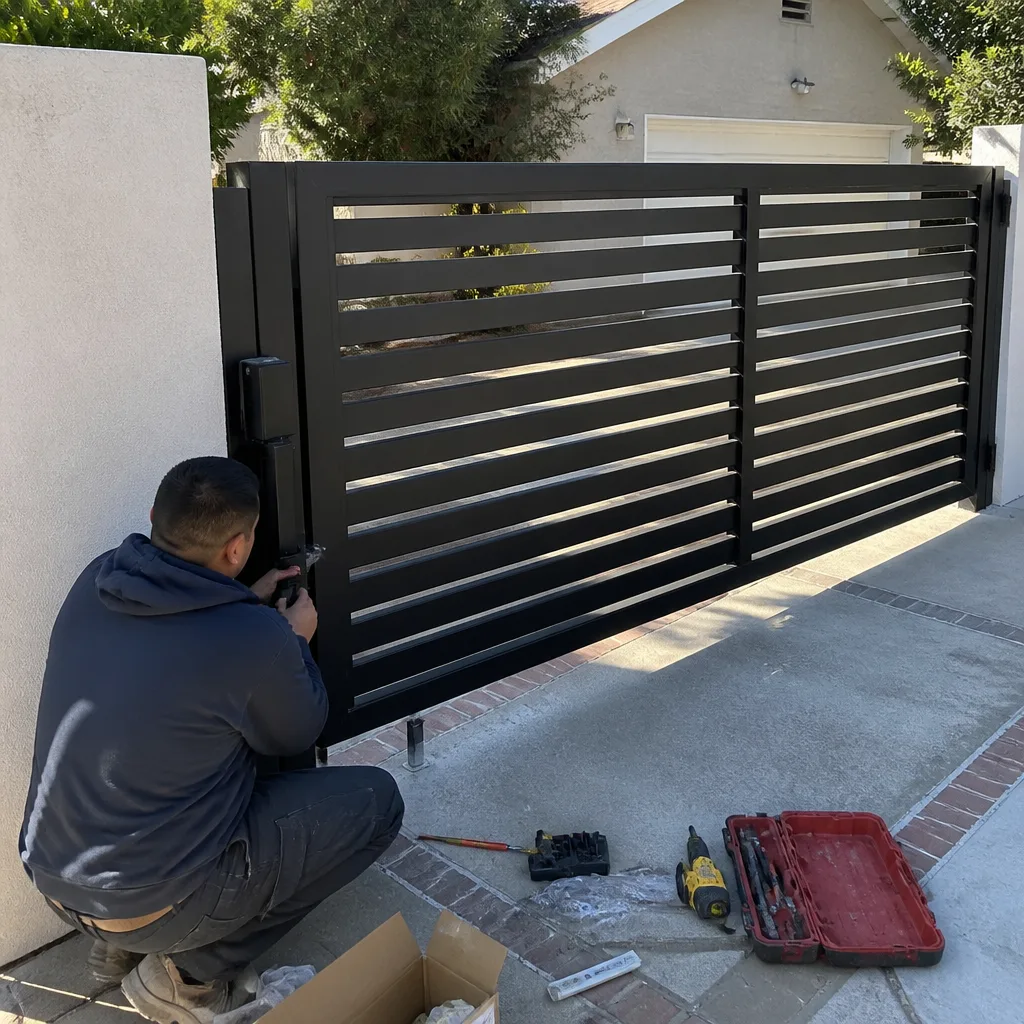 After
After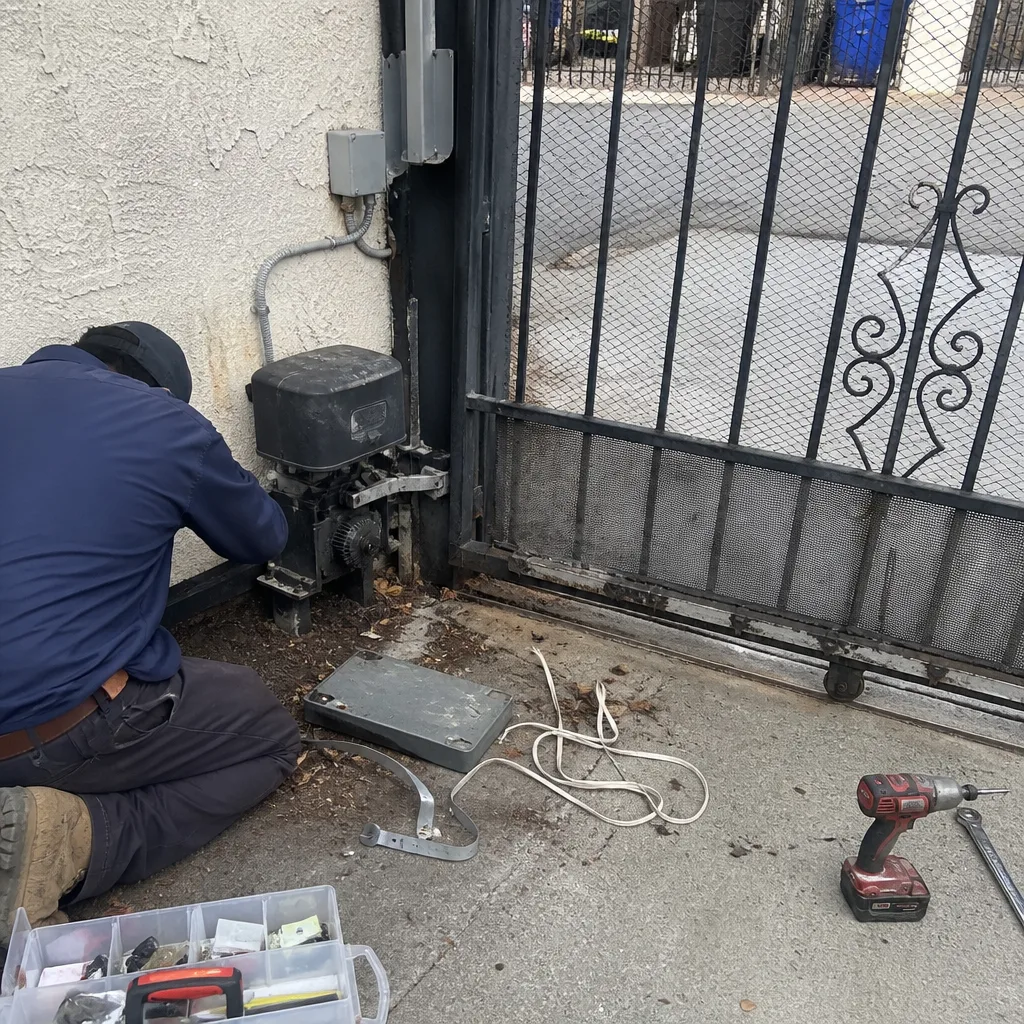 Before
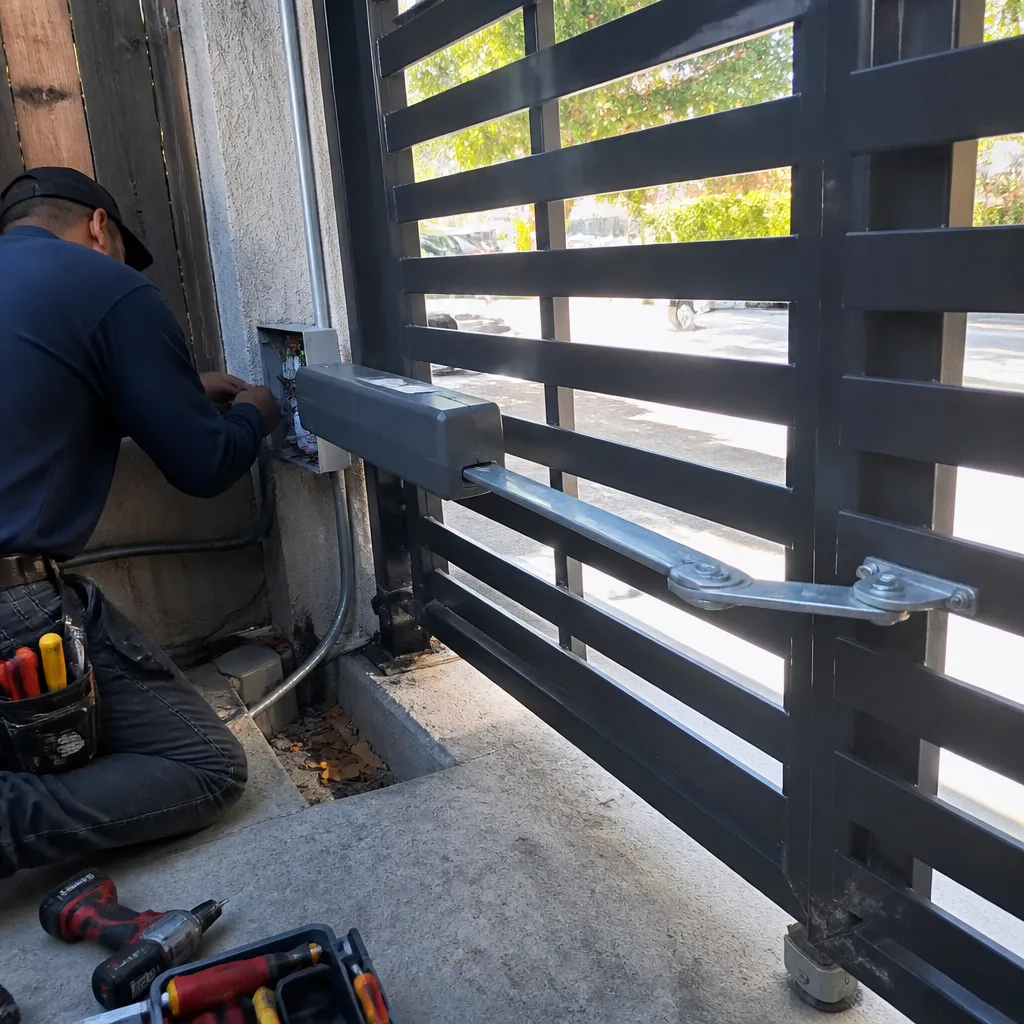 After
AfterHow to Hire a Gate Repair Contractor in Los Angeles: A Step-by-Step Guide
In Los Angeles, a gate repair contractor only needs a C-61/D28 specialty license, a credential most homeowners have never heard of and almost nobody checks. That one overlooked detail explains a lot of repeat repair callbacks across the city, from Sherman Oaks to Eagle Rock. This guide, along with our Seasonal Gate Repair Care for Los Angeles: Year-Round Homeowner’s Guide, turns the hiring process into a concrete vetting script, so you can separate a factory-trained gate technician from a handyman with a truck and a convincing pitch. You’ll learn exactly what to verify before anyone touches your gate, what a fair written estimate looks like, and which five interview questions eliminate most bad candidates on the spot.
Quick Answer
To hire a gate repair contractor in Los Angeles, verify their California C-61/D28 specialty license on the CSLB website, ask about brand-specific training for your opener (LiftMaster, FAAC, DoorKing, etc.), and get a written estimate that separates labor from parts before any work starts. A legitimate contractor will volunteer their license number, name the brands they’re factory-trained on, and put the total price in writing without being asked. Skip anyone who hesitates on any of these three points.
Table of Contents
- Step 1: Verify the C-61/D28 License (90 Seconds, Non-Negotiable)
- Step 2: Ask About Brand-Specific Training and Experience
- Step 3: Confirm Insurance Coverage for Gate-Specific Property Damage
- Step 4: The Five Interview Questions That Eliminate 80% of Bad Candidates
- Step 5: Read the Written Estimate Like an Inspector
- What Gate Repair Actually Costs in Los Angeles
- What a Legitimate Job Timeline Looks Like
- Red Flags That Signal a Contractor to Avoid
- Common Mistakes to Avoid
- When to Call a Professional
- Frequently Asked Questions
- The Bottom Line
Step 1: Verify the C-61/D28 License (90 Seconds, Non-Negotiable)
California’s Contractors State License Board (CSLB) requires a specific specialty classification for anyone who installs, repairs, or services automatic gate operators: C-61/D28, the Doors, Gates, and Activating Devices classification. This is not the same as a general contractor license, and it’s not the same as a locksmith registration. A general building contractor (B license) can legally frame a house but may not hold the specific training and testing required for gate operator systems.
Here’s the verification process, which takes about 90 seconds:
- Go to cslb.ca.gov and click “Check a License” on the home page.
- Enter the contractor’s name or license number. If they won’t give you the number before a visit, that’s your first red flag.
- Confirm the classification shows C-61/D28, not just a general B or a different specialty.
- Check the license status says “Active,” not “Expired,” “Suspended,” or “Inactive.”
- Look at the “Workers’ Comp” field. If the contractor has employees and no workers’ comp coverage, you could be liable if someone gets hurt on your property.
We’ve seen this play out repeatedly in Los Angeles. A homeowner in Encino hires someone from a neighborhood app, the gate stops working again in three weeks, and when they finally check, there’s no C-61/D28 anywhere on record. The repair was done by someone operating outside the system, and the homeowner has no CSLB complaint path. The 90-second check prevents that entire scenario.
You can also call the CSLB directly at 1-800-321-CSLB if you prefer to verify by phone. A licensed contractor will never be offended by a license check. The ones who push back are telling you something useful.
Step 2: Ask About Brand-Specific Training and Experience
Gate openers are not interchangeable. A DoorKing swing arm operator has a completely different control board, limit switch configuration, and failure pattern than a Ghost Controls slide gate system. A technician who “works on all brands” often means they’ve fumbled through a few manuals and replaced some generic parts. What you want is factory-familiarity: training, hands-on repair volume, and working knowledge of the specific brand mounted on your property (see our Choosing the Right Gate Repair Brand: A Buyer’s Guide for Los Angeles).
In Los Angeles, the most common residential brands we see are LiftMaster, FAAC, BFT, Linear, Viking, Ghost Controls, DoorKing, Elite, and Mighty Mule. That’s not a marketing list, it’s a market reality. If a contractor cannot name the last three Ghost Controls boards they replaced, or doesn’t know that Elite operators have a specific manual release sequence, they’re learning on your gate at your expense.
Here’s the practical test: ask the contractor to name your opener’s brand before you tell them what it is, based on a photo. A trained technician can usually identify the manufacturer from the housing shape, keypad style, or arm hardware. Then ask what the most common failure is for that specific model line. If they say “motors burn out” for every brand, that’s generic filler, not expertise.
At Calder Gate Repair, our technicians train across nine major opener brands. That depth matters because Los Angeles properties include everything from a 1970s swing gate in Los Feliz with an original Linear operator to a brand-new Mighty Mule slide installation in Porter Ranch. The repair approach is different for each.
Step 3: Confirm Insurance Coverage for Gate-Specific Property Damage
General liability insurance is not enough. You need to confirm the contractor’s policy covers gate-specific property damage: a damaged opener control board, a bent gate frame from improper lifting, or a failed limit switch that causes the gate to slam into a vehicle or a wall.
Ask the contractor for a Certificate of Insurance (COI) and read the “Description of Operations” box. It should mention gate repair, gate installation, or access control systems specifically. If the box says only “handyman services” or “general contracting,” the insurer may deny a claim involving an automatic gate operator because the work falls outside the described scope.
Three questions to ask about insurance:
- “Does your policy cover damage to gate operators, control boards, and gate frames specifically?” If the answer is a vague “we’re fully insured,” ask for the COI and read it yourself.
- “What is your policy limit?” Most legitimate gate contractors in the Los Angeles market carry at least $1 million in general liability. Lower limits are a warning sign for a trade involving motorized equipment and property damage potential.
- “Is there an additional insured option?” If you have an HOA, especially in gated communities in Calabasas or Brentwood, the HOA will often require being named as an additional insured before work begins on a shared gate.
We’ve seen homeowners skip this step and regret it. A gate that fails to close properly can damage a car, injure a pedestrian, or leave a property unsecured. If the contractor’s insurance does not cover the work they actually performed, the homeowner’s own policy may be the only thing left, and many home policies exclude motorized gate equipment.
Step 4: The Five Interview Questions That Eliminate 80% of Bad Candidates
Most homeowners ask the wrong questions: “How much do you charge?” and “When can you start?” Those are important, but they should come after you’ve established competence. Here are the five questions that expose a weak candidate quickly, based on years of watching homeowners in Los Angeles hire the wrong person first.
Question 1: “What is your California contractor license number, and what classification is it?”
A licensed gate contractor answers immediately: “C-61/D28.” Anyone who stumbles, deflects, or says they are “licensed but it’s under a different name” is not ready for your gate. This single question eliminates a large share of unlicensed operators in the LA market. If they won’t give you a number before arriving, do not let them on the property.
Question 2: “Which gate opener brands are you factory-trained or factory-certified on?”
A legitimate answer names specific brands, not a generic “all of them.” You want to hear LiftMaster, FAAC, BFT, DoorKing, Elite, Ghost Controls, Mighty Mule, or whatever matches your system. Follow up with: “What’s the most common failure you see on that brand?” A technician who has actually repaired DoorKing operators in the field will tell you about actuator arm issues or limit switch drift. A phony will say something vague like “they all have motor problems.”
Question 3: “Will I get a written estimate that separates labor from parts before any work starts?”
The right answer is “yes, always.” Not “we’ll see once we get in there,” not “I’ll text you a number when I know more.” A written pre-work estimate with a labor line and a parts line is the single most reliable predictor of a fair final invoice. If a contractor refuses to put the price in writing before starting, walk away.
Question 4: “What is your warranty, and will it be in writing?”
Listen for a specific duration and a specific trigger. “One year, if the same part fails we come back free” is a real answer. “We guarantee our work, don’t worry about it” is not. A legitimate warranty is written on the invoice or estimate and names the coverage period and what happens if the repair fails. At Calder, every repair includes a 365-Day Done Right Promise: if the repair fails within 365 days, we return at no charge. You should expect similar specificity from any contractor you hire.
Question 5: “If I make an emergency call, who am I actually speaking to?”
A professional operation has a live person answering, not a voicemail with a promise to call back. Ask directly: “If my gate stops working at 8 PM and I call, will a human answer?” The answer tells you a lot about how the company operates. We answer 24/7 with a live person. If a contractor’s phone goes to voicemail during business hours, imagine what happens when your gate fails on a Sunday night.
Step 5: Read the Written Estimate Like an Inspector
A written estimate is either a clear road map or a trap door. Most Los Angeles homeowners don’t read them carefully, and some contractors count on that. Here’s how to read one properly.
First, look for a labor-versus-parts breakdown. If the estimate is one lump sum with no separation, you can’t compare it to anything, you can’t verify the parts cost, and you have no protection if the contractor swaps in a cheaper component. A clean estimate lists labor as one line and each part as its own line with a part number or description.
Second, beware of these specific red flags in written estimates:
- “Parts TBD” on a repair estimate. A competent gate technician knows what parts are needed before starting. “Parts TBD” means either they haven’t diagnosed the problem yet (so why are they quoting?) or they plan to inflate the parts cost after the gate is disassembled.
- Vague line items like “gate repair service” or “general maintenance.” What exactly is being repaired or replaced? A good estimate says “Replace limit switch on FAAC 402 operator” not “fix gate.”
- No warranty language on the document. If the guarantee is not written, it doesn’t exist. Verbal promises disappear at invoice time.
- An estimate that changes after the work starts without a signed change order. A legitimate contractor may discover an additional issue and will present a revised written estimate before proceeding, not after.
Compare two estimates for the same repair whenever possible. If one contractor quotes $280 and another quotes $900 for the same line items, ask why. Sometimes the higher quote includes a heavier-duty part, a better brand, or additional labor to correct a secondary issue. Sometimes it’s just pricing power. The line-item breakdown shows you which is which.
Never accept a verbal estimate for gate work. A gate operator involves electrical components, moving parts, and safety systems. If something goes wrong and you need to file a claim or dispute a charge, a verbal agreement has no paper trail. Written estimates protect both parties.
What Gate Repair Actually Costs in Los Angeles
Gate repair pricing in Los Angeles runs higher than the national average, driven by labor rates, the prevalence of custom and older gates, and the cost of carrying proper licensing and insurance in California. Here are realistic ranges based on what we see across the city:
| Repair Type | Typical Los Angeles Range | Notes |
|---|---|---|
| Service call / diagnostic fee | $75-$150 | Often credited toward the repair if you proceed. |
| Gate opener gear replacement | $180-$340 | Depends on brand and gear type. LiftMaster and Linear gears are common. |
| Circuit board replacement | $280-$650 | Boards are brand-specific. DoorKing and Elite boards run higher. |
| Limit switch replacement | $140-$260 | Small part, but requires opener access and adjustment. |
| Full gate opener replacement | $900-$2,400 | Includes opener unit, hardware, and labor. Brand and gate size drive the range. |
| Welding repair on gate frame | $200-$600 | Depends on the extent of damage and access. |
| Safety sensor or photo eye replacement | $150-$350 | Required by law on all automatic gates in California. |
These are pre-parts repair ranges for the Los Angeles market. The point is not to nail an exact number before anyone sees your gate, but to know what a reasonable range looks like, so a quote that lands dramatically outside it triggers questions. A $1,200 quote for a gear replacement is either a misdiagnosis or a contractor who thinks you won’t check.
At Calder Gate Repair, every customer receives a written price before any work starts. The number on the invoice is the number agreed to at the door, never a surprise. That’s the standard gate repair in Los Angeles should be held to.
What a Legitimate Job Timeline Looks Like
Knowing what a normal repair timeline looks like helps you spot both stall tactics and rushed work. Different jobs take different amounts of time, and a contractor who promises everything “in an hour” or who drags a simple repair across three weeks is telling you something.
Common repairs, same visit: Limit switch replacement, gear replacement, remote programming, safety sensor alignment, and circuit board swap-outs are typically completed in a single visit of 1 to 3 hours, assuming the part is on the truck or readily available. A technician who needs to “come back next week” for a common gear or switch part is not stocking properly.
Brand-specific part ordering: Some DoorKing, Elite, and Ghost Controls parts are model-specific and may need to be ordered from the manufacturer’s regional distributor. In Los Angeles, most of these arrive within 2 to 5 business days. A timeline of 7 to 10 days is normal for older or discontinued boards. Longer than that, and you should ask why.
Full opener replacement: A complete opener swap, including removing the old unit, mounting the new one, wiring, programming, and safety testing, typically takes 3 to 6 hours on site. This is measured work, not an emergency call. A contractor who promises a full replacement in under 2 hours is cutting corners somewhere, usually on safety sensor calibration or limit switch fine-tuning.
Emergency calls: Many Los Angeles gate companies offer same-day or next-day emergency service for non-functional gates, especially when the gate is stuck open and the property is unsecured. This is the one scenario where dispatch speed matters. For non-emergency work like a new installation or an opener upgrade, expect a scheduled appointment within 3 to 7 days.
Stall tactics look like this: “The part is on backorder” repeated for three weeks with no tracking number. “I’ll get back to you” with no follow-up. A legitimate contractor in Los Angeles can tell you where a part is and when it will arrive. If they can’t, find someone who can.
Red Flags That Signal a Contractor to Avoid
- No C-61/D28 license number provided up front. If they won’t give you a number before the visit, they’re not licensed, and the CSLB can’t help you if something goes wrong.
- No written estimate before work starts. In Los Angeles, this is the most common complaint we hear from homeowners who call us second. They paid a verbal quote, then received an invoice that was 40% higher.
- Cash-only or discount-for-cash offers. Legitimate contractors take standard payment methods and leave a paper trail. Cash-only pricing usually means no license, no insurance, no warranty.
- Pressure to decide immediately. “I’ve got another job in the neighborhood today, so I need to know now.” A real contractor can schedule you next week. Rush tactics are a classic sign of a contractor who doesn’t want you to compare estimates or verify credentials.
- No written warranty language. If the guarantee is not on paper, it doesn’t exist. Verbal promises have never once helped a homeowner in a dispute.
- Vague brand knowledge. If you mention your opener brand and get a blank look or a generic “we do all brands,” keep looking. Brand-specific training is the difference between a correct repair and a callback.
Common Mistakes to Avoid
- Hiring the first contractor who answers the phone. In the Los Angeles market, where unlicensed operators advertise alongside legitimate companies, taking the first available slot means you skip every verification step this guide just covered.
- Assuming a general contractor can fix a gate opener. A B license does not include C-61/D28 gate operator training. It’s like asking a heart surgeon to pull a tooth. They may be skilled, but it’s the wrong specialty.
- Skipping the insurance check. If a contractor’s policy doesn’t cover gate-specific damage and something goes wrong, you are personally exposed. Always read the COI’s description of operations.
- Accepting a verbal estimate. No written price, no protection. Ever. This is the single most preventable mistake we see in Los Angeles.
- Choosing the cheapest quote without comparing line items. Sometimes the low quote uses aftermarket parts, skips safety sensor replacement, or omits the wiring work that a higher quote includes. Compare the line items, not just the total.
- Ignoring the warranty before paying. Ask for the warranty in writing before the work starts, and read it. Know the duration, the trigger, and what’s covered. A 365-day warranty with a free return visit is very different from “if you have any issues, call me.”
- Not asking about brand-specific training. Most homeowners never think to ask, and most bad contractors never volunteer. This one question separates a real gate technician from a general handyman in seconds.
When to Call a Professional
Some gate issues are worth a close look from a homeowner: a remote battery that needs replacing, a photo eye that’s simply misaligned because a planter shifted, a gate that’s creaking because the hinges need lubricant. But anything involving the gate operator itself, the control board, safety sensors, limit switches, or wiring deserves a licensed professional. Automatic gates are heavy, motorized equipment under tension and spring load. A gate that fails to reverse properly can cause serious injury. The safety edges and photo eyes exist for a reason.
If your gate won’t open, won’t close, reverses mid-cycle, makes grinding noises, or intermittently stops responding, call a licensed gate contractor. Calder Gate Repair offers free estimates in Los Angeles, call (903) 417-0793 and we’ll diagnose the issue with a written price before any work starts.
Frequently Asked Questions
A gate repair contractor in California needs a C-61/D28 specialty license, which covers doors, gates, and activating devices including automatic gate operators. Verify the license number on the CSLB website at cslb.ca.gov before hiring anyone. For help with a licensed gate repair in Los Angeles, call (903) 417-0793.
Most common gate opener repairs, like gear replacements, limit switch swaps, and circuit board replacements, are completed in a single 1-to-3-hour visit. If a part needs to be ordered from a manufacturer, expect 2 to 10 business days depending on the brand and model. A full opener replacement typically takes 3 to 6 hours on site. For an honest timeline on your specific repair, call (903) 417-0793.
A fair gate repair estimate is written, separates labor from parts, and includes specific line items like “replace limit switch on FAAC 402 operator” rather than vague phrases like “gate repair service.” It also includes warranty language in writing. Avoid estimates with “parts TBD” or a single lump sum with no breakdown. Our Gate Repair services provide a written price before any work starts, every time.
Repair is usually the right call if the opener is under 10 years old, the motor and board are in good condition, and the repair cost is under half the price of a new unit. Replacement makes more sense when the opener is older, the board has failed repeatedly, or the repair cost approaches the price of a new opener. A good technician will give you both options with honest pricing. Call (903) 417-0793 for a straight answer on your specific system.
The most common residential gate opener brands in Los Angeles are LiftMaster, FAAC, BFT, Linear, Viking, Ghost Controls, DoorKing, Elite, and Mighty Mule. When hiring, ask which brands the contractor is factory-trained on and specifically whether they have experience with the brand installed on your property. Our technicians are factory-familiar with all nine major brands.
Most gate repairs, like replacing a gear, circuit board, or limit switch, do not require a permit in Los Angeles. Full gate installations or major structural changes may require city approval depending on your location and gate type. A licensed C-61/D28 contractor can tell you whether your specific job requires permitting. When in doubt, call (903) 417-0793 and we’ll point you in the right direction.
The Bottom Line
Hiring a gate repair contractor in Los Angeles comes down to three verifications: a C-61/D28 license you can confirm in 90 seconds, brand-specific training you can test with one question, and a written estimate that separates labor from parts. Most homeowners skip all three and pay for it with repeat callbacks or inflated invoices. Spend the extra five minutes on vetting, and you’ll get a repair that holds. Take a shortcut, and you’ll likely call a second contractor in a month. The choice is yours. We’re here if you need us.
For electric gate repair in Los Angeles or gate opener repair in Los Angeles, call Calder Gate Repair at (903) 417-0793 for a free estimate and a written price before any work starts.
Written by Nico Alvarez, Owner at Calder Gate Repair, serving Los Angeles since 2009.