
Last updated October 9, 2026
Free on-site gate assessment - hinges, posts, and your LiftMaster or Nice gate operator checked before anything is quoted
The assessment is free and the quote is the invoice.

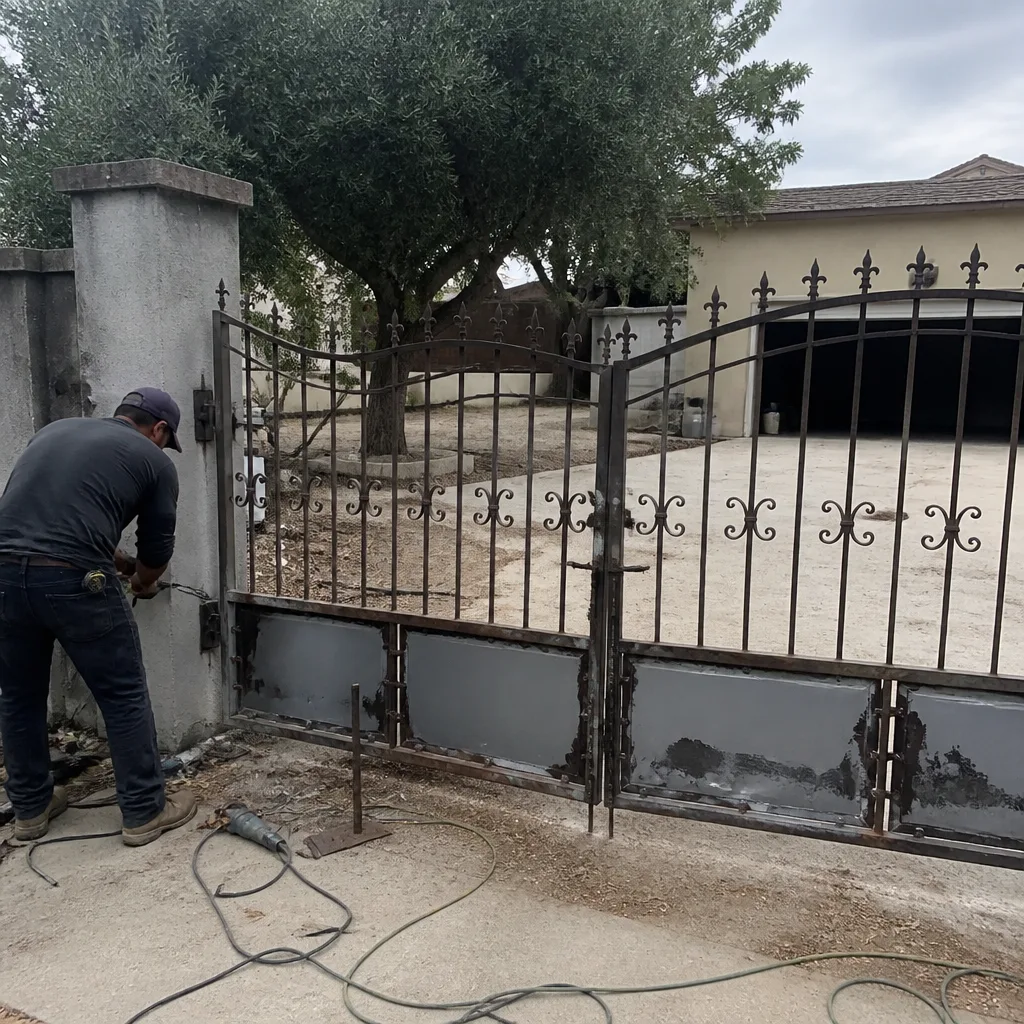 Before
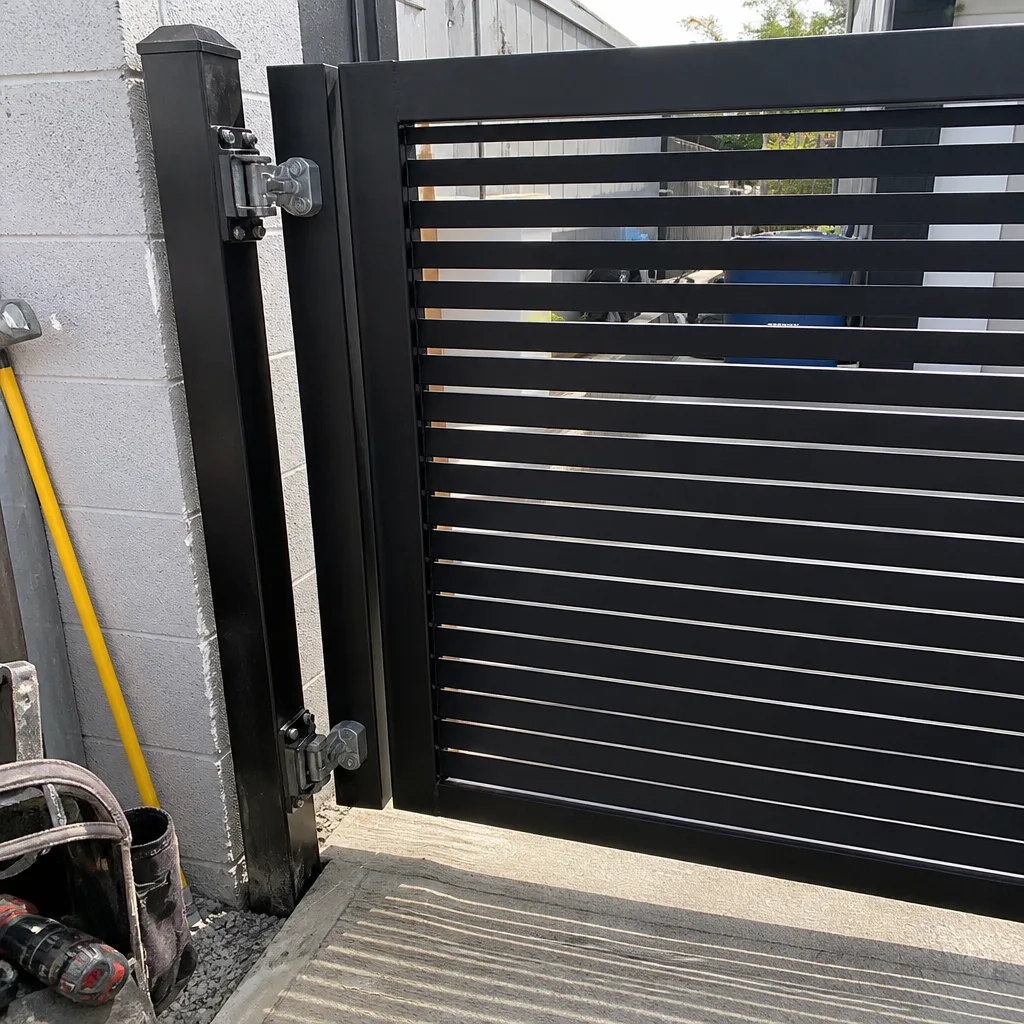 After
After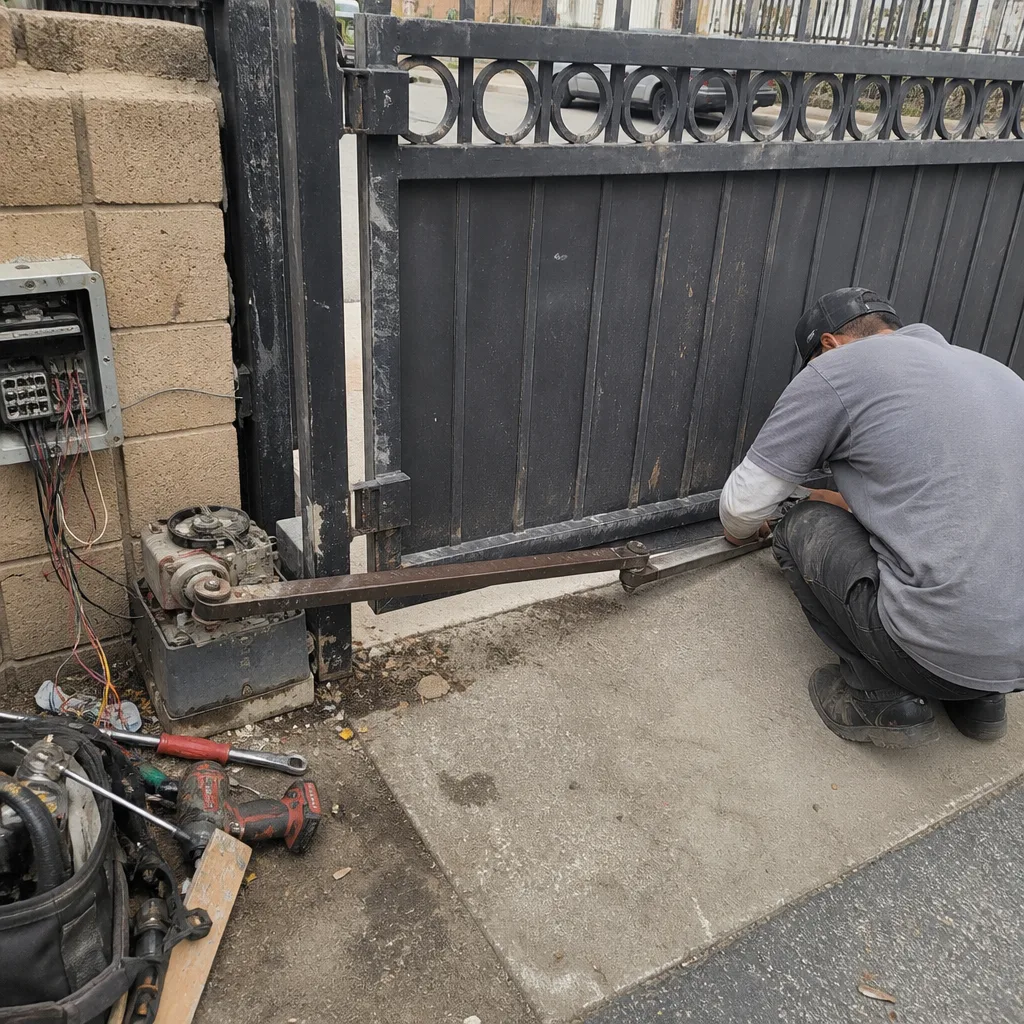 Before
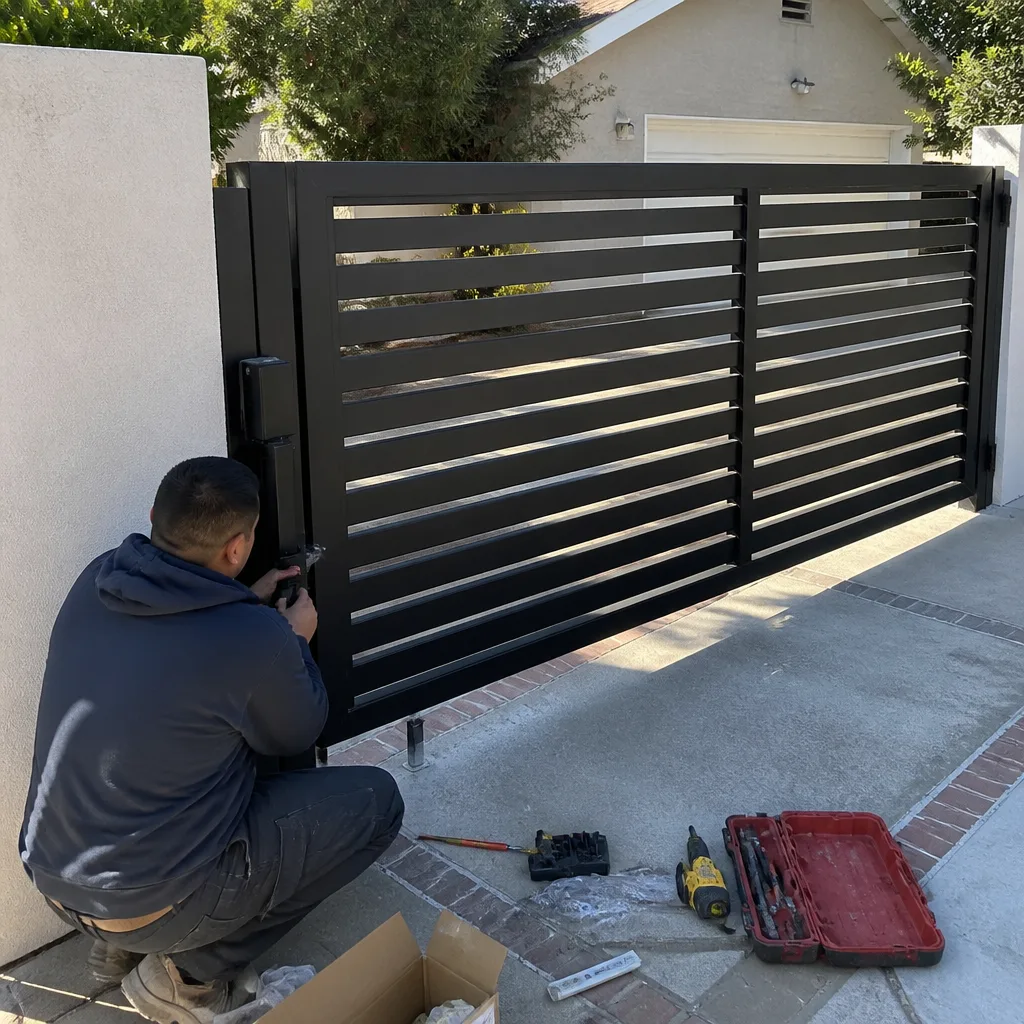 After
After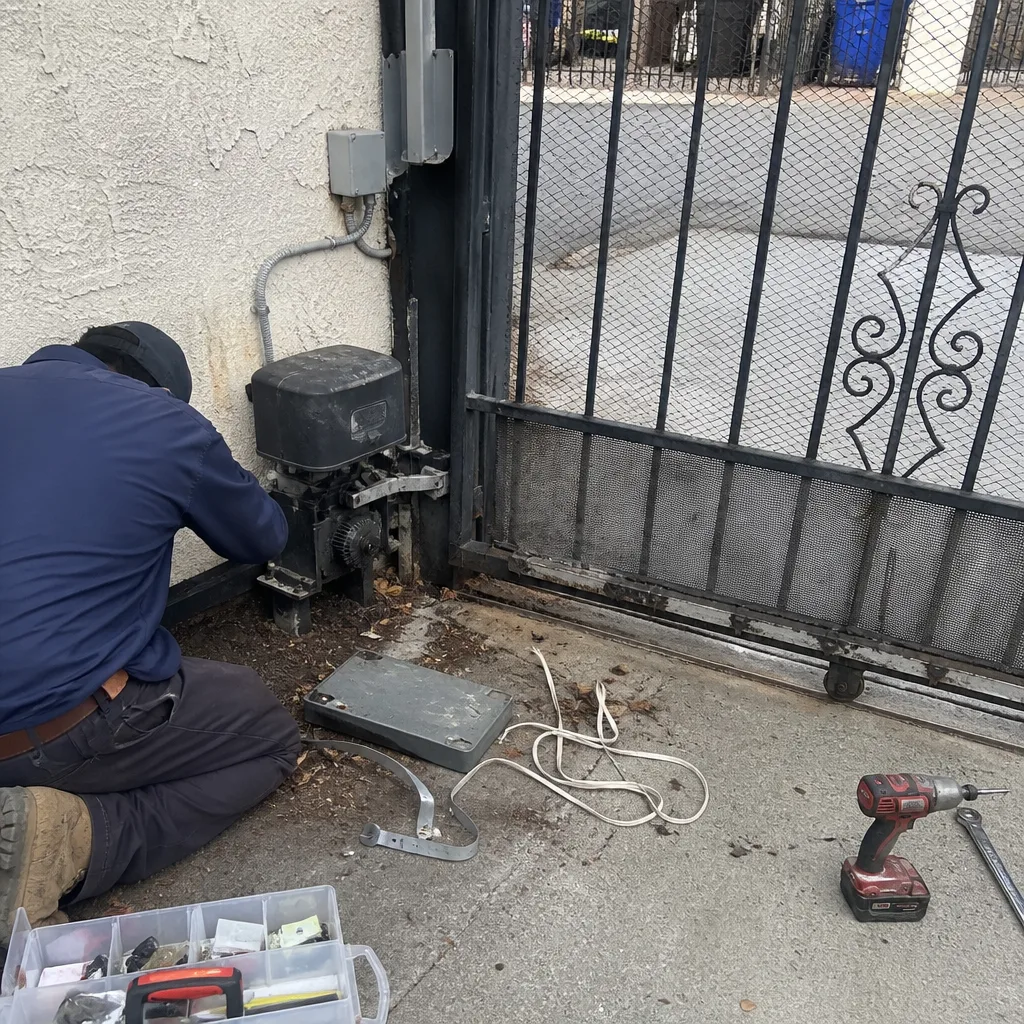 Before
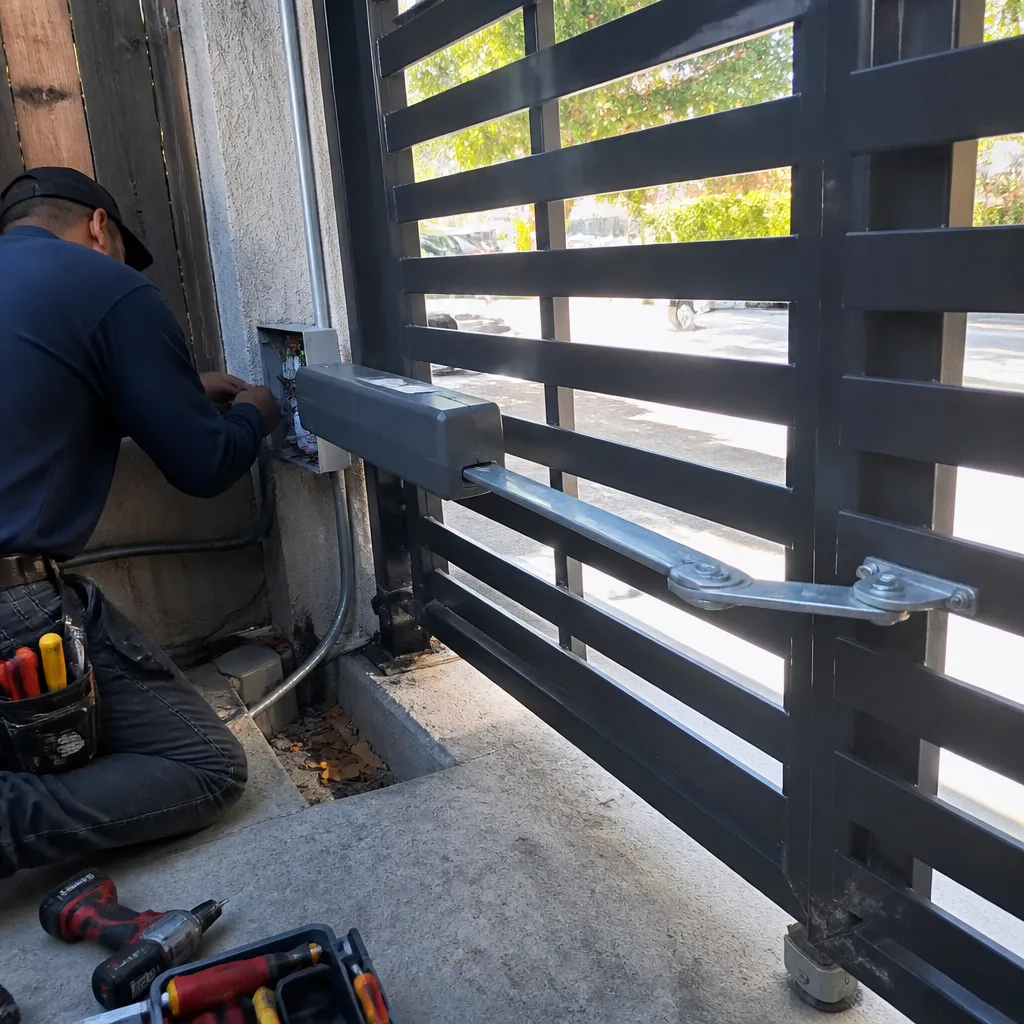 After
AfterGate Repair Maintenance Schedule: What to Do and When
Lubricating your gate opener on the wrong schedule can cause more wear than skipping lubrication entirely. Most aerosol sprays attract grit, and in Los Angeles, that grit is everywhere: dust from the hills, sand blown off the beaches, and the fine particulate that settles over every neighborhood from Echo Park to Encino. This guide is about building a maintenance calendar that matches your gate’s actual drive type, material, and local conditions. We’ll cover the five-minute monthly inspection that catches most failures, the seasonal adjustments that protect Southern California gates, and which DIY tasks are safe versus which quietly void your manufacturer warranty.
Quick Answer
Most Los Angeles gates need a 5-minute visual inspection every month, lubrication twice a year (spring and fall), and a professional tune-up every 18 to 24 months. The exact schedule depends on your gate’s drive type: chain-drive gates need chain-tension checks and the correct chain-specific lubricant, while belt, screw, and direct-drive openers each have their own cadence. Homeowners who follow this rhythm typically avoid emergency Gate Repair services and extend their opener’s lifespan by 3 to 5 years.
Table of Contents
- The Drive-Type Maintenance Matrix: Chain vs. Belt vs. Screw vs. Direct-Drive
- The Five-Minute Monthly Visual Inspection Checklist
- Seasonal Adjustments for Southern California Gates
- The Twice-A-Year Lubrication Guide (And Why More Is Not Better)
- Gate Finish and Hardware: Preventing Rust Streaks Before They Devalue Curb Appeal
- Warranty Boundaries: Which Maintenance Tasks Reset Your Clock and Which Void It
- Common Mistakes to Avoid
- When to Call a Professional
- Frequently Asked Questions
- The Bottom Line
The Drive-Type Maintenance Matrix: Chain vs. Belt vs. Screw vs. Direct-Drive
Your gate opener’s drive mechanism dictates how often you need to maintain it, and ignoring this is the most common reason Los Angeles homeowners pay for avoidable repairs. A chain-drive opener in Silver Lake needs a different schedule than a belt-drive unit in Pacific Palisades, and a direct-drive motor in West Adams runs nearly maintenance-free for years. Here is the breakdown, with product guidance for each.
- Chain-drive: The workhorse of residential gates. The chain stretches over time, especially in hotter inland Los Angeles neighborhoods where temperature swings cause the metal to expand and contract. Check chain tension every 3 months and lubricate the chain with a dry, graphite-based lubricant twice a year. Never use thick grease – it traps dust and forms an abrasive paste. Brands like Viking and Ghost Controls sell chain-drive openers, and both specify a chain inspection interval in their manuals.
- Belt-drive: Quieter than chain, and a popular choice in dense Los Angeles neighborhoods where gates sit close to bedrooms. The belt itself requires no lubrication, but the idler pulley bearings do. Inspect the belt for cracks or glazing every 6 months, and plan to replace it every 5 to 7 years of regular use. Elite’s belt-drive openers are common in LA installations.
- Screw-drive: These openers run a threaded rod along the rail. They are loud by modern standards, but they are still in service all over the San Fernando Valley. The screw needs a specific white lithium lubricant applied lightly every 6 months. Over-lubricating a screw-drive is worse than under-lubricating it because excess lubricant drips onto the track sensor. DoorKing still supports thousands of these units across Los Angeles.
- Direct-drive: The motor itself moves along a fixed chain, and the only moving part is the motor carriage. There is essentially nothing to lubricate. Maintenance means checking the carriage wheels for debris buildup and confirming the safety sensor lenses stay clean. Direct-drive openers in beach-adjacent communities like Playa del Rey still need seasonal attention to electrical connections due to salt air.
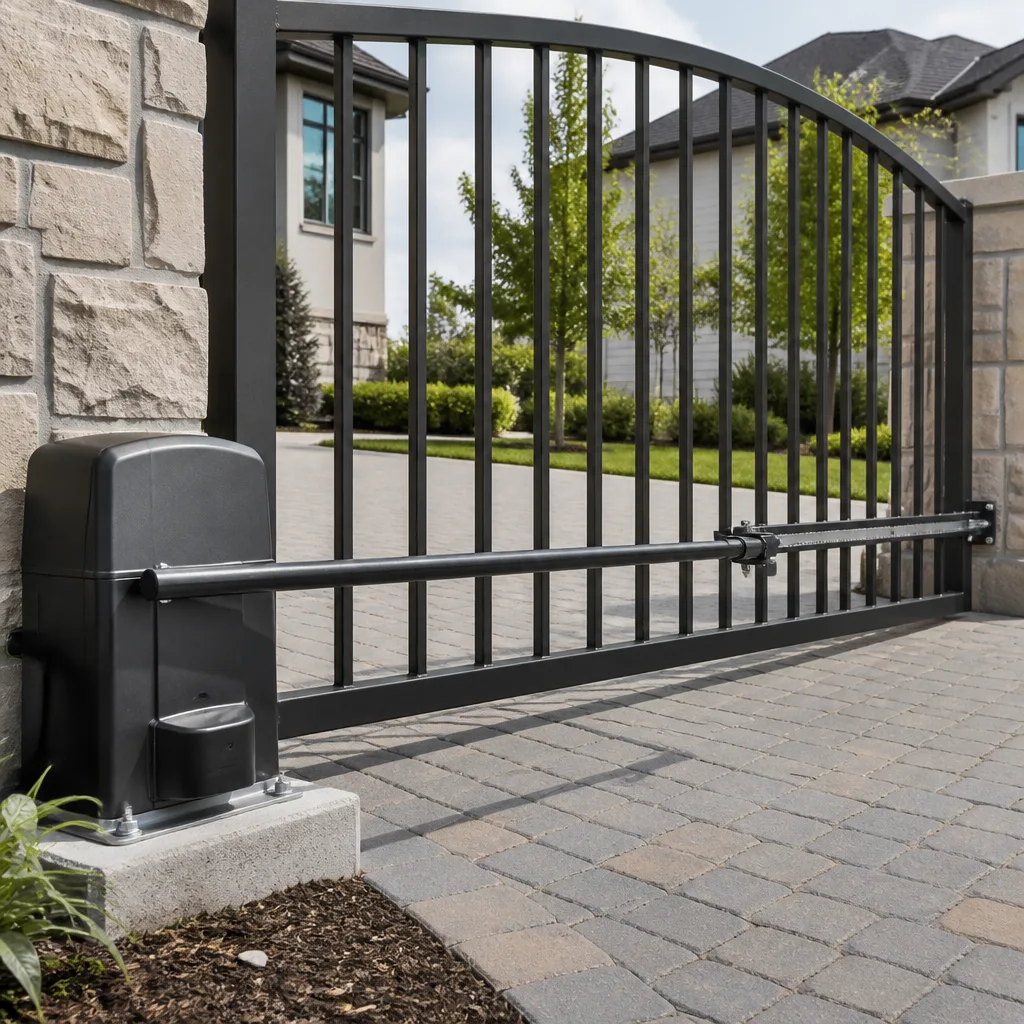
If you don’t know which drive type you have, look at the rail that runs from the motor to the gate arm. A visible metal chain means chain-drive. A black rubber belt means belt-drive. A long threaded rod means screw-drive. A smooth, enclosed rail with the motor riding directly on it means direct-drive.
The Five-Minute Monthly Visual Inspection Checklist
Eighty percent of the emergency calls we see in Los Angeles start as a small issue that was visible for weeks before failure. A hinge pin starts to seize, a roller wears a flat spot, a safety sensor lens gets covered in dust from Santa Ana winds. Five minutes a month catches these before they become a 10 p.m. gate that will not close. Do this routine with the gate in manual mode or the opener disconnected, and never stand in the path of a moving gate.
- Walk the full path of the gate. Look for debris in the track, especially after wind events. Los Angeles Santa Anas deposit leaves, twigs, and fine dirt directly into gate tracks in hillside neighborhoods.
- Push the gate manually from fully open to fully closed. It should move smoothly with consistent resistance. If it binds, drags, or catches, something is wearing: a bearing, a roller, or a hinge.
- Inspect the hinge points and welds. Look for rust, cracks in the metal, or sagging. A gate that droops at the free end puts extra strain on the opener motor and shortens its life.
- Check the safety sensors. They are usually two small boxes near the gate’s open position, about 6 inches off the ground. Wipe the lenses with a dry cloth. Misaligned or dirty sensors are the number one cause of a gate that reverses or refuses to close.
- Listen. Run the gate through one full open-close cycle and listen for grinding, squealing, or clicking that was not there last month. New noises mean new wear.
- Look at the ground clearance. If the gate scrapes the driveway, the hinge posts may have settled. This is common in Los Angeles where many homes sit on expansive clay soil that shifts between wet winter months and dry summers.
This monthly routine is what the Calder Gate Repair home page’s maintenance philosophy is built on: catching problems early, before they need a diagnostic service call.
Seasonal Adjustments for Southern California Gates
Southern California does not have harsh winters, but it has two seasonal forces that do real damage to gates: Santa Ana wind events and the rainy season. Both demand specific follow-up on a maintenance calendar.
After Santa Ana Wind Events
Santa Anas can gust over 60 miles per hour through the mountain passes and fan out across the Los Angeles basin. Those winds drive fine dust into every mechanical joint, strip lubrication off chains, and wedge debris into tracks. After a significant wind event, do a full track cleaning and re-check chain tension. If your gate is in a wind corridor like Porter Ranch, Sunland-Tujunga, or the foothills of Altadena, consider this a mandatory monthly task during Santa Ana season (typically September through February). Dust also coats photoelectric sensor lenses, so clean them more frequently in these weeks.
After the Rainy Season
Los Angeles rain is inconsistent, but when it comes, it exposes every seal, gasket, and electrical connection. After the last rain of spring, inspect the operator housing for moisture intrusion. Look for water line marks inside the control box, check for corrosion on terminal connections, and confirm that the low-voltage wire insulation is intact where it enters the ground. For gates in beach communities like Venice and Manhattan Beach, salt-laden moisture accelerates corrosion year-round, so add a quarterly electrical inspection to the calendar.
Summer Heat Cycles
Inland Los Angeles neighborhoods regularly exceed 100 degrees in July and August. The heat expands metal gate frames and stretches chains. If your gate rubs or binds only on hot afternoons, the chain tension or hinge alignment is borderline and will worsen. Adjusting it before summer peak reduces opener strain and prevents the motor from burning out during a heat wave when you need the gate most.
The Twice-A-Year Lubrication Guide (And Why More Is Not Better)
The single most misunderstood gate maintenance task is lubrication. More is not better, and the wrong product is worse than no product. In Los Angeles’s dry climate, aerosol lubricants that stay wet become dust magnets, creating an abrasive slurry that accelerates wear on chains, hinges, and rollers. Here is the correct approach.
- Chain-drive openers: Use a dry graphite chain lube or a motorcycle-grade dry chain wax. Apply a thin, even coating to the chain every 6 months and wipe off excess. Never use WD-40 (it’s a solvent, not a lubricant) or heavy chassis grease.
- Hinges and pivot points: A few drops of machine oil or a light lithium grease is appropriate. Apply sparingly, then operate the gate to work the lubricant into the joint, then wipe away what oozes out so dust cannot adhere.
- Screw-drive rails: White lithium grease, a thin coat, twice a year. If the rail is heavily greased, clean it with a degreaser and start fresh before applying the new layer.
- Belt-drive systems: No lubrication on the belt itself. Lubricate only the idler pulley bearing with a drop of bearing oil, if accessible.
- Direct-drive systems: Nothing to lubricate on the drive mechanism. Keep the rail clean and free of debris.
Mark the calendar for the first week of spring and the first week of fall. Those two applications are all most Los Angeles gates need, assuming monthly inspections confirm the lubricant is still present and not contaminated.
Gate Finish and Hardware: Preventing Rust Streaks Before They Devalue Curb Appeal
A gate that works but looks weathered will drag down your property’s curb appeal, and in Los Angeles, the first sign of neglect is nearly always rust streaks. These streaks form where hardware (bolts, latch plates, hinge pins) is a different metal than the gate itself, creating galvanic corrosion. They also form under scratched powder coating where bare steel is exposed.
The fix is not painting over rust. That traps moisture and accelerates the damage. Here is the routine that prevents streaks from forming in the first place:
- Wash the gate twice a year with mild dish soap and water. Use a soft brush on textured surfaces. Rinse thoroughly and dry with a microfiber cloth to prevent water spotting that can etch into clear coats.
- Inspect for chips and scratches in the powder coat or paint each time you wash. Touch up bare metal with a matching automotive touch-up paint or a rust-inhibiting primer, even if the color is not a perfect match. Covered metal does not rust.
- Check hardware for dissimilar metal contact. If you see white or orange residue forming around a bolt head, that is early galvanic corrosion. Remove the fastener, clean both surfaces, apply a thin anti-seize compound, and reinstall.
- Lubricate the latch mechanism every 6 months at the same time you lubricate the opener chain. A sticky latch makes homeowners slam or force the gate, which bends hinges and misaligns the opener.
For wood gates, which are common in older Los Angeles neighborhoods like Hancock Park and Larchmont Village, the finish needs attention every 18 to 24 months. Sand any peeling areas, re-seal with a marine-grade spar varnish or exterior sealant rated for high UV exposure, and check the bottom rail where standing water from sprinklers causes rot.
Warranty Boundaries: Which Maintenance Tasks Reset Your Clock and Which Void It
Many Los Angeles homeowners assume their gate opener manufacturer requires professional service to keep the warranty valid. The truth is more nuanced, and the difference matters. Manufacturers like Ghost Controls and Viking publish maintenance requirements in their owner’s manuals, and those requirements differ by product line.
What protects your warranty:
- Documented maintenance. Keep a simple log of lubrication dates, inspection findings, and any parts replaced. A dated notebook or a digital note on your phone works. If a warranty claim arises, the documentation shows you met the manufacturer’s maintenance schedule.
- Using compatible parts. If you replace a photo eye, remote, or circuit board, using the same manufacturer’s part or a manufacturer-approved equivalent keeps your warranty intact.
- Keeping the gate itself mechanically sound. The opener warranty typically does not cover damage caused by a binding, misaligned, or overweight gate. Monthly inspections that catch hinge wear and roller flat spots before they strain the motor actually protect your coverage.
What quietly voids your warranty:
- Modifying the control board, removing safety sensors, or bypassing any safety feature to solve a nuisance problem. A gate that reverses because of a dirty sensor lens should be cleaned, not bypassed. If an injury occurs on a bypassed sensor, the warranty is the least of your problems.
- Installing non-approved accessories, such as a generic keypad wired incorrectly, that cause a short on the control board. The board failure will not be covered.
- Using the wrong lubricant on a chain or screw drive. If a chain snap or screw thread failure is attributed to an abrasive contaminant introduced by the wrong lubricant, the manufacturer can deny the claim.
Our approach at Electric Gate Repair in Los Angeles is to work inside the manufacturer’s documented maintenance schedule, not around it.
Common Mistakes to Avoid
- Lubricating monthly with the wrong product. A wet, sticky aerosol spray applied every month turns a chain into a grinding paste. Twice a year with a dry lubricant is correct for Los Angeles conditions, and most other dry climates.
- Ignoring a gate that scrapes the driveway. The scrape is a symptom of hinge wear or post settlement. Every scrape cycle multiplies the load on the opener motor, and motors do not recover from sustained overload.
- Bypassing a reversing safety sensor. Homeowners get frustrated with a gate that will not close, so they disconnect or reposition the sensor. That turns a minor maintenance task into a serious safety risk, and it voids the manufacturer warranty.
- Oiling a belt-drive belt. Rubber belts degrade when exposed to petroleum-based lubricants. The correct action is no lubrication at all.
- Skipping the winter electrical inspection. After heavy rain, water intrusion into the control box causes intermittent failures that often resolve themselves once the box dries out. Skipping the inspection means you discover the corrosion months later, when the board finally fails outright.
- Tightening a chain without checking the sprockets. Tightening a loose chain on a worn sprocket does not fix the problem; it accelerates sprocket wear. If the chain is consistently loose, inspect the sprocket teeth for hooking or reduced depth before adjusting tension.
- Painting over rust without prep. A coat of paint over active rust traps moisture against the steel and makes the corrosion worse underneath. Wire-brush first, treat with a rust converter, then prime and paint.
When to Call a Professional
Most maintenance tasks on this schedule are safe for a careful homeowner. But some situations call for a professional, and the decision should be made before damage compounds. If you hear grinding from inside the motor housing, if the gate fails to stop when it hits an obstruction, if you smell burning or notice scorch marks near the control board, or if the gate has fallen off its track, do not attempt a repair. Gate openers store enough kinetic energy in the motor and springs to cause serious injury, and gate systems with high-tension components deserve the same respect as a garage door. Gate Repair in Los Angeles is what our team does every day, and we’re trained on the brands most Los Angeles homes run. Calder Gate Repair offers free estimates in Los Angeles, and every job includes a written price before any work starts.
Frequently Asked Questions
Do a five-minute visual inspection every month, lubricate twice a year in spring and fall, and schedule a professional tune-up every 18 to 24 months. For deeper help, see our Gate Repair Troubleshooting: Common Problems and How to Fix Them. The monthly inspection is the highest-value task because it catches wear before it becomes a repair. If you’re outside those intervals, the most important step is starting now, not waiting for the next season.
A professional gate tune-up in Los Angeles typically runs $90 to $180, depending on the drive type and the condition of the gate. More comprehensive service that includes chain replacement, sensor realignment, or hinge repair runs $200 to $450 before parts. Calder Gate Repair gives every customer a written price before any work starts, so the number you agree to is the number on the invoice. Check our Gate Repair Permits, Codes & Inspections in CA: What You Need to Know for compliance details. Call (903) 417-0793 for a free estimate.
For most Los Angeles homeowners, the monthly visual inspection and the twice-yearly lubrication are entirely DIY tasks, assuming you’re comfortable working around a gate and you follow the manufacturer’s manual. Professional service is appropriate for tune-ups involving chain tension adjustment, electrical checks, and any job where the gate has come off its track or the opener housing needs to be opened. The goal is a maintenance rhythm you actually keep, not perfection.
For a chain-drive opener, use a dry graphite chain lube or dry chain wax, applied thinly every six months. For a screw-drive opener, use a light coat of white lithium grease twice a year. Belt-drive and direct-drive openers need no lubricant on the drive mechanism itself. Never use WD-40 or a wet aerosol spray; in dry Los Angeles conditions, wet lubricants attract dust and create a grinding paste.
Manufacturer warranties generally cover defects in materials and workmanship, not damage caused by a gate that is misaligned, overlubricated with the wrong product, or operated with safety sensors disconnected. Documenting your maintenance, using correct lubricants, and keeping your gate mechanically sound protects your coverage. Some manufacturers require professional installation for their longer warranty terms, which often applies to full Gate Opener Repair in Los Angeles work rather than routine maintenance.
Yes, in specific ways. Los Angeles has a dry climate with seasonal Santa Ana winds that blast dust into tracks and mechanical joints, plus a short winter rainy season that tests electrical seals. Coastal neighborhoods add salt air corrosion. A maintenance schedule built for a humid East Coast climate will be wrong for Los Angeles because it focuses on moisture and mold rather than dust, UV degradation, and salt corrosion.
The Bottom Line
A gate maintenance schedule only works if it is realistic, and the realistic version is this: five minutes each month, two lubrication sessions per year, one professional tune-up every 18 to 24 months, and extra checks after Santa Anas and winter rains. Build the schedule around your gate’s drive type, material, and immediate environment, and document what you do. The payoff is not just a gate that keeps working; it’s avoiding the emergency call, the after-hours fee, and the surprise invoice. Explore more guides & resources to keep your system running smoothly. Calder Gate Repair is here when you need a professional, with a written price before any work begins and a live person answering the phone 24/7 at (903) 417-0793.
Written by Nico Alvarez, Owner at Calder Gate Repair, serving Los Angeles since 2009.