
Last updated October 9, 2026
Free on-site gate assessment - hinges, posts, and your LiftMaster or Nice gate operator checked before anything is quoted
The assessment is free and the quote is the invoice.
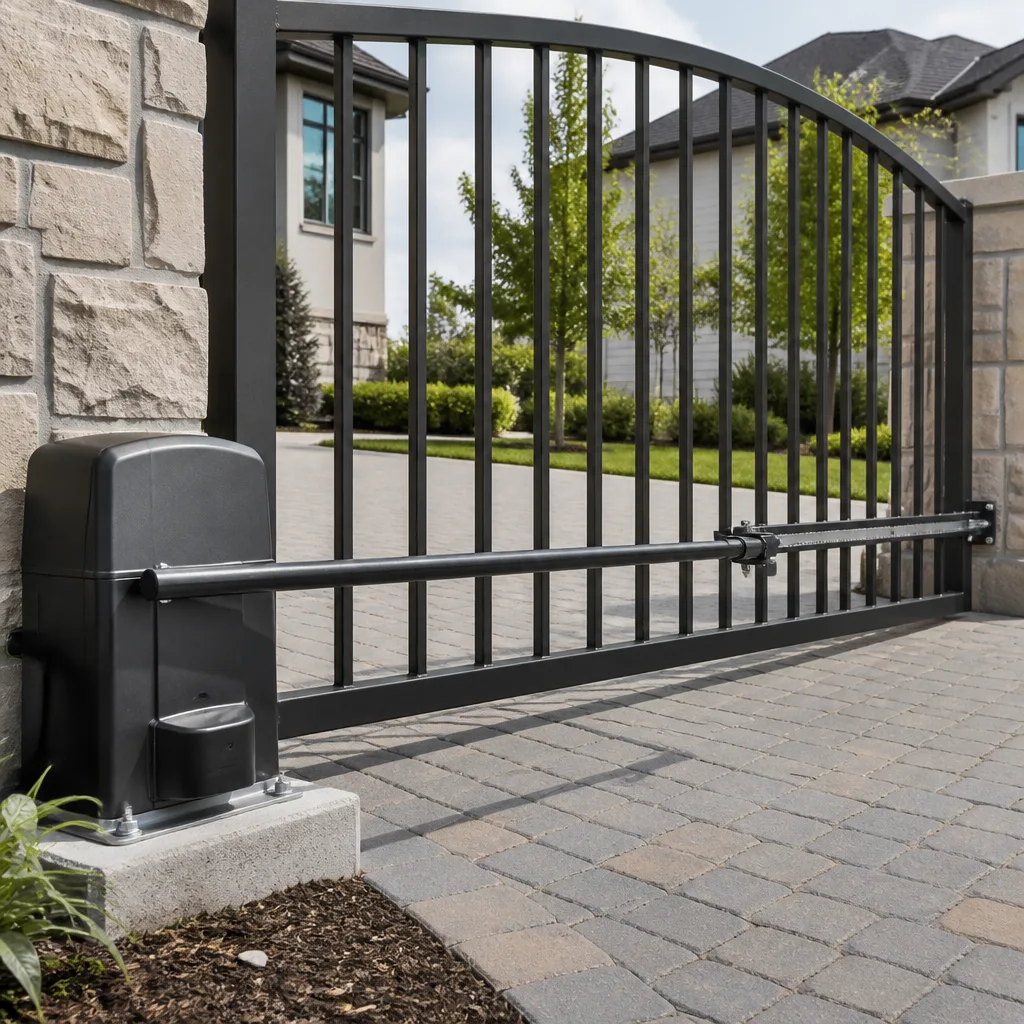
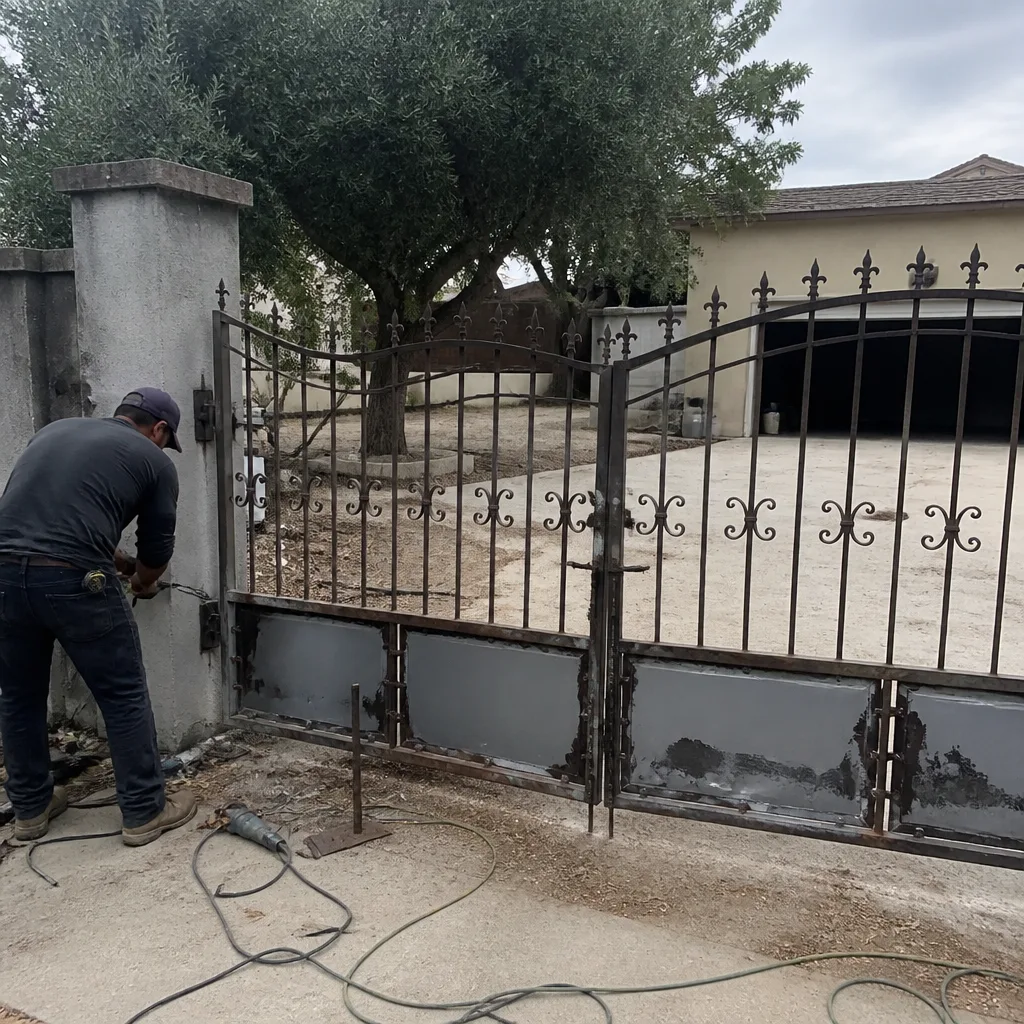 Before
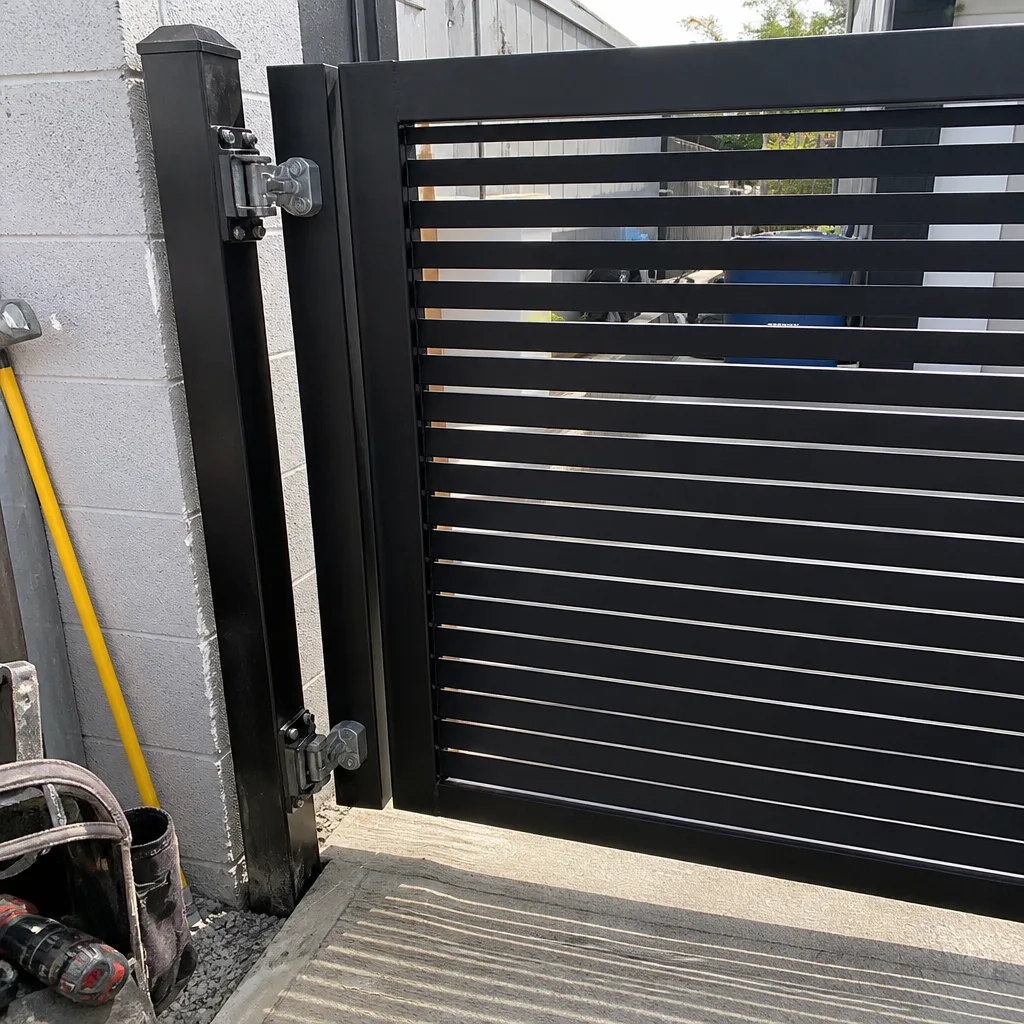 After
After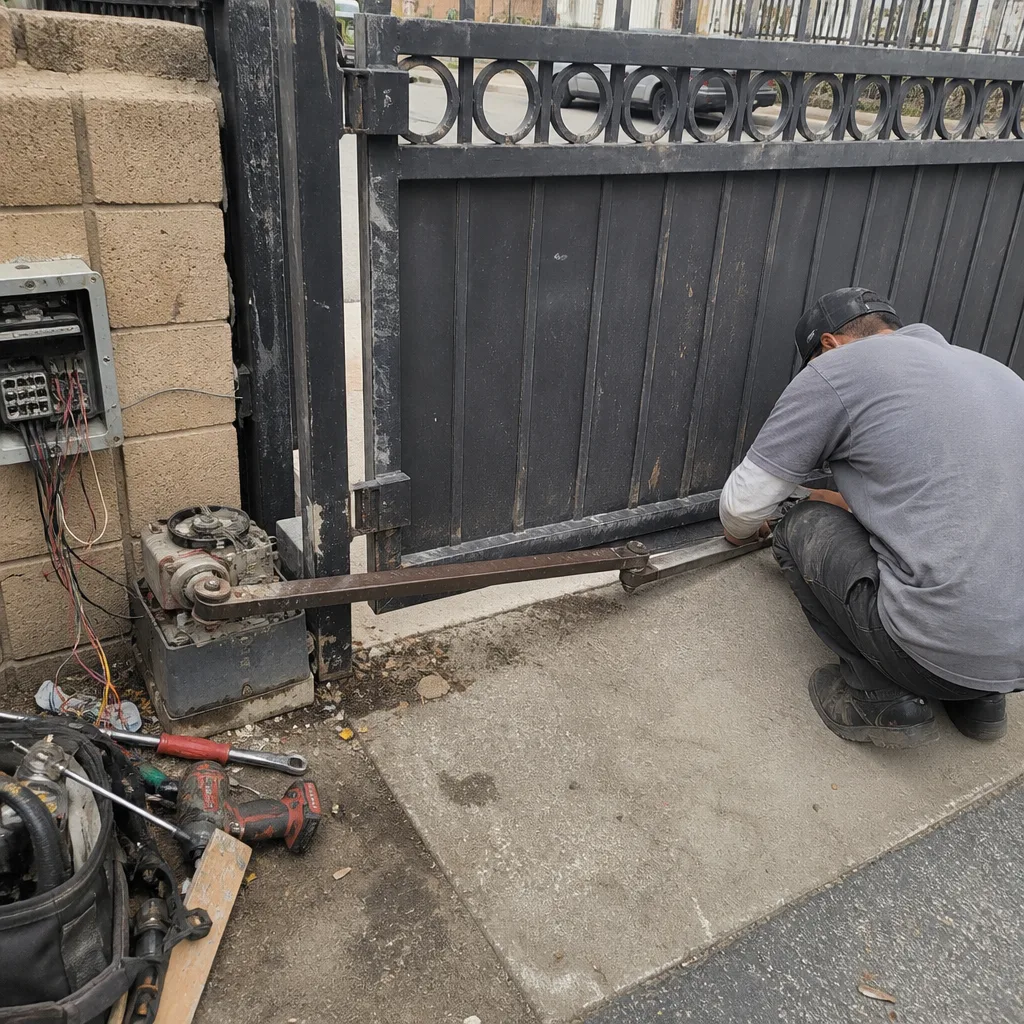 Before
 After
After Before
 After
AfterDIY vs Professional Gate Repair: The Los Angeles Homeowner’s Decision Guide
Here’s something most YouTube tutorials conveniently skip: a DIY automatic gate opener install in Los Angeles can void your homeowner’s insurance coverage for gate-related injuries if the system isn’t UL 325 compliant. Your insurer won’t ask about your gate when you sign the policy, but they absolutely will if a delivery driver gets pinned or a neighbor’s kid gets clipped. And that’s when a $400 savings turns into a six-figure liability. We’ve spent years untangling gates across Los Angeles, from Westchester to Woodland Hills, and this guide covers what’s genuinely safe to do yourself, what legally needs a pro, and what the real break-even math looks like when you factor in more than just parts.
Quick Answer
For most Los Angeles homeowners, DIY is the right call for hinge lubrication, remote reprogramming, and minor track clearing. Professional repair is legally and financially the right call for opener replacement, circuit board work, spring or cable tension, and any repair on a gate governed by UL 325 automated gate safety rules. If your gate has moving parts under tension or a motor, a botched repair creates a liability claim waiting to happen. Calder Gate Repair offers free estimates in Los Angeles at (903) 417-0793, and every job price is written down before work starts.
Table of Contents
- What Is Actually Safe for DIY Gate Repair
- Repairs That Need a Gate Professional
- UL 325 in California: The Liability You Don’t See Coming
- The Real Cost: DIY vs Professional Gate Repair
- The Hybrid Approach: Prep Work That Saves You Money
- Brand-Specific Notes: FAAC, BFT, Linear, and Viking Systems
- Common Mistakes to Avoid
- When to Call a Professional
- Frequently Asked Questions
What Is Actually Safe for DIY Gate Repair
There are a handful of gate tasks where a careful Los Angeles homeowner can genuinely save money without creating risk. These are the jobs that involve no tensioned parts, no wiring, and no calibration of safety features:
- Hinge lubrication: A can of white lithium grease and five minutes per hinge is all this takes. Squealing gates in Los Angeles are common, especially in beach-adjacent zones like Playa del Rey and Marina del Rey where salt air accelerates wear. Lubricate every six months.
- Remote reprogramming: Almost every gate opener brand (LiftMaster, FAAC, BFT, Linear, Viking) has a learn button or a simple multi-step remote sync sequence you can do without tools. If you have the manual, this is a ten-minute job.
- Minor track clearing: Leaves, gravel, and wind-blown debris jam slide gates across Los Angeles. Clearing the track and the rail is safe and quick. Do not touch the limit switches or the motor housing while you’re at it.
- Battery replacement in wireless keypads: A 9V battery swap is safe. If the keypad still won’t work after a fresh battery, the issue is likely the receiver board, and that’s a professional repair.
- Photo-eye sensor lens cleaning: The small lenses on either side of the gate opening collect dust and spider webs. A microfiber cloth and glass cleaner restores them. If the gate still reverses or won’t close after cleaning, the photo-eye alignment or wiring is the culprit, not the lens.
What these all have in common: no springs under tension, no capacitors, no high-voltage wiring, and no safety-system calibration. In our experience, these five tasks cover roughly 20 percent of the gate issues Los Angeles homeowners call us about.
Repairs That Need a Gate Professional
Some gate repairs are dangerous or legally sensitive enough that DIY is a bad bet. Here’s the honest breakdown of what we see at Calder Gate Repair, and why:
Gate opener motor replacement
Replacing a gate opener motor isn’t like swapping a garbage disposal. The motor must be matched to the gate’s weight, usage cycle, and voltage. A motor that’s underpowered for a solid iron gate in a place like Hancock Park will burn out within months. A motor that’s overpowered creates jolting starts that stress the rack and pinion. Professional installation includes torque calibration, limit switch setting, and safety edge integration. We replace gate openers across Los Angeles regularly, and about a third of those jobs involve correcting a previous DIY or handyman install that skipped torque calibration entirely.
Circuit board replacement
Modern gate openers run on control boards with dozens of jumpers, dip switches, and wire terminals. A BFT or Viking board can have 30-plus connection points. One wrong wire placement and you can short the entire system. Worse, a miswired board can leave safety inputs bypassed without your knowing it, which means the gate stops reversing when it hits an obstruction. That’s the exact scenario that puts a homeowner on the wrong end of an injury claim.
Gate spring and cable tension
Slide gates and cantilever gates use extension springs and aircraft cable under enormous tension. When those springs snap or the cable frays, the gate can drop or slide uncontrolled. A gate that weighs 600 to 1,000 pounds moving under spring force is not something to improvise around. This is the gate-repair equivalent of garage-door torsion springs: lethal if handled wrong. Leave it to a tech who does it weekly.
Safety system calibration
UL 325 requires that gate operators include entrapment protection: photo-eyes, contact edges, or both. These components must be tested with a specific gauge and force meter after installation or repair. Homeowners don’t carry those tools because they cost several hundred dollars. If a safety edge isn’t calibrated to the correct sensitivity, the gate won’t reverse when it meets resistance. That failure mode is invisible until someone gets hurt.
Repairs on gates tied to alarm or access-control systems
Many Los Angeles homes with automated gates also have entry keypads, intercoms, or full access-control integrations. When a gate is wired into a larger system, a repair that looks isolated can disrupt the whole network. We frequently see DIY gate work that accidentally severed alarm wiring or left an access control panel throwing error codes. A professional repair isolates the gate circuit from the house system before starting work.
UL 325 in California: The Liability You Don’t See Coming
California is one of the most plaintiff-friendly states for premises liability. If someone is injured by a gate on your property, you, the homeowner, are on the hook unless you can prove the gate system met all applicable safety standards. That standard, for automated gates, is UL 325, and it’s not optional.
UL 325 governs the design, installation, and maintenance of gate operators. It mandates entrapment protection, proper warning signage, and specific force and speed limits. Crucially, UL 325 compliance requires documentation of professional installation or repair. No documentation, no defense.
Most Los Angeles homeowners don’t discover this until one of two moments: filing an insurance claim after a gate injury, or selling the house and facing escrow disclosure questions about the gate system. Both moments are bad times to learn that your DIY opener install rendered your gate technically non-compliant.
Here’s the specific pattern we hear about in the Los Angeles market: a home goes under contract, the buyer’s home inspector flags the self-installed gate opener as lacking safety certification, and the escrow stalls while the seller scrambles to have a professional remediate the system. By then, the seller has lost negotiating leverage. A professional install with UL 325 documentation on file costs less than the typical price concession in that escrow scenario.
And to be clear about the insurance side: most Los Angeles homeowner policies cover gate-related liability by default. But coverage assumes the gate was installed and maintained to code. A self-installed opener that lacks UL 325 documentation gives the insurer a coverage denial argument. You don’t want to test that argument after an injury on the property.
If you’re considering a DIY gate opener installation in Los Angeles specifically, know this: California’s adoption of UL 325 as the applicable safety standard means the installer (you) is responsible for compliance. There is no homeowner DIY exception. The gate opener repair work we do always includes safety-system verification and written documentation, which is precisely what insurers and escrow officers want to see.
The Real Cost: DIY vs Professional Gate Repair
Here’s the math most YouTube videos don’t show you. Let’s price a gate opener replacement in Los Angeles, honestly.
DIY gate opener replacement: the real number
- Opener unit: $450 to $900 for a decent residential model (LiftMaster or Linear; a BFT or Viking will run higher)
- Mounting hardware and brackets: $40 to $120
- Conduit and wiring: $30 to $100, if you need to run new low-voltage wire
- Safety photo-eyes (if not included): $60 to $150
- Force-testing gauge (required for UL 325 verification): $250 to $400, or you skip it and are non-compliant
- Your time: 6 to 12 hours for a first-timer, including trial and error
- Total out-of-pocket: $580 to $1,420, plus 6 to 12 hours of your weekend
Professional gate opener replacement: the real number
- Labor and installation: $400 to $800, depending on gate type and site conditions
- Opener unit (professional pricing): $400 to $850
- Safety edge and photo-eye integration: included in most professional installs
- UL 325 compliance documentation: included, no extra cost
- Total out-of-pocket: $800 to $1,650, with zero solo labor hours
The break-even insight: when you factor in the force-testing gauge, the DIY path saves roughly $100 to $300 on paper, but costs you a full weekend and leaves you with zero compliance documentation. If you skip the gauge, you keep the savings but assume the liability exposure described above. That’s a bad trade in Los Angeles, where personal injury settlements routinely exceed the cost of the gate, the opener, and every repair you’ll ever do to it.
At Calder Gate Repair, every job receives a written price before any work starts. The number on the invoice is the number agreed to up front. That includes the opener, the labor, the safety-system verification, and the documentation. For Los Angeles homeowners weighing DIY against professional work, the honest comparison isn’t $900 pro vs $500 DIY. It’s $900 with documentation and a gate repair guarantee vs $500 without either.
The Hybrid Approach: Prep Work That Saves You Money
You don’t have to choose between pure DIY and full-service professional repair. The smart middle path for Los Angeles homeowners is to handle the simple prep tasks yourself and leave the billable diagnostic and repair work to a pro. Here’s a step-by-step approach that cuts an hour of billable time off a typical service call:
- Write down the symptoms in specific language. Instead of “the gate is broken,” note: “the gate opens halfway, stops, and beeps three times.” Or “the opener hums but the gate doesn’t move.” Specific symptoms help the tech diagnose faster.
- Take photos and a short video. A 10-second phone video of the gate misbehaving is worth more than a 10-minute phone description. Shoot the gate, the opener brand label, and the control board if you can access it safely.
- Check the obvious. Clear debris from the track, confirm the manual release is disengaged, verify the breaker hasn’t tripped, and check the remote battery. About 15 percent of the calls we receive are resolved by one of these four checks before we even dispatch.
- Locate the opener model number. Every opener has a model and serial plate. Knowing you have a FAAC 402, a BFT Deimos, or a Linear LRA saves the tech from doing model identification on-site, and lets us confirm parts availability before we arrive.
- Note when the problem started. After a storm? After a power outage? After a landscaping crew worked near the gate? Timeline context is diagnostic gold.
This prep work genuinely reduces billable diagnostic time. It also gives the technician a head start on parts sourcing, which matters in Los Angeles where same-day service across a sprawling metro depends on having the right component in the truck before dispatch.
Brand-Specific Notes: FAAC, BFT, Linear, and Viking Systems
Gate opener brands are not interchangeable in how they fail, and a Los Angeles homeowner with a FAAC gate has different repair considerations than one with a Viking. Here are the patterns we actually see:
FAAC
FAAC hydraulic and electromechanical operators are common on mid-century and hillside Los Angeles properties. They’re durable but sensitive to oil viscosity and hydraulic pressure settings. A DIY repair that opens the hydraulic reservoir or adjusts a pressure relief valve without the right gauge can leave the gate moving slower than traffic on the 405, or worse, moving unpredictably. FAAC repairs usually involve hydraulic fluid level checks, solenoid cleaning, and limit switch alignment, all of which require brand-specific knowledge.
BFT
BFT openers show up frequently on newer Los Angeles construction, especially in gated communities and multifamily entries. Their control boards are dense with configuration options, and the factory default settings rarely match the installed gate’s weight and travel. We see BFT gates that were DIY-installed with the factory torque curve still loaded, which translates to jerky starts and premature rack wear. Professional BFT work includes downloading the current parameter map and reprogramming it for the specific gate.
Linear
Linear is the workhorse of residential gate openers in Los Angeles, and for good reason: parts are widely available and the design is straightforward. But “straightforward” has limits. Linear swing gate arms use a lead screw that must be greased with the correct compound, and a homeowner with a grease gun full of wheel-bearing grease will create more friction, not less. Linear’s most common failure is the onboard radio receiver, which occasionally requires a frequency reflash that only a dealer with brand access can perform.
Viking
Viking operators are heavy-duty commercial-grade units that occasionally appear on high-end residential estates in Bel Air, Brentwood, and Pacific Palisades. They’re built to run thousands of cycles a day, but they demand respect: capacitor banks inside a Viking control cabinet hold a charge even after the unit is powered down. A DIY board swap on a Viking carries a genuine shock hazard. This is a brand where we recommend professional service without hesitation, every time.
We’re factory-familiar with all four of these brands plus LiftMaster, Ghost Controls, DoorKing, Elite, and Mighty Mule. That brand coverage matters in Los Angeles because our service area spans nearly every opener type a homeowner is likely to own, and the electric gate repair work we do already accounts for brand-specific boards, wiring harnesses, and troubleshooting logic.
Common Mistakes to Avoid
- Skipping the manual release re-engagement test. After any DIY repair, many homeowners forget to test that the manual release actually re-engages. A gate that won’t disengage in a fire or emergency is a life-safety risk, not a convenience issue.
- Using the wrong lubricant. WD-40 is not a gate lubricant. It strips away the grease already in place. Use white lithium grease on hinges and slide tracks, and nothing at all inside the motor housing.
- Adjusting the close-force setting to “just get it to close.” If the gate needs more force to close, something is binding. Crank up the force and you’ve removed the safety margin that UL 325 requires. Fix the binding instead.
- Ignoring the warning signs of capacitor failure. A buzzing sound from the opener without gate movement often indicates a failing capacitor. Power cycling the unit repeatedly doesn’t fix it and can damage the control board. Capacitors store charge and should be handled only by a professional.
- Replacing the remote when the receiver is the problem. If a new remote doesn’t fix the issue, the problem is usually the receiver board, not the remote. We see homeowners buy two or three new remotes before calling us. That’s wasted money.
- Assuming the gate installer is the right person for the repair. The contractor who poured your driveway and hung the gate isn’t necessarily qualified to troubleshoot a FAAC hydraulic operator or a BFT control board. Gate installation and gate opener electronics are different trades.
- Deleting the old remote codes instead of adding a new one. If you’re adding a remote, use the “add” procedure, not the “erase all and reprogram” procedure. The latter wipes every remote, including the one your partner keeps in the car, which means reprogramming everything from scratch.
When to Call a Professional
Call a professional if your gate is making grinding or buzzing sounds, moving slower than usual, failing to close fully, reversing without an obstruction, or showing visible damage to cables, springs, or the opener housing. These symptoms indicate mechanical wear or electrical issues that worsen with continued use. If your gate is stuck open or closed, stops being able to secure the property, or shows scorch marks or burning smells near the control board, shut off the power at the breaker and call a pro. Calder Gate Repair offers free estimates in Los Angeles, call (903) 417-0793. We dispatch background-checked, uniformed technicians with live, trackable arrival times, and every repair carries a written price before work starts, a written 365-Day Done Right Promise, and a free second visit if the repair fails within the 365-day coverage window.
Frequently Asked Questions
Most gate opener repairs in Los Angeles do not require a permit, but a full gate opener replacement or new installation often does, depending on your city or unincorporated county jurisdiction. Repairs that replace an existing opener like-for-like typically fall under maintenance. New installs, new gate construction, or work involving electrical panel additions may trigger permit requirements. When in doubt, call your local building department or ask your gate repair company whether they handle permitting for your project type.
Most residential gate repairs in Los Angeles run $180 to $650 before parts, with gate opener replacements typically landing between $800 and $1,650 all-in. Simple fixes like remote reprogramming or hinge adjustment sit at the lower end. Circuit board replacements and opener motor swaps sit at the higher end. Parts for premium brands like FAAC, BFT, and Viking typically cost more than parts for Linear or LiftMaster systems. Bonus: Calder Gate Repair includes a written price before any work starts, so you’ll know the exact number before we pick up a tool. Call (903) 417-0793 for a free estimate.
Yes, in most cases Calder Gate Repair can offer same-day or next-day service for urgent gate opener repairs in Los Angeles. We keep common parts for FAAC, BFT, Linear, Viking, LiftMaster, Ghost Controls, DoorKing, Elite, and Mighty Mule in our service vehicles, which means many repairs are completed in a single visit. For specialty parts we expedite shipping and communicate the exact arrival timeline before any work begins.
UL 325 is a safety standard that governs automated gate operators, and it requires entrapment protection, proper warning signage, and professional installation documentation. In California, UL 325 compliance is the baseline for proving your gate system was installed and maintained properly if someone is injured. A self-installed gate opener without UL 325 documentation gives your insurer grounds to deny a liability claim, and disclosure questions around gate systems are a regular sticking point in Los Angeles escrow transactions.
Replacing a gate opener yourself is not recommended for most Los Angeles homeowners because the job involves mains voltage wiring, capacitor discharge risks, torque and limit calibration, and safety-system integration that must be verified for UL 325 compliance. A spring or cable under tension can cause serious injury if released incorrectly. The cost savings are modest once you account for the required testing equipment. Professional installation includes the compliance documentation that protects you in an insurance claim or home sale.
Yes, Calder Gate Repair is factory-familiar with nine major brands: LiftMaster, FAAC, BFT, Linear, Viking, Ghost Controls, DoorKing, Elite, and Mighty Mule. That covers virtually every residential gate opener installed across Los Angeles. Our techs work on this equipment daily, so we diagnose faults faster, carry the correct replacement parts, and program systems to manufacturer spec. Call (903) 417-0793 and we’ll tell you over the phone if it’s a repair we can complete same-day.
The Bottom Line
DIY gate repair works for hinge lubrication, remote reprogramming, and debris clearing. It does not work for anything involving springs, cables, circuit boards, safety systems, or opener motors, because those systems carry real physical and legal risk in Los Angeles. UL 325 compliance isn’t bureaucratic red tape; it’s the standard that protects you in an insurance claim, an injury lawsuit, or a home sale. The honest math says professional repair costs about the same as DIY once you account for testing equipment and your own time, and it buys you documentation no weekend project can provide. When the job needs a pro, Calder Gate Repair answers the phone 24/7 at (903) 417-0793, and every job carries a written price, a written 365-Day Done Right Promise, and a free second visit if the repair fails. Check out the Calder Gate Repair home page for more on how we work.
Written by Nico Alvarez, Owner at Calder Gate Repair, serving Los Angeles since 2009.